

























































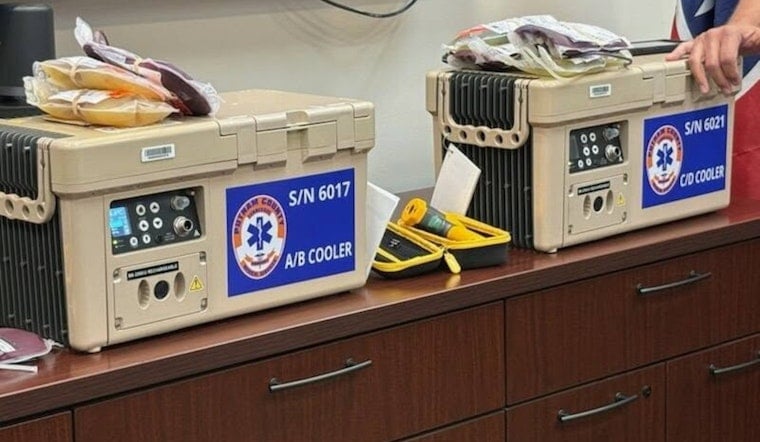
When a call comes in for a bad crash or a dangerous home birth in Putnam County, paramedics are no longer just bringing bandages and oxygen. Putnam County EMS in Cookeville is now carrying blood on its ambulances and can start transfusions in the field before patients ever see an emergency room. Several units are outfitted with climate-controlled coolers and inline warmers so medics can deliver blood to crash scenes, home births, and other life-threatening calls, all with the goal of cutting the time to first transfusion on runs where minutes can mean the difference between life and death.
What Changed in Putnam County
Putnam County has joined roughly half a dozen Tennessee counties that already offer prehospital blood, and local ambulances now carry specialized coolers and warmers that keep units within the strict temperature range required for safe use, according to WSMV. The station reported that the program comes with an annual tab of about $25,000 for blood products, storage, and training. Blood for both Putnam and nearby Williamson County will come through a partnership with Blood Assurance.
Where the Blood Comes From
Putnam County’s blood supply will be managed through a partnership with Blood Assurance, a regional blood center that serves hospitals across Tennessee and neighboring states. Blood centers and partner hospitals typically rotate units, maintain detailed temperature logs, and require ongoing clinician training, steps that add recurring cost and operational complexity to any prehospital transfusion program.
Local Precedent and Lifesaving Examples
Williamson Health EMS in Brentwood, an early adopter in Middle Tennessee, used an in-ambulance transfusion during a 2024 premature home birth that local staff credit with saving a mother and her newborn. Michael Wallace, chief of Williamson Health EMS, told WSMV that crews “never give the product unless it’s life-threatening,” underscoring that transfusions are reserved for the most critical calls.
National Context and What to Watch
Prehospital transfusion is still relatively rare across the country, but it is spreading as studies and pilot programs suggest early blood can improve survival for patients with severe hemorrhage. The Prehospital Blood Transfusion Coalition monitors state scope-of-practice rules and program rollouts. National trade outlets have documented how counties set up these services and the training, supply, and dispatch challenges that come with them, including resources from the Prehospital Transfusion Initiative Coalition and recent reporting on similar county programs by EMS1. Local officials say they will be watching donation levels and hospital exchange arrangements closely as other Mid-State counties prepare to launch programs of their own.



