

























































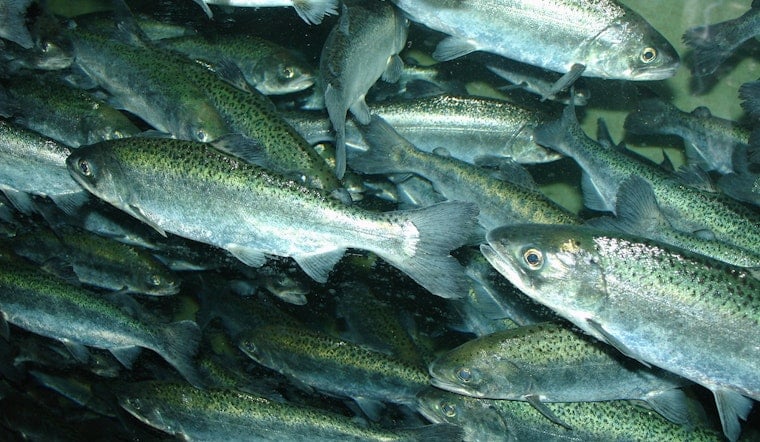
The long-awaited return of Chinook salmon to the upper Klamath River is running into a microscopic buzzsaw. A recent federal health survey found that nearly half of the juvenile Chinook tested this spring are carrying the parasite Ceratonova shasta, and about one in five of those infections reached levels associated with death. Scattered piles of tiny carcasses along the riverbanks have tribes and scientists on edge, just months after they were celebrating salmon above the former dam sites. Low flows and unusually warm water in the basin are helping the parasite multiply faster and push infections over the line from bad to lethal.
Survey data shows high infection rates
In a June 1 memo, the U.S. Fish & Wildlife Service California-Nevada Fish Health Center reported that QPCR testing of juvenile Chinook collected between March 17 and May 12 detected Ceratonova shasta in 46% of the fish sampled. Of 696 juveniles from three upper-river reaches, 319 tested positive, and 18% of those infected carried DNA copy numbers above three logs, a level the memo associates with mortality. Biologists also installed a new rotary screw trap at the old Iron Gate Dam site, which let them sample fish in a stretch of river that had been underwater behind the dam for more than a century.
Parasite thrives when rivers warm
Ceratonova shasta is a waterborne myxozoan parasite that infects salmon and trout and has been blamed for die-offs and weak year-classes in the Klamath basin for decades. Infection rates, parasite replication and disease severity all climb as river temperatures rise and flows drop, giving the pathogen a head start on already stressed fish. Oregon Sea Grant describes how warmer, low-flow years in the Pacific Northwest can boost exposure to the parasite and speed the progression from infection to disease.
Dam removal opened habitat and a new monitoring window
The removal of four lower Klamath hydroelectric dams in 2024 reopened upstream spawning and rearing habitat and, for the first time in decades, gave biologists a clear look at outmigrating juveniles in reaches that had been reservoirs. That is why tribes and researchers were so quick to celebrate the discovery of naturally hatched Chinook in the upper basin this spring. The same reconnection, though, is forcing managers to confront how pathogens move through a newly linked river system. Coverage from OPB and regional monitoring summaries has underscored how quickly conditions can shift after dam removal, while FishBio has walked through the new health data from the upper river.
Scientists are digging in
Oregon State University parasitologists and partner agencies are dissecting smolts and running molecular assays to chart where infections and high parasite loads are clustering, work meant to show whether more targeted management could cut down exposure. OSU fish parasitologist Sascha Hallett told The Portland Tribune that the number of small juvenile carcasses showing up along the upper river is alarming, and that this level of juvenile mortality has not been seen in the upper basin since the dams came out. Oregon State University
What managers and tribes are watching
Agencies, tribes and water users say they are closely watching flow schedules, hatchery release timing and water temperatures as the outmigration season plays out. A review in Frontiers in Ecology and Evolution that helped shape post-removal planning called for expanded, basin-wide pathogen monitoring and adaptive flow management to keep exposure in check. Local water-user groups and the Bureau of Reclamation’s annual operations plan, which influence how quickly young salmon move through infectious zones, are getting extra scrutiny this year. KWUA
Researchers caution that the spike in infections does not automatically doom the river’s recovery, but it is a sharp reminder of how fast climate conditions and water management choices can tilt the odds for young salmon. Tribal fisheries staff and federal biologists plan to keep sampling through spring and summer and to publish more detailed results as they come in. For now, the high prevalence of Ceratonova shasta in the upper Klamath is tightening the focus on pairing habitat restoration with serious, long-term disease surveillance. The Klamath Tribes





