

























































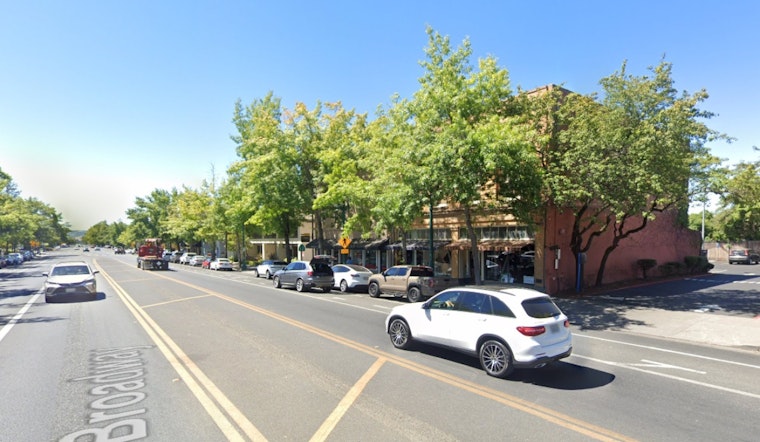
Dos' Bar, the downtown Sonoma tasting room and natural‑wine collective that opened in 2024, has poured its last glass after roughly two years in business. Founders and participating winemakers told staff that the experiment never penciled out financially and that the owners had gone without paying themselves to keep the space staffed.
Co-founder Aaron Brown, who also co-founded Bardos Cider, said the closure did not stem from one dramatic moment so much as a model that, in his words, "never matured into a different chapter." As reported by the San Francisco Chronicle, Brown emphasized that "Nothing bad happened," describing a series of attempts to recalibrate the concept before ultimately deciding to shut down.
How the Collective Worked
Dos' Bar operated as a shared downtown hub where a rotating crew of six to eight small producers poured wines and ciders, hosted pop-ups, music nights, and winemaker events. The idea was to offer visitors a neighborhood-style hangout, without forcing each tiny label to shoulder the cost of its own tasting room. The bar's lineup and event history are detailed on the Dos’ Bar website, which highlights producers such as North American Press, Marioni, and Fres.Co and Caleb Leisure.
Industry Headwinds
The timing of the shutdown tracks with broader pressure on wineries and tasting rooms. In its 2026 State of the U.S. Wine Industry report, Silicon Valley Bank found that U.S. wine volume and value both slipped in 2025 and warned that many small producers will need to rethink direct-to-consumer strategies. The analysis argues that relationship-driven hospitality and tighter inventory control are becoming critical for survival.
Why Community Spirit Wasn't Enough
Brown told the Chronicle that even when events packed the room, weekday walk-in traffic could be painfully thin, and the behind-the-scenes coordination, from booking to staffing to outreach, landed on founders who were already juggling harvest and other jobs. As reported by the San Francisco Chronicle, they floated ideas such as converting Dos' Bar into a cooperative run by participating wineries or narrowing the roster to Sonoma-based producers, but none of those plans came together.
What Comes Next
Brown said Dos' Bar could reappear in a lighter weight form, such as pop-ups or other low-overhead experiments that preserve the collaborative energy without the burden of fixed rent. Local coverage has framed Dos' Bar as part of a small, experimental natural wine scene in Sonoma that leans into craft and event-driven culture instead of traditional reservation-driven tasting room economics, according to Sonoma Magazine.




