

























































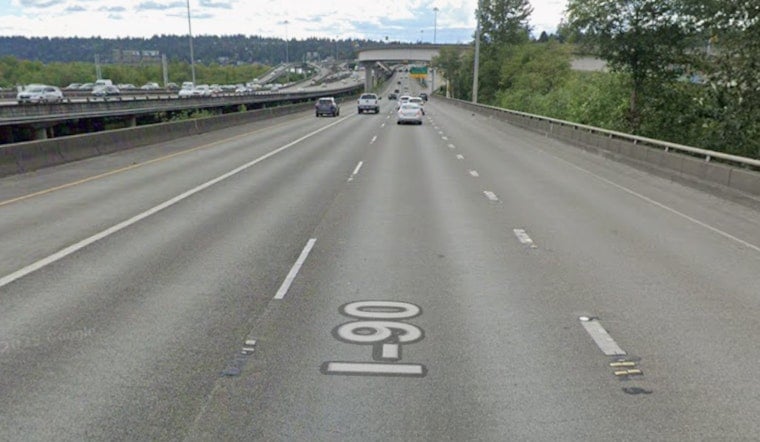
A deadly afternoon crash on westbound I-90 near the I-405 interchange in Bellevue on Tuesday killed a motorcyclist and squeezed traffic into a single open lane, turning the westbound commute across Lake Washington into a slow-motion slog. Emergency crews stayed on scene as investigators and tow trucks worked to clear the wreckage, and traffic inched past the closure.
Real-time travel tools from WSDOT showed multiple westbound lanes and an on-ramp blocked near 133rd Avenue Southeast, funneling drivers into one lane and creating stop-and-go conditions on I-90. Tow trucks and responders were staged along the shoulder, and vehicles were moving slowly through the work zone.
The crash was reported at about 2:40 p.m. near the I-405 interchange, and the Washington State Patrol confirmed that a motorcyclist was killed, as reported by KIRO 7. According to KIRO 7, WSDOT measured roughly a two-mile backup by about 3:45 p.m., and officials had not given drivers an estimate for when all lanes would reopen.
Ongoing I-90 Work Leaves Drivers With Few Escape Routes
WSDOT began nighttime paving and bridge work on stretches of I-90 through Bellevue earlier in June. The agency notes that the projects can narrow shoulders and cut down on options for rerouting traffic when crashes happen. Those constraints mean that a blocked lane can trigger longer backups than usual on this stretch, especially during the afternoon commute.
What Drivers Should Know
Drivers heading westbound should plan for slow travel and think about alternate routes such as State Route 520 or I-405 to get around the worst of the congestion. Local commute resources recommend allowing extra time and checking live traffic tools and agency feeds before leaving, according to Choose Your Way Bellevue.
Troopers said the cause of the collision was still under investigation and did not release additional information about the victim. KIRO 7 reported that it would update its coverage as new details emerge. In the meantime, motorists are urged to give crews space to work and avoid the area if possible while investigators finish their on-scene work.



