

























































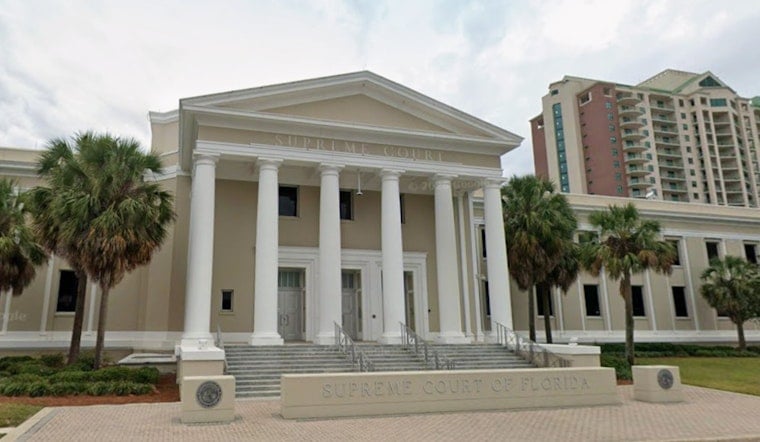
Florida’s highest court has decided that Kenneth Chesebro, a key legal architect of the 2020 “fake electors” plan, can keep practicing law in the state. Instead of suspending his license, the Florida Supreme Court issued a public reprimand, even as one justice pushed for much tougher discipline. The court pointed to Georgia’s First Offender Act, which wiped out Chesebro’s probation and treated him as if he had no criminal conviction, as a major complication in deciding what to do with his Florida license.
High court weighs comity against misconduct
In an unsigned opinion, the majority said Florida was obligated to respect the legal effect of Georgia’s actions and that Chesebro’s discharge under the First Offender Act created “unique” circumstances. Because Georgia’s courts formally deemed him not to have a conviction, the justices concluded that a suspension was not appropriate and instead crafted a written reprimand and related conditions as the sanction. The court’s reasoning and the outcome are laid out in the opinion, as summarized by Bloomberg Law.
Dissent: 'An intolerable breach'
Justice Jorge Labarga was having none of it. In a lone dissent, he argued that a reprimand was “disproportionate to the severity of Chesebro’s grave ethical violations” and branded the filing of fraudulent Electoral College paperwork “an intolerable breach of professional ethics.” Labarga urged the court to impose stronger penalties in light of the conduct at issue, according to Florida Bulldog, which quoted directly from his opinion.
Background: guilty plea and probation
Chesebro pleaded guilty in Fulton County, Georgia, in October 2023 to a felony charge of conspiracy to commit filing false documents and received a five-year probation sentence, according to AP. Georgia courts later ended his probation under the state’s First Offender Act and entered an order stating he “shall not be considered to have ever had a criminal conviction,” a detail the Florida Supreme Court said it could not overlook, as reported by Creative Loafing Tampa.
Federal pardon, state penalties remain
Chesebro’s name later appeared on a November 10, 2025 list of pardons issued by President Donald Trump for allies connected to efforts to overturn the 2020 election, according to Forbes. That federal clemency does not, however, wipe away the authority of states to police their own bars. New York’s Appellate Division disbarred Chesebro in June 2025, and other jurisdictions have moved to suspend or scrutinize his credentials; the New York ruling is posted by the official court reporter at NYCourts.gov.
How Florida's sanction compares
The Florida Bar had urged the state’s high court to sideline Chesebro for 60 days, while a court-appointed referee suggested a 30-day suspension instead. The justices went in a different direction, rejecting both proposals and ordering a written reprimand along with mandatory attendance at The Florida Bar’s Ethics School, Florida Bulldog reports. Justice Adam Tanenbaum, the court’s newest member, agreed with the overall outcome but wrote separately to say he would not have imposed the $2,229.37 in costs that the court assessed, according to Bloomberg Law.
Legal implications and next steps
The court’s public orders note that disciplinary rulings can be challenged through motions for rehearing and do not become final until the rehearing period has run, as outlined by The Florida Bar. If the Bar seeks further review or the case returns on rehearing, Florida’s attempt to balance respect for another state’s judgment with its own standards of professional accountability could become a reference point for how other states respond to similar conduct in their disciplinary systems.





