

























































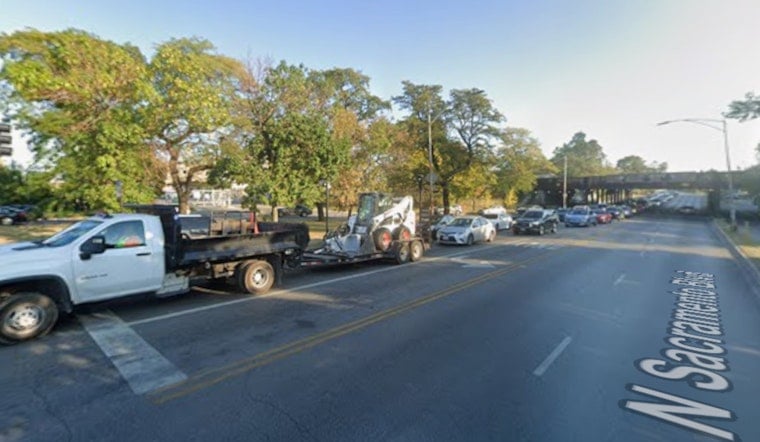
Two long-vacant lots on West Fifth Avenue between Sacramento and Kedzie are trading weeds for walnuts. This spring, the Garfield Park Community Orchards project broke ground on roughly 32,000 square feet of new fruit- and nut-producing green space, with plans for about 50 fruit trees, berry bushes, and native understory plantings. The design is intended to slow runoff and help keep rainwater out of neighborhood basements, with construction that began in May continuing through infrastructure work ahead of fall plantings.
The project is led by NeighborSpace in partnership with the Garfield Park Community Council and funded by a mix of public and philanthropic dollars, with about $2.2 million committed in total and roughly $1.2 million coming from the city, according to Block Club Chicago. The two parcels are slated for gardening, recreation, and multigenerational programming. The Garfield Park Community Council says construction began in May 2026 as crews stage infrastructure work ahead of fall plantings, a schedule outlined by the Garfield Park Community Council.
Orchard Designed To Catch the Storms
Organizers say the layout combines added tree canopy, bioswales, permeable paving, and native plantings to catch and absorb runoff before it can overwhelm local sewers or seep into basements. A project summary from the Resilient by Nature initiative estimates the green infrastructure could redirect on the order of 90,000 gallons of stormwater into planted areas instead of nearby mains. RxN and recent reporting place the orchard within the city’s broader Resilient Corridors strategy, which focuses on nature-based flood control on the West Side. Inside Climate News has described the orchard as a concrete example of that approach.
Community Stewards and What Comes Next
NeighborSpace is handling site planning, stewardship training and long-term support, working with local residents on programming and maintenance, according to NeighborSpace. As Block Club Chicago reports, organizers say they expect the orchards to become “part of the social infrastructure when cared for by multiple generations.” Major construction and planting phases are projected to wrap up around summer 2027, with community events and training to follow.





