

























































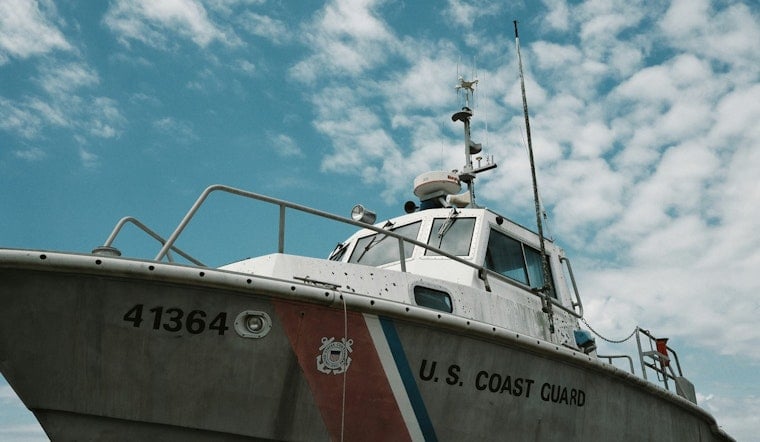
Miami's shipping lifeline to Haiti is about to get a lot more complicated. The U.S. Coast Guard says it will start enforcing new security conditions on vessels that have recently called at Haitian ports, a shift that could slow cargo, add costs and push some carriers to rethink their routes. The rules kick in June 22, 2026, and will force ships to increase their security posture while docked in Haiti and to document those steps before they can enter U.S. waters. Coast Guard officials are pitching the move as a shield for American ports and maritime trade while Haiti tries to tighten port security.
What the Coast Guard ordered
The agency laid out the new requirements in a notice published in the Federal Register this month, announcing that conditions of entry will apply to vessels arriving from the Republic of Haiti starting June 22, 2026. Under the Maritime Transportation Security Act of 2002, the Coast Guard concluded that Haiti does not maintain effective antiterrorism measures at its ports. With that finding, Haiti is now added to a list of countries where special entry conditions are triggered before ships can reach U.S. shores.
How ships will be inspected
On the ground, or rather on the water, the details are spelled out through the Coast Guard's Maritime Commons blog and Port Security Advisory PSA 3-26. According to the Coast Guard, vessels that have called at Haitian ports should expect to show proof of any extra security measures they took while in port, and they should be prepared for closer inspections when they reach U.S. waters. Mariners and operators are being urged to study the advisory and to budget additional time and paperwork once they reach American ports.
Why Haiti was flagged
Growing gang activity around Haiti's waterfront has left its seaports increasingly exposed, creating exactly the kind of security gap the Coast Guard cited. As reported by the Miami Herald, masked gunmen boarded a Panama-flagged ship anchored off Port-au-Prince on May 1 and kidnapped two crew members. Several carriers have already stopped calling directly on the capital, routing containers through regional hubs such as Jamaica instead. Those port security worries sit alongside broader international efforts to stabilize the country, including U.N. Security Council authorization of multinational missions to support security and a larger Gang Suppression Force to protect key infrastructure, according to the United Nations.
Jean Evens Charles, director general of the Haitian National Port Authority, told the Miami Herald, "We are limited, and we don’t have resources for all that," explaining that the government can issue instructions to captains but lacks the capacity to police the entire coastline. Industry officials speaking to the Herald warned that the Coast Guard's conditions could drive up costs through higher insurance premiums or extra private security on board, and that more cargo is likely to move through transshipment hubs that stretch delivery times. For Haiti, heavily reliant on imports, those added burdens risk landing on the backs of consumers and businesses that are already under strain.
Local ripple effects
In South Florida, where ports have long served as the main funnel for goods headed to Haiti, the new rules could reshape everyday operations. Carriers may juggle schedules and staging points, leading to more empty repositioning moves, delays for feeder services and tighter margins for truckers and warehouses handling Caribbean cargo. Port managers and shippers around Miami and Fort Lauderdale will be watching for fresh Notices to Mariners and captain-of-the-port guidance once the advisory formally takes effect.
Legal implications
The Coast Guard says it is acting under the Maritime Transportation Security Act, specifically 46 U.S.C. 70110, which allows it to impose conditions of entry when a foreign port lacks effective antiterrorism safeguards. As spelled out in the Federal Register notice, vessels that cannot show they took adequate security steps in Haiti may face additional enforcement actions or be denied entry until inspectors are satisfied. Shipowners and operators are being told to treat the advisory as binding operational guidance for any voyage that includes a Haitian port call.
With the new rules set to take effect on June 22, 2026, industry observers will be tracking how carriers and insurers respond and whether Haitian authorities can move quickly enough to shore up port security. For now, the Coast Guard is describing its action as a temporary protective measure aimed at keeping U.S. waters safe while Haitian and foreign partners tackle longer term fixes. Analysts will be watching to see whether the advisory reshapes Caribbean shipping lanes and how much of the extra cost ultimately shows up in prices on both sides of the water.



