

























































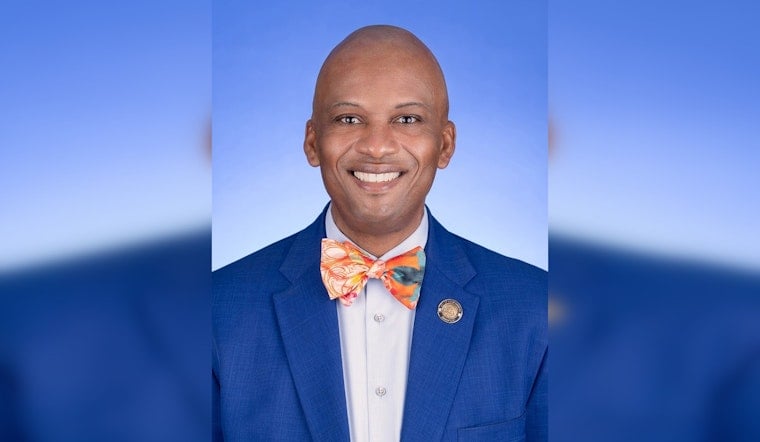
Miami-Dade’s political heavyweights are rolling out a long game for the region’s future, and they are doing it through a new 30x30 Vision Council that held its first meeting on May 7 and tapped Commissioner Oliver G. Gilbert III as chair. The group is tasked with sketching a 30-year roadmap across seven thorny fronts: housing, rapid transit, public safety, economic development, culture and arts, education and talent retention, and healthcare, according to a release from Miami-Dade County.
In that county release, Gilbert framed the council as a future-proofing effort, saying, “The work of this Council is about preparing Miami-Dade County for the opportunities and challenges of the future.” The statement explains that the council plans to stand up subcommittees that will dig into each focus area and develop recommendations meant to boost regional coordination and support long-term, sustainable growth.
The inaugural May 7 session was not just ceremonial. As reported by Community Newspapers, members unanimously selected Tina Vidal-Duart as vice chair. That coverage notes the council, along with its subcommittees, intends to keep meeting regularly in order to sharpen priorities and steer higher-level strategy talks.
Ordinance, Makeup and Mandate
The 30x30 Vision Council is not a casual advisory roundtable. As detailed in Municode Library, it was created by Ordinance No. 24-79 to bring public and private leaders under one umbrella for multi-decade planning. The law spells out a broad membership that includes county commissioners, the county mayor, the sheriff, school board representatives, municipal officials and leaders from major institutions.
Per that ordinance, the council holds advisory powers on big-ticket issues such as rapid mass transit initiatives and general obligation bonds, positioning it as a forum that can weigh in before the region locks in expensive, long-lived projects.
Staffing, Trust Fund and Budget Signals
Internal documents on the commission’s Miami-Dade County Legistar site show how the county plans to keep the council running. According to those records, the council may expand its roster with additional voting members, form committees as needed and set up a trust fund that can accept both public and private donations to support its work.
The same Legistar minutes and memos assign staffing and record-keeping duties to the Chair’s office and the Office of Policy and Budgetary Affairs. That setup signals the county is backing the council with official staff time and administrative muscle, rather than treating it as a short-lived task force.
What the Council Means for Miami
Local planners argue that long-range coordination is no longer a nice-to-have for Miami-Dade, given regional strains that do not stop at city limits. Housing affordability, clogged commuter routes and the fight to keep skilled workers in the local economy all cut across municipal boundaries. When the 30x30 concept was first floated in 2024, Miami Today described the council as a cross-sector table designed to link projects that too often move in isolation.
For now, the 30x30 Vision Council and its subcommittees are expected to keep meeting to develop recommendations and refine strategic priorities, according to Community Newspapers. Over the next year, residents and stakeholders should start to see planning proposals and budget requests that reflect the council’s long-range focus rather than just the next budget cycle.





