

























































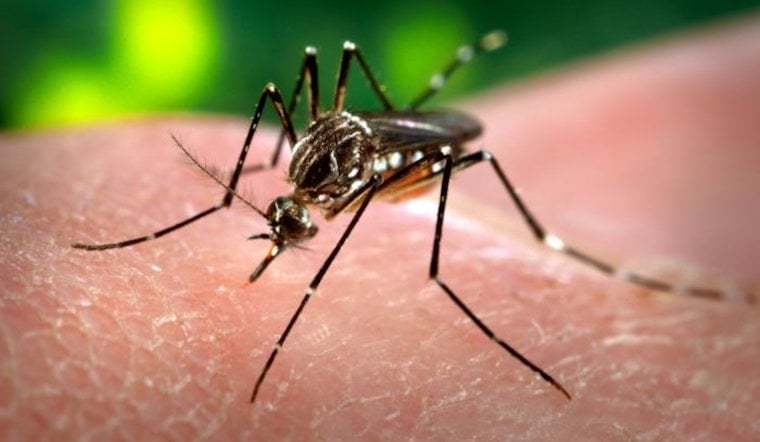
Miami’s most notorious tiny troublemakers are even busier than anyone thought. A new global study that included mosquito samples from Miami shows that the yellow fever mosquito, Aedes aegypti, does not just ferry one pathogen at a time. Instead, it carries a whole crowd of insect-specific viruses that coexist, compete and sometimes even ramp up the mosquito’s own antiviral defenses. For a city that has long served as a gateway for mosquito-borne disease, that means local traps, samples and vector-control work are now central players in a fast-growing surveillance effort.
Published in Nature Communications, the study used a small-RNA genomics approach and pulled together more than 280 small and long RNA sequencing datasets from Aedes aegypti collected across the Americas, Africa and Asia. Researchers identified many mosquito viruses that actively infect the insects and found that some viral communities show clear geographic patterns. The results suggest that mosquito populations carry distinct viral "signatures" that may shape whether human pathogens can successfully establish themselves, according to Nature Communications.
RNA interference: mosquitoes' internal virus check
When viruses replicate inside mosquitoes, they generate double-stranded RNA that the insects slice into viral small RNAs, or vsmRNAs. Those fragments fuel the mosquito’s RNA interference, or RNAi, machinery and can slow down viral replication. The Boston University press summary explains that researchers cultured several mosquito viruses in cell lines and saw vsmRNA patterns that closely matched those found in wild mosquitoes. That similarity suggests the RNAi response is not just lab noise but a biologically meaningful way mosquitoes keep viruses in check, as outlined by Boston University.
Miami samples helped map the micro-ecosystem
Florida International University researchers contributed field collections from Miami-Dade that fed directly into the global dataset, and FIU co-authors say those local samples revealed viruses that persist across generations in local mosquito populations. Co-author Matthew DeGennaro has described Miami as a gateway for vector-borne disease and said the city’s mosquito samples were crucial for spotting the regionally distinct viral profiles that emerged in the study, per Florida International University.
Could the virome be used to fight outbreaks?
The authors did more than sequence mosquito RNA. They infected mosquito cell lines with homogenates from field-caught mosquitoes and developed stably infected cultures that produced vsmRNAs capable of silencing matching reporter genes. That experimental work shows a mechanism by which insect-specific viruses could influence how susceptible mosquitoes are to other pathogens. The paper argues that these viral hitchhikers might eventually serve as surveillance markers or even as biocontrol tools, according to Nature Communications.
Why it matters for Miami
For Miami-Dade vector control teams, the message is that a mosquito’s internal virome may help explain why outbreaks play out differently from one place to another and could someday be folded into trap testing to provide earlier warning signs. FIU co-authors suggest that tracking mosquito immune responses, not just waiting on human case counts, could sharpen predictions as warmer temperatures allow Aedes aegypti to expand its range. The university’s write-up of the work underscores those local stakes, per Florida International University.
Until tools like that are ready for prime time, the public-health basics still carry the day: dump standing water, fix window and door screens and use insect repellent that is registered with the Environmental Protection Agency during mosquito season. The CDC recommends EPA-registered repellents and other source-reduction steps to cut bites and disease risk, according to CDC. Local vector-control agencies note that the same simple steps help limit breeding and make high-tech surveillance efforts a lot more effective.





