

























































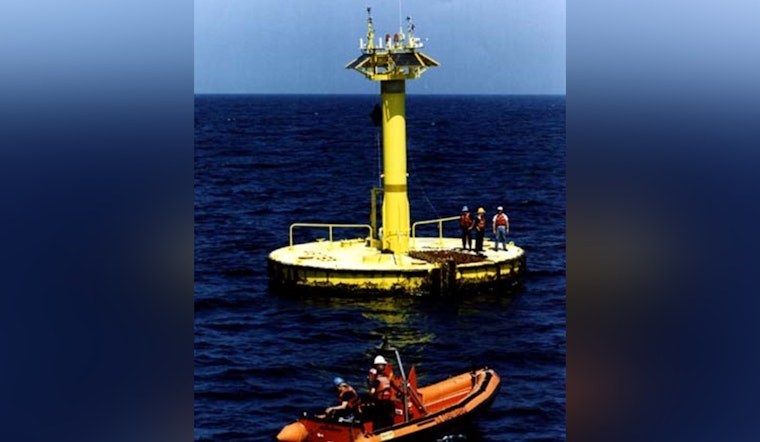
On June 16, 2026, a research buoy off the Oregon coast is slated to be hauled out of the water, cutting off a key stream of ocean data that scientists have relied on for a decade. The removal will silence part of a long running observing network and halt continuous sub‑surface measurements that researchers say are essential for tracking climate shifts just as the Pacific is heating up and extreme events are battering marine ecosystems.
The buoy is one piece of the National Science Foundation’s “descoping” of the Ocean Observatories Initiative, a sprawling system that has piped real‑time data to universities, fisheries managers and forecasters for more than ten years. The Ocean Observatories Initiative, or OOI, includes more than 900 instruments that have provided continuous measurements from the sea surface down into the depths.
Built at a reported cost of about $386 million, the OOI is now being pared back. The National Science Foundation plans to dismantle most of the array, pulling equipment from waters off Oregon, Washington, Alaska, North Carolina and the Irminger Sea by 2027, according to The Associated Press. Over the years, OOI data have fueled more than 500 scientific publications, and many researchers had expected the observatory to run another 15 to 20 years.
“It’s a crippling loss of information,” Ed Dever, an Oregon State University professor who helped lead Pacific operations, told The Associated Press. The observatory, he noted, was designed as a 25 to 30 year project, and scientists were just reaching the ten year mark of continuous records that is typically needed to pick out meaningful climate signals. Before the recent cuts, researchers said, roughly 60 to 70 people worked directly on the program, which operated at about $48 million a year.
What Is Being Removed And When
The National Science Foundation’s descoping plan calls for a phased recovery and removal of in‑water infrastructure from the Endurance, Pioneer, Irminger Sea and Station Papa arrays over roughly the next 15 months. Final recovery work for the Endurance Array off the Pacific Northwest is scheduled for June 2026.
According to the program management office at the Ocean Observatories Initiative, each time infrastructure is recovered, the associated real‑time data streams will shut off. The good news, such as it is, is that all previously collected OOI data will remain accessible through the OOI Data Center.
The same update explains that the Regional Cabled Array, the Data Center and the Program Management Office are expected to keep operating through September 30, 2028, even as ships head out to pull up moorings and gliders in the coming months, according to OOI.
Why Scientists Say The Record Matters
The gear being removed does more than float on the surface. Subsurface moorings, profiling instruments and gliders capture oxygen levels, temperature and nutrient profiles that satellites simply cannot see. Researchers warn that losing those views will leave blind spots just as ocean conditions are getting more volatile.
The Climate Prediction Center at NOAA has put the United States under an El Niño Watch and says an El Niño is likely to develop this summer, a shift that would raise the stakes for high‑resolution ocean monitoring, according to NOAA. At the same time, NOAA’s marine heatwave outlook shows unusually warm waters off California and in parts of the North Pacific, underscoring why scientists say they need sustained subsurface time series, according to NOAA.
Budget Context And The ‘Descoping’ Decision
The cuts trace back to a White House budget outline that proposed steep reductions for non‑defense science programs. An analysis by USAFacts found a roughly 56 percent proposed reduction for the National Science Foundation in the fiscal year 2026 blueprint.
NSF officials have framed the descoping as a reprioritization, arguing that the agency needs a “nimbler” portfolio that can pivot to emerging technologies. Agency statements also say the move reflects recommendations in the National Academies’ 2025 Decadal Survey, which urged a fresh look at how OOI should be structured for the coming decade, according to the National Academies. Scientists and educators counter that tight budgets left long duration observatories exposed to rapid program shifts that are hard to reverse once infrastructure is pulled out.
What’s Next For The Data
Program leaders at OOI are keen to stress that the archive is not disappearing along with the hardware. “All previously collected OOI data will remain accessible through the OOI Data Center,” a recent note to the community reads.
The Regional Cabled Array off the Pacific Northwest is expected to remain in place and continue providing seafloor seismic and volcanic data through partner operations, according to the University of Washington. In the near term, researchers face a sprint to turn a decade of nearly continuous measurements into models, analyses and funding proposals before swaths of the system go quiet.
For coastal communities, and for the scientists who keep an eye on their waters, the practical reality is fewer routine observations at a time when “normal” conditions are becoming rarer. Coverage by outlets including E&E News has cast the decision as part of a broader pullback from long term environmental monitoring that could complicate forecasting and resource management for years.





