

























































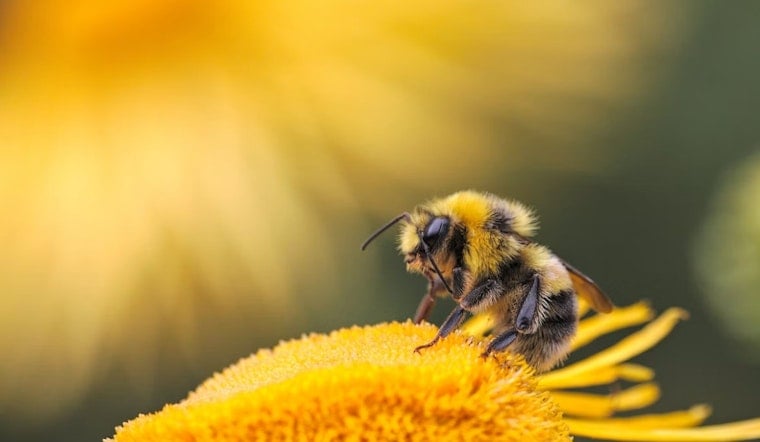
Dozens of dead honeybees on an Oakland front porch this week left neighbors rattled and wondering if the city is facing a zombee problem. The insects were clustered beneath a porch light, a scene residents described as eerie and inexplicable. Entomologists say it is the kind of pattern they watch for, but not, on its own, proof that pollinators are headed for an apocalypse.
As reported by The Mercury News, the reader who contacted the paper identified herself as Midori and asked whether the pile of bee bodies under the light meant parasitic flies were turning bees into "zombees." The paper's Animal Life column gathered responses from local beekeepers and researchers, who urged testing of specimens instead of panic. Those experts say clusters of dead foragers under lights are a known signal that deserves a closer look.
What Researchers Mean By 'Zombees'
Scientists use the term "zombee" for honey bees that fly at odd hours, circle lights and then die. That behavior has been linked to the parasitic phorid fly Apocephalus borealis. Laboratory and field research has shown that the fly can lay eggs inside bees, alter their behavior and eventually kill them. In some documented cases, fly larvae later emerged from dead bees, according to a study in PLOS ONE. That research helped spark community surveillance projects that map where parasitized bees show up.
Where 'Zombees' Have Turned Up
Confirmed cases of parasitized bees are not confined to the Bay Area. Researchers and citizen scientists have documented them in parts of California and elsewhere on the West Coast, and records also extend to regions such as British Columbia, South Dakota and Vermont. A 2021 analysis that pulled together published reports, museum specimens and citizen data evaluated the fly's known range and invasion risk, and highlighted that what people find often depends on where they are looking, according to Springer Nature. In other words, patches of dead bees under lights are a recognizable pattern in places where people are watching for it.
Other Threats That Complicate The Picture
Experts emphasize that parasitic flies are only one of several pressures on pollinators. Pesticides, parasitic Varroa mites and poor nutrition commonly interact, weakening colonies and making unusual die-offs more likely. Broad reviews and federal analyses of honey bee declines point to a mix of pathogens, pests, pesticides and habitat problems that together shorten bee lifespans and make it harder to assign a single cause. Because of that tangle of stressors, a clump of dead bees on a porch can reflect overlapping problems rather than one dramatic new plague.
How To Help Scientists Track It
Researchers who study parasitized bees ask that people who spot dead or abnormally behaving bees preserve specimens and report them to the citizen-science project ZomBee Watch, which provides instructions on collecting and submitting samples. San Francisco State University, which helped launch ZomBee Watch, recommends keeping bees in a sealed container and contacting local beekeepers or university labs for guidance instead of spraying insecticide around porch lights. Simple reports and a few saved specimens give scientists the best chance to determine whether parasitic flies, pesticides or other causes are involved.
For now, entomologists say the Oakland discovery fits a familiar pattern and should be reported, not sensationalized. Testing will show whether the insects were parasitized or killed by other stressors. Ongoing citizen reports and targeted sampling will help researchers track changes in parasite range and sort through the many threats facing pollinators. If you are a beekeeper or you repeatedly see clusters of dead bees in your neighborhood, local beekeeping groups and university labs can often advise on testing and next steps.





