

























































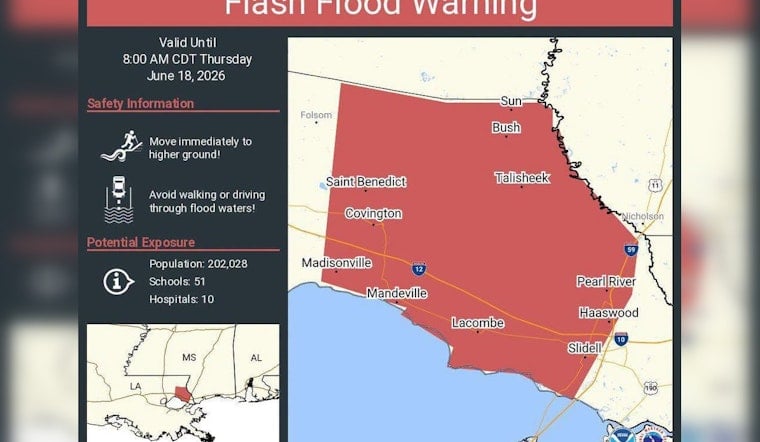
A predawn flash flood warning jolted St. Tammany Parish awake early Thursday, blanketing much of the North Shore and stretching into the morning commute. Slow-moving thunderstorms dropped heavy pockets of rain that can quickly swamp streets, underpasses and low-lying neighborhoods. Parish officials urged residents to move to higher ground and to avoid walking or driving through standing water.
According to the National Weather Service in New Orleans, radar showed thunderstorms producing heavy rain across the parish, with between 1 and 3 inches already reported when the warning was issued at 5:07 a.m. CDT. The agency said the warning is in effect until 8:00 a.m. CDT and repeated the standard life-saving advice to "turn around, don't drown" when encountering flooded roads. Residents living along creeks, streams and other low-lying areas were specifically warned to take immediate precautions.
Where the warning applies
In an early-morning alert on its official Facebook page, St. Tammany Parish singled out communities including Slidell, Mandeville, Covington, Lacombe and Pearl River and noted that Highway 11, Highway 59 and Highway 12 could be exposed to flooding. The parish urged people to move immediately to higher ground and to avoid walking or driving through flood waters for their safety. For the full advisory see the St. Tammany Parish Government Facebook post.
How to stay safe
Flooding on the North Shore can develop in minutes and has trapped vehicles in the past; local coverage showed Slidell firefighters recently rescuing occupants from a stalled car during high water, a reminder that drivers should not gamble with depth. As reported by Slidell firefighters recently rescuing occupants, first responders often become the last line of defense when streets flood. If you encounter flooded roadways, turn around and report dangerous conditions to local emergency services immediately.
Monitor updates from the National Weather Service and the parish's social pages for changes to the situation, and delay nonessential travel until the warning expires. If you are in a flood-prone area, move to higher ground and follow guidance from local emergency officials.





