

























































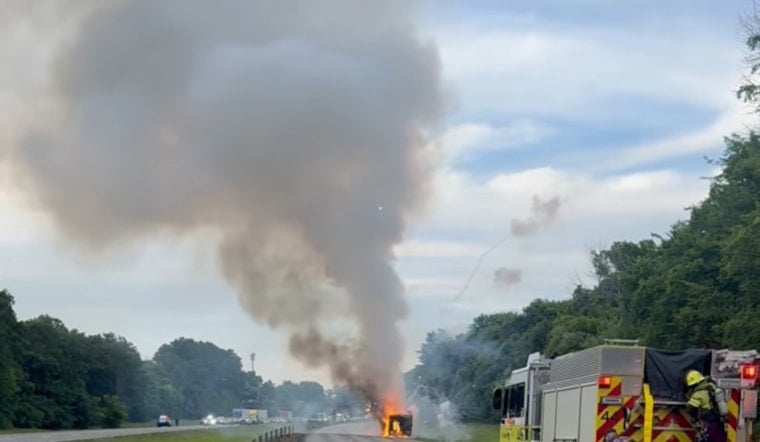
For a few surreal minutes Saturday evening, a stretch of Interstate 75 just east of Chattanooga looked less like a highway and more like a rogue Fourth of July finale, as a trailer loaded with fireworks erupted in flames and started launching rockets across the road.
A pickup truck towing a trailer caught fire, setting off its cargo and sending fireworks and debris shooting over travel lanes and nearby overpasses. Crews from the Tri‑Community Volunteer Fire Department, backed up by Chattanooga firefighters, shut down lanes so they could shuttle water and tackle the blaze. Despite the chaotic scene, no injuries were reported, though video from the scene showed pyrotechnics bursting in multiple directions.
After the smoke cleared, the Tennessee Highway Patrol's commercial‑vehicle unit, Motor Carrier Plus, conducted a post‑incident inspection and said the setup had almost none of the required hazmat safeguards. According to an agency announcement reported to WVLT, the rig had no hazardous‑materials placards, no current hazmat registration, no shipping papers, no emergency‑response information, and no USDOT number. Investigators also said the driver did not have the required hazardous‑materials endorsement.
The agency identified the driver as Dalton Beeler and cited him for lacking that hazmat endorsement, WVLT reported. "This incident looked like a fireworks show, but it could have been much worse," Col. Matt Perry, commander of the Tennessee Highway Patrol, said in the announcement reported by the station.
Local departments shared video of the trailer fully engulfed as fireworks were fired off from the burning load. The Tri‑Community Volunteer Fire Department said "the trailer was full of fireworks, all of which became involved in the fire," and that devices were "going off in different directions, endangering drivers," according to NBC News. Chattanooga city crews assisted on scene while neighboring volunteer departments helped shuttle water and manage hazards as lanes stayed closed.
Authorities briefly stopped traffic in both directions so firefighters and troopers could work the incident and keep drivers out of the line of flying debris. The wreckage and scattered fireworks were cleared overnight, and lanes eventually reopened, local stations reported. WSMV/KFVS noted that crews used the closed roadway to move water to firefighters and that no one was hurt.
What the rules require
Federal hazardous‑materials regulations require that shipments needing placards travel with accurate shipping papers, emergency‑response information and a monitored emergency contact number, as outlined in guidance from PHMSA. Carriers must also maintain any required registrations and identification. Drivers hauling placardable quantities generally must have a hazmat endorsement on their commercial driver's license, and interstate carriers or those moving certain hazardous loads must register with FMCSA and obtain a USDOT number, as explained in FMCSA's "Do I need a USDOT number?" guidance.
Potential penalties and next steps
The Tennessee Highway Patrol said it has opened an investigation and cited the driver for not having the required hazmat endorsement, according to WVLT. The agency did not say whether federal regulators will seek additional enforcement. Under federal rules, regulators can pursue civil penalties and compliance orders for missing shipping papers, placards, or registrations, and federal regulatory summaries and legal analyses outline past cases where paperwork or registration failures led to enforcement.
With Independence Day approaching, officials used the I‑75 incident as a cautionary tale. Transporting fireworks involves real risk, even when the cargo looks like pure celebration, and authorities urged companies, vendors, and drivers to follow federal and local requirements, including display permits and local bans. State guidance and national coverage note that Tennessee allows most consumer fireworks but that cities and counties can add their own restrictions, so organizers and drivers are being urged to double‑check local rules before hauling or staging displays, according to NBC News.





