

























































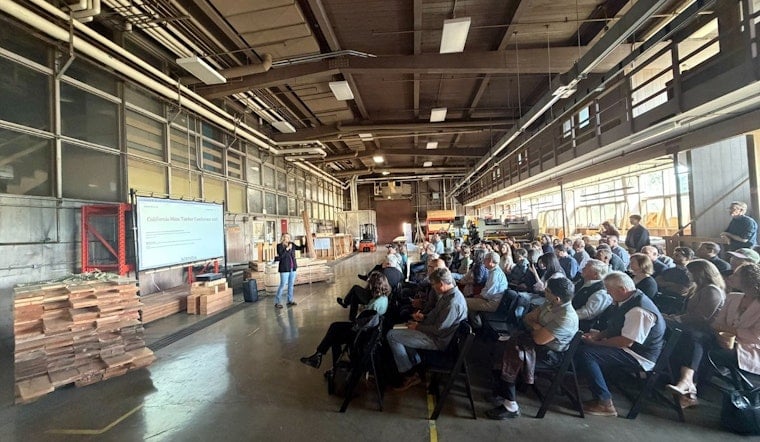
California is rolling out its first statewide Mass Timber Coalition, a new public-private push to solve two problems at once: overgrown, fire-prone forests and the building sector’s appetite for carbon-intensive materials. The idea is to turn small-diameter logs from thinning and restoration projects into engineered timber panels that can reduce construction emissions while supporting paychecks in rural communities. The launch lands as policymakers and builders hunt for ways to cut wildfire risk and move away from concrete and steel.
Who’s In The Room
The coalition pulls together a big tent of state and federal agencies, county and local governments, research institutions, industry reps, forest sector groups, nonprofits and community partners, according to Woodworking Network. On the communications side, the initial notice went out on X from the California Board of Forestry & Fire Protection, which helped blast the news across California’s forestry channels. Organizers say the goal is to line up policy, manufacturing and public procurement so there is a steady, predictable market for wood coming from restoration work.
BIG NEWS: California launches the first statewide Mass Timber Coalition. 🌲
— California Board of Forestry & Fire Protection (@CAForestry) June 12, 2026
For the first time, folks from all levels of government are joining with private industry, research institutions & others to chart a path for wood utilization in CA.
READ MORE: https://t.co/rqW7n4Dyd7 pic.twitter.com/YQQGrFubZM
What The Coalition Will Do
The Board of Forestry’s draft coalition materials spell out a to-do list that starts immediately. Priorities include folding procurement incentives into existing grant and funding programs, tying forest-restoration contracts to local mass timber sourcing under AB 2518, using grants to jump-start fabrication capacity and simplifying building codes and permitting to cut project uncertainty, according to the Board of Forestry and Fire Protection. The same draft calls for pilot projects, workforce training and financing tools such as revolving loans and pre-development funds so new mills and CLT plants can actually pencil out for lenders. Those recommendations build on Joint Institute work that has been in development since 2025.
Why It Matters
Supporters are looking north for proof of concept. The Oregon Mass Timber Coalition has already used a mix of federal and state money to stand up manufacturing sites, testing labs and workforce pipelines that connect forest thinning work to new housing, as the U.S. Economic Development Administration’s case study shows. Backers argue that if California can build its own in-state supply chain, it could chip away at wildfire fuels and cut embodied carbon in buildings by swapping in engineered wood panels for a share of the steel and concrete now in use. On top of that, they say, the model could support family-wage jobs in rural communities while giving restoration projects a real market for low-value logs.
Remaining Hurdles
State planning documents are also blunt about the obstacles. Most CLT and glulam installed in California projects today is imported, fiber supply is uneven because of wildfire damage and logging limits, and big upfront capital costs plus murky permitting make private investment a tough sell, according to the Board’s draft. To change that equation, the document calls for CEQA clarifications, tax incentives and targeted seed funding to bring in manufacturers and lenders. Industry voices add that the coalition will need early pilot projects and firm procurement commitments to convince investors this is more than a passing policy trend.
What Comes Next
Officials say more specifics and formal workgroups will surface in the coming months, as Joint Institute meetings and potential grant rounds start to pin down timelines and pilot sites. For now, the California Grants Portal lists Katie Harrell as a Board contact for Joint Institute and early funding questions. Stakeholders expect to see procurement language and pilot funding show up in state grant solicitations and agency guidance later this summer.





