

























































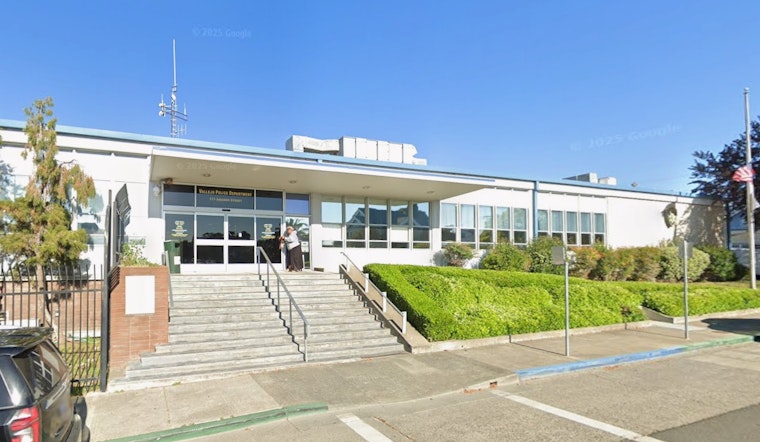
After years of secrecy and legal wrangling, Vallejo officials yesterday finally pulled back the curtain on a long-shelved internal investigation that puts six police officers on the wrong side of department policy and clears eight others in the city’s notorious badge-bending scandal.
The probe, led by retired Sonoma County Sheriff Robert Giordano, found that the ritual of bending the tips of metal badges amounted to misconduct under department rules. Investigators did not, however, establish a direct link between the bent badges and any fatal shootings. The practice, in which officers altered their badges, had been the subject of public outrage and rumor for years, according to SFGATE.
Giordano’s review leaned heavily on interviews and internal communications. He spoke with 43 current and former city officials and officers and tracked known badge-bending incidents from 2003 through 2019. The report concludes that the practice was never an official Vallejo police tradition, but says it appears to have been started by Officer Kent Tribble after he joined the department from the Concord Police Department, according to SFGATE.
The investigation names six officers as having violated department policy: Lee Horton, Terry Poyser, Ryan McMahon, Ken Tribble, Zach Jacobsen and Kyle Wylie. Eight others were cleared of misconduct: David McLaughlin, Matt Komoda, Jason Bahou, Jeremy Huff, Mark Galios, Jason Scott, Jarrett Tonn and Todd Tribble, as reported by NBC Bay Area.
What the report says
Giordano characterizes badge bending as a “discrete” show of solidarity for an officer involved in a shooting, rather than a department-wide rite. He notes that there was not enough evidence to prove the ritual was used to celebrate killings, a critical distinction in a city already under intense scrutiny over police violence. Even so, the report warns that altering a badge is an unauthorized use that can easily be misread by the public and further damages the department’s reputation, as outlined by SFGATE.
How the report became public
The investigation itself is not new. The report runs about 150 pages and was completed in 2021, then tucked away while the city argued over personnel privacy and how far California’s public-records laws actually go. The ACLU of Northern California sued to force its release, contending that the findings fell under SB 1421, a state transparency law that opens certain police records to the public. Courts ultimately sided with disclosure, clearing the way for the city to release the report this week.
Community reaction and department response
Community advocates wasted little time telling the city council that the report confirmed what they had been saying for years about Vallejo’s police culture. “The release of today’s report shows that these failures were real, were repeated and were harmful,” Cristal Gallegos of the Vallejo Housing Justice Coalition told councilmembers on Tuesday.
Police leadership, for its part, tried to signal that the era of quiet tolerance for such rituals is over. In a statement to NBC Bay Area, Police Chief Jason Ta said, “Members of the Vallejo Police Department have been reminded that such conduct will not be tolerated.”
What's next
Badge bending first burst into public view after the 2019 killing of Willie McCoy and was widely exposed by local reporting in 2020. The Giordano report notes several instances in which command staff knew about bent badges but did not act quickly, a history that continues to fuel calls for accountability.
With the report finally out, community groups are pressing for clearer discipline and concrete reforms, while city leaders weigh how to respond to findings that document years of knowledge at the top and a culture that allowed the practice to persist, as detailed by Open Vallejo.





