

























































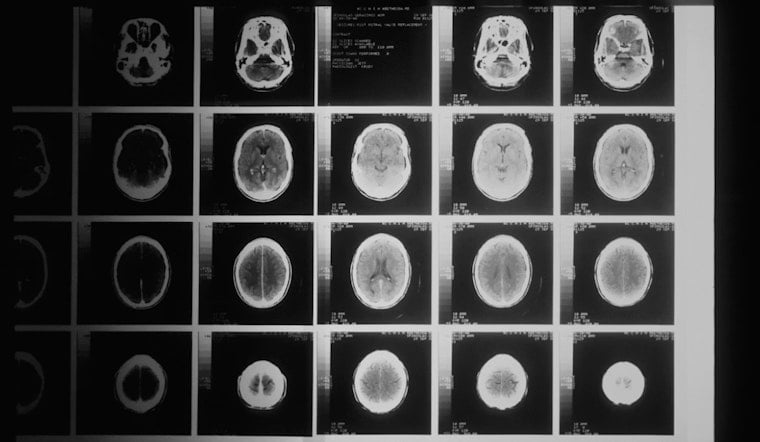
San Francisco scientists at UCSF say a new kind of "smart" brain implant may help people with Parkinson's disease stay steadier on their feet. In a paper published Monday, the team reports that a device that adjusts brain stimulation in real time as someone walks led to smoother steps and fewer falls in a small blinded trial. Instead of delivering a constant buzz of electricity, the system times its pulses to each phase of the gait cycle, targeting the swing and stance of each leg. The results are early and modest in scale, but they hint at a fresh way to tackle stubborn walking and balance problems that often ignore standard treatments.
How the Implant Learns a Patient's Stride
The fully implanted device records neural activity from motor areas of the brain while patients move, then uses data-driven algorithms to pick out personalized biomarkers tied to left and right leg swing, according to UCSF News. Those signals effectively teach the system what each patient's walking cycle looks like. Researchers then program the implant so that stimulation locks onto that pattern and can adjust its amplitude on a subsecond timescale as the person walks around in daily life.
Small Blinded Trial, Fewer Falls
To see whether the concept actually helps people, the team ran a randomized, blinded crossover feasibility trial in five participants who already had deep brain stimulation hardware in place. Investigators embedded each person's gait biomarkers into a bidirectional neurostimulator, then compared traditional continuous stimulation with the new gait-synchronized adaptive approach.
As reported in Nature Medicine, adaptive stimulation reduced step variability and improved gait symmetry while still maintaining overall motor control. Participants fell less often when the adaptive setting was active. The authors reported no serious adverse events, and people in the study tolerated the rapid stimulation changes during several days of at-home testing.
Devices, Data and Where the Trial Stands
The work took place under a UCSF protocol registered as NCT04675398 and used the investigational Medtronic Summit RC+S sensing and stimulation platform, according to ClinicalTrials.gov. The team had previously shared early versions of the findings as a preprint and says most analysis code and de-identified data will be made available to other researchers, according to the medRxiv preprint and the published methods.
What Comes Next
The authors emphasize that this was an early feasibility study with just a handful of participants, and the paper underscores that larger, multi-center randomized trials are still needed to show whether gait-synchronized adaptive deep brain stimulation can provide lasting benefits for a broader Parkinson's population. If that promise holds up in bigger studies, the same movement-responsive framework could eventually be adapted to other dynamic behaviors, from speech to mood and cognition, that current continuous stimulation has struggled to treat reliably.
For patients and families in the Bay Area, the work offers a cautious but concrete bit of optimism: a proof of concept that implanted devices can respond to real life outside the clinic, not just quiet exam rooms. Whether this kind of smart stimulation makes the leap from specialized research programs into everyday care will hinge on wider access, hardware refinements and longer-term follow-up.





