

























































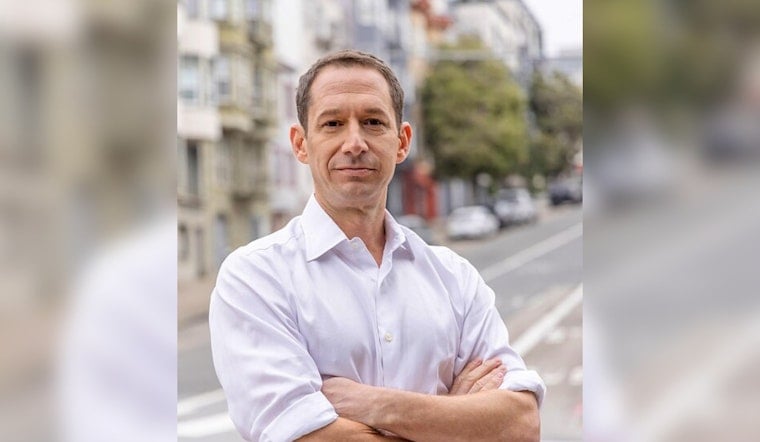
Mayor Daniel Lurie announced today that San Francisco is holding more than 500 city-funded service providers accountable for keeping the areas around their buildings clean and safe, rolling out a strengthened version of the city's Good Neighbor Policy. The policy requires shelters, drop-in centers, and other city-funded sites to conduct regular perimeter checks, pick up trash, and address disruptive behavior happening just outside their doors.
“Every San Franciscan deserves a safe and clean neighborhood, and every person struggling on our streets deserves a real path to treatment and stability,” Daniel Lurie wrote in announcing the policy. The mayor's office describes the standards as clear and consistent, a shift from a prior system in which good-neighbor rules were applied inconsistently across departments and were difficult to enforce. The updated policy also builds in training for service providers so operators know what is expected of them.
We are holding more than 500 city-funded service providers accountable for keeping their surrounding areas clean and safe. Every San Franciscan deserves a safe and clean neighborhood, and every person struggling on our streets deserves a real path to treatment and stability.… pic.twitter.com/FJbBbecAux
— Daniel Lurie 丹尼爾·羅偉 (@DanielLurie) August 19, 2026
One Standard Across Three City Departments
Rather than leaving neighbor relations to individual departments, the revised Citywide Good Neighbor Policy applies to programs funded through the Department of Homelessness and Supportive Housing, the Department of Public Health, and the Mayor's Office of Housing and Community Development, according to SF.gov. That covers emergency shelters, transitional housing, drop-in centers, access points, and permanent supportive housing sites — a wide swath of the roughly 600 non-profit organizations that hold city contracts. SF.gov's earlier guidance on standard HSH site contracts spells out what compliance looks like in practice: a 24-hour hotline for neighbor complaints, scheduled perimeter patrols, and active discouragement of public drug use and loitering immediately outside facilities.
The scale of the city's nonprofit contracting network is enormous. San Francisco distributes approximately $1.7 billion annually in municipal contract funding across roughly 600 non-profit organizations, and about half of those organizations hold active contracts with multiple city departments at once, per GrowSF. That overlap is part of why a single, standardized policy — rather than department-by-department rules — has been a priority for Lurie since before he took office; nonprofit contract reform and oversight were central pillars of his 2024 mayoral campaign.
Fiscal Pressure on the Nonprofits Being Asked to Comply
The tightened enforcement arrives as the city's finances are under strain. Lurie directed city departments earlier this year to implement $400 million in budget reductions, including $100 million in personnel cuts and up to 500 layoffs, according to KQED. Nonprofit service providers have expressed concern that shrinking city grant allocations will make it harder to absorb new compliance obligations like perimeter patrols and hotline staffing, even as those same organizations face reduced funding.
The policy's reach already extends into some of the city's newer street-level programs. San Francisco's Large Vehicle Refuge Permit program, launched last year under Lurie's vehicular homelessness strategy, requires RV residents to follow a version of the Good Neighbor Policy that includes keeping street areas clean and participating in case management in order to keep their six-month parking permits, El Tecolote has reported. Permit holders who violate cleanliness standards or reject housing offers risk having their permits revoked and their vehicles towed with police support.
Part of a Broader Push for Centralized Oversight
The Good Neighbor enforcement effort tracks with a larger structural push from Lurie's administration. In March, Lurie and Board of Supervisors President Rafael Mandelman introduced three charter reform measures aimed at the November 2026 ballot that would consolidate executive authority over city departments and oversight commissions, according to Mission Local. Each measure needs roughly 51,000 registered voter signatures to qualify.
City officials have pointed to specific facilities as models for what site-level Good Neighbor compliance can look like. When Lurie opened a 24/7 police-friendly behavioral health stabilization center at 822 Geary Street last year, the site came with its own dedicated Good Neighbor Policy meant to maintain sidewalk cleanliness and safety in Lower Nob Hill and the Tenderloin, per SF.gov. That facility was enabled by Lurie's Fentanyl State of Emergency Ordinance and was designed to provide rapid intake for people in behavioral health crises.
Hoodline previously reported on a Salvation Army-run recovery housing site that committed to its own Good Neighbor Policy amid neighborhood pushback, and on the mayor's broader Breaking the Cycle strategy for reforming the city's drug treatment and homelessness response. Federal money also underpins much of this network: San Francisco secured approximately $56.1 million in Continuum of Care grant funding from HUD for fiscal year 2024 to support homeless services and permanent supportive housing run by the city and its nonprofit partners, according to city documents cited by SF.gov.
Not Every City-Funded Site Survives
The push for accountability comes against a backdrop of past program closures over cost and performance concerns. The Department of Homelessness and Supportive Housing shut down the Bayview Vehicle Triage Center in March 2024 after three years and nearly $18 million in spending, citing high operational costs and weak participant outcomes, El Tecolote reported. That closure has fueled ongoing debate over whether high per-capita spending on temporary facilities produces enough permanent housing results to justify the cost.
San Francisco's most recent Point-in-Time count, conducted in 2024, recorded 8,323 unhoused individuals citywide, with nearly 4,000 unsheltered — a 16% decrease in unsheltered homelessness compared to 2019, according to SF.gov data. That population is served by the same network of shelters, drop-in centers, and supportive housing sites now facing sharper Good Neighbor requirements, even as the providers running them contend with tightening city budgets.




