

























































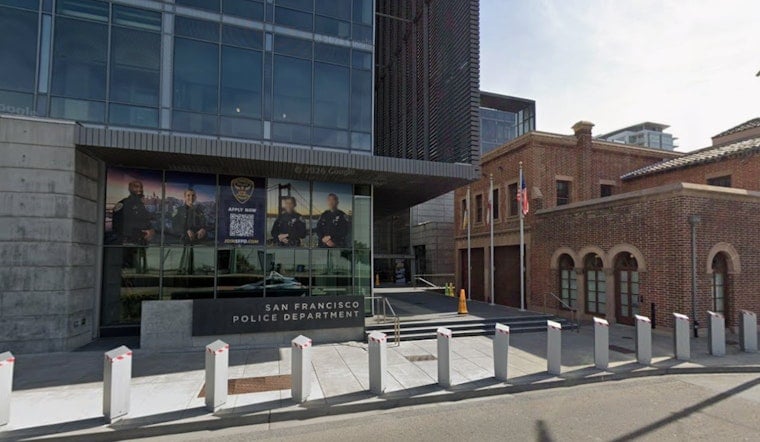
San Francisco police have arrested a 50-year-old man in connection with a fatal pedestrian crash that happened before dawn on Sixth Street in SoMa on July 14, more than a month before the arrest was made. The victim, later identified as 57-year-old San Francisco resident David Reinhart, died after being struck near the 200 block of Sixth Street around 4:07 a.m., and the case has reignited concerns about one of the city's most persistently dangerous intersections.
According to KRON4, the San Francisco Police Department's Traffic Collision Investigation Unit arrested Isaac Bowler on Monday in the 1900 block of Evans Avenue. Bowler was booked on charges of misdemeanor vehicular manslaughter, failing to exercise due care for a pedestrian, and failing to provide proof of insurance. Police said Bowler remained at the scene after the crash and cooperated with the investigation, and alcohol or drugs were not suspected to be factors in the collision.
Reinhart's identity was not released until weeks after the crash. The San Francisco County Medical Examiner's Office confirmed his name and age, according to SFGATE, which reported he died from his injuries at Zuckerberg San Francisco General Hospital. Emergency responders were initially dispatched based on a 911 call describing a bicyclist bleeding from the head, but police later clarified the victim was on foot, per Mission Local. Fire crews performed CPR at the scene before transporting the victim just after 4 a.m.
A Corridor With a Troubled Track Record
Walk San Francisco said the crash marked the city's 12th pedestrian death of 2026 and the second such death in SoMa. The advocacy group also noted that the crash site sits near Sixth and Howard streets, where a 78-year-old man was struck and killed nearly a year earlier, on August 10, 2025. Both Sixth Street and Howard Street fall within San Francisco's High Injury Network, the roughly 12 to 13 percent of city streets where the vast majority of severe and fatal crashes occur, as SFGATE's reporting on the network has detailed.
The location's history makes the timing especially jarring. City officials cut the ribbon on the completed 6th Street Pedestrian Safety Project less than a year before Reinhart's death, on September 26, 2025, according to a report from the city's official portal. That $6 million overhaul, funded in part by local sales tax revenue, added 15-foot widened sidewalks, corner bulb-outs, new alley traffic signals, and high-visibility crosswalks along the corridor.
Charges Point to Ordinary Negligence, Not Impairment
Bowler's arrest under Penal Code Section 192(c)(2) signals prosecutors are pursuing a misdemeanor case built on ordinary negligence rather than gross negligence or impairment. Under that statute, causing a death while driving with ordinary negligence during a traffic infraction or otherwise lawful act carries a maximum of one year in county jail, probation, and possible license suspension, according to the California Criminal Lawyer Group. He also faces an allegation under California Vehicle Code Section 21954(b), which establishes that drivers have a statutory duty to exercise due care for pedestrian safety on any roadway — regardless of whether a pedestrian is inside a marked crosswalk, per the Saeedian Law Group's legal analysis. California's Freedom to Walk Act further restricts police from citing pedestrians for jaywalking absent an immediate collision hazard.
Citywide Numbers Still Trending Down, But Pedestrians Remain Exposed
San Francisco recorded 25 total traffic deaths in 2025, including 17 pedestrian fatalities — a steep drop from 43 total traffic deaths the year before, according to reporting from The Crusader. By mid-July 2026, the city had already reached 12 pedestrian deaths, the pace Walk San Francisco flagged with Reinhart's death. Nationally, pedestrian deaths account for more than 52 percent of all traffic fatalities in San Francisco, giving it the highest such share among major U.S. cities tracked by federal safety regulators, per analysis from The San Francisco Standard. Dense urban layouts keep speeds relatively low, the outlet noted, but they also raise pedestrian exposure to vehicles on corridors like Sixth Street.
Hoodline previously flagged this exact corridor as one of the city's most dangerous years before the safety project broke ground, and later covered the community outreach process that shaped the eventual redesign. Whether the recent infrastructure upgrades will meaningfully change the corridor's trajectory remains an open question as the case against Bowler moves through the courts.




