

























































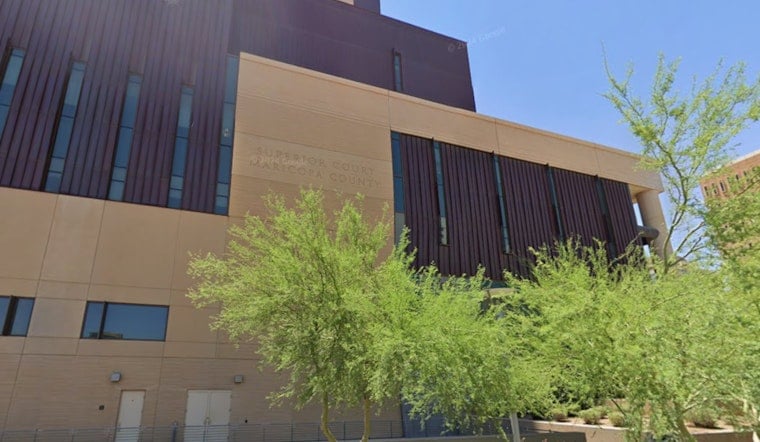
Maricopa County Superior Court has handed down a four-year prison sentence to Ismail Hamed, who pleaded guilty to making terroristic threats and advancing on a deputy with a knife. The case, which stems from a 2019 confrontation in Fountain Hills where Sgt. Brandon Wells shot Hamed after he moved toward deputies with a knife, returned to court this week. Wells told the judge the ordeal has reshaped his life and family and used the hearing to sharply criticize how prosecutors handled the case.
As reported by ABC15, the Maricopa County Attorney’s Office earlier approved a plea deal that allowed Hamed’s crimes to be designated as non-dangerous, which significantly reduced the expected prison term. ABC15 also reported that Hamed apologized in court while denying any ties to terrorist organizations and told the judge he had been attempting "suicide-by-cop." Prosecutors said they struggled with how to handle the case and pointed to Hamed’s extensive mental-health history as a key factor in the negotiations. Online inmate records show he will be eligible for release in August 2029.
What Happened in 2019
On Jan. 7, 2019, Hamed repeatedly called 911 and asked that a deputy meet him at the Maricopa County Sheriff’s Office Fountain Hills substation. When deputies arrived, body-camera video released at the time shows Hamed throwing rocks and pulling out a knife. FOX10 Phoenix reported that Wells ordered Hamed to drop the weapon before firing his gun.
Court records and news coverage from that period state that investigators later found extremist material linked to Hamed and said he had declared allegiance to ISIS, which drew national attention and prompted an FBI review. Phoenix New Times previously detailed the social-media content authorities cited as part of that investigation.
Officer Speaks Out
At the sentencing hearing, Wells did not hold back. He told the judge there had been "an extreme lack of communication" from both the Sheriff’s Office and the county attorney’s office and argued that the plea deal effectively meant negotiating with a terrorist, ABC15 reported. "The United States does not negotiate with terrorists and the county attorney did just that," he said in court, adding that the case has had a lasting effect on his family.
Maricopa County Attorney Rachel Mitchell responded during her monthly media briefing, saying she understood why Wells was upset and that her office factored in Hamed’s mental-health history when agreeing to the plea, ABC15 added.
Legal Notes
Under Arizona sentencing practices, taking away the "dangerous" designation from a conviction typically lowers a defendant’s exposure to prison time and can give prosecutors more room to weigh punishment against treatment and rehabilitation. Prosecutors in Hamed’s case told the court they wanted him to have a chance to succeed and even agreed to let him remain out of custody between the plea and sentencing so he could finish college, saying that decision reflected those competing goals.
The clash between Wells and the county attorney highlights a familiar fault line in criminal justice: frontline officers pushing for tougher penalties and prosecutors balancing public-safety risks with mental-health concerns. The dispute is likely to fuel ongoing debates in Maricopa County about transparency in plea bargaining and how consistently prosecutors communicate with victims and law enforcement.
For now, Hamed is headed to state prison on a shorter sentence than some in law enforcement had sought, and the case leaves open broader questions about how prosecutors should approach defendants accused of radicalization who also present serious mental-health issues.





