

























































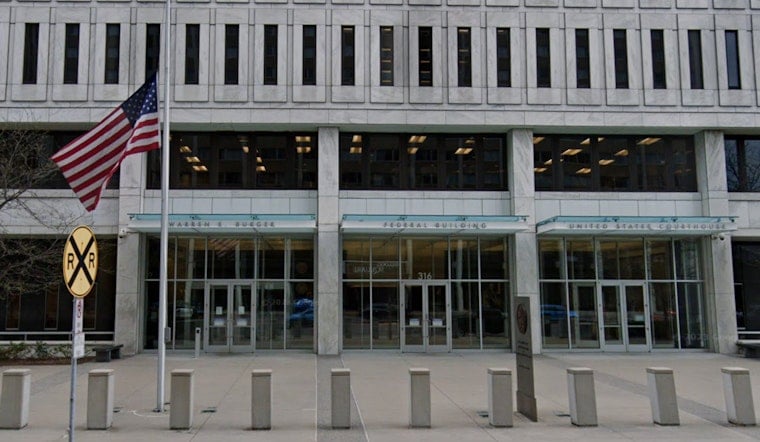
A brazen crypto heist that started in a quiet Washington County home is now pointed squarely toward federal sentencing, after two Texas brothers admitted in court to kidnapping and robbing a Minnesota family of more than $8 million in digital currency.
Isiah Angelo Garcia, 25, and his brother, 24-year-old Raymond Christian Garcia, pleaded guilty Thursday in U.S. District Court in Minneapolis for their roles in a violent September 2025 home invasion in the Grant area that left a family zip-tied and their cryptocurrency drained. Both men agreed to pay more than $8 million in restitution, and sentencing hearings will be set at a later date. Federal authorities say the case stretches from a suburban house in Washington County to a remote northern Minnesota cabin and all the way back to the brothers' hometown in Texas.
According to the U.S. Attorney's Office, District of Minnesota, each brother entered a guilty plea to one count of Interference with Commerce by Robbery. Prosecutors say the men admitted using firearms to threaten the victims and acknowledged responsibility for the multimillion-dollar loss. Each defendant faces a statutory maximum sentence of 20 years in federal prison, along with the agreed restitution.
How the Crypto Home Invasion Played Out
Prosecutors say the Garcias traveled from Texas to Minnesota and, on Sept. 19, 2025, forced their way into a home in Grant. Armed with what appeared to be an AR-15-style rifle and a shotgun, they allegedly zip-tied a father, his wife, and their adult son, then demanded access to the family's cryptocurrency accounts.
According to charging documents, Isiah Garcia then drove the father to a family cabin in Jacobson, Minnesota, to retrieve a hard-drive-style crypto wallet, while Raymond Garcia stayed behind at the Grant home to guard the remaining family members. The transfers that followed pulled more than $8 million from the victims' holdings, as detailed by the Pioneer Press.
Investigators Followed a Paper Trail Back to Texas
The takedown of the brothers was far less cinematic than the crime itself. The FBI and the Washington County Sheriff's Office followed a series of small but telling clues, including a Wendy's receipt and surveillance footage from a Motel 6, which pointed them to a rental car used in the crime. That vehicle, investigators say, led straight to the Garcias' home turf in Waller, Texas.
Both men were arrested in late September 2025 after state and federal agents coordinated across jurisdictions to track the suspects. The cross-country investigation leaned heavily on receipts, video evidence, and rental records that tied the Garcias to the Minnesota scenes, according to MPR News.
Old-School Violence Meets New-School Money
Law enforcement officials and crypto analysts say this case is part of a troubling pattern in which traditional stickups collide with digital finance. Criminals are increasingly targeting individual holders of cryptocurrency, relying on threats and physical force to get passwords and private keys, rather than trying to hack exchanges or financial platforms.
Blockchain researchers in 2025 warned of a rise in so-called “wrench attacks,” a term for crimes where victims are coerced in person to unlock their crypto wallets. Personal-wallet compromises now make up a growing share of stolen digital assets, complicating any attempt to claw back funds and highlighting the limits of blockchain tracing alone, according to Chainalysis.
U.S. Attorney Daniel N. Rosen and FBI Minneapolis officials have publicly praised the multi-agency investigation. Washington County Sheriff Dan Starry called the case “an important step toward accountability and justice for the community,” according to the U.S. Attorney's Office, District of Minnesota. Sentencing dates have not yet been set, and federal prosecutors say they intend to seek penalties that reflect the violence and scale of the crime while working to return as much money as possible to the family.





