

























































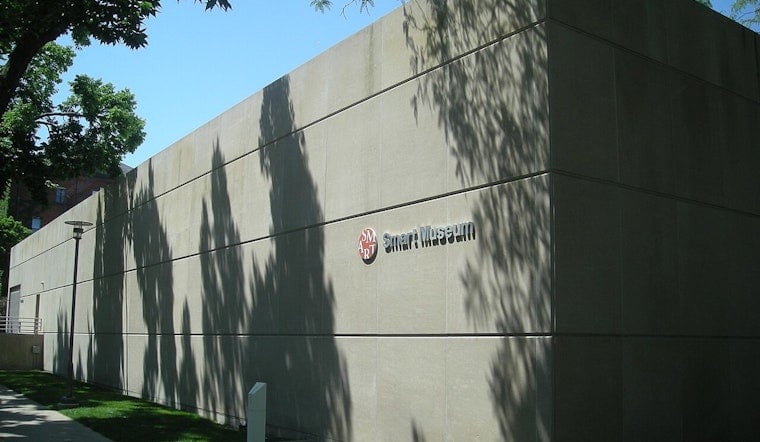
Tokyo-based digital art collective teamLab is taking over the University of Chicago's Smart Museum this fall, turning its galleries into fully immersive, reactive light worlds that track your every move and mood shift in the sky.
The exhibition, titled teamLab: Everything Exists in Infinite Continuity, runs from Sept. 22, 2026 through Feb. 21, 2027 at the Smart Museum of Art and will feature the North American premiere of Massless Suns and Dark Suns, according to the museum’s announcement. In a statement to Smart Museum of Art, teamLab founder Toshiyuki Inoko said, “Everything exists in a long borderless continuity.” The museum describes the show as a survey of more than two decades of the collective’s work, spread across the Elisabeth and William M. Landes and Richard and Mary L. Gray galleries.
What You'll See
Inside, Massless Suns and Dark Suns will fill darkened rooms with floating light spheres that glow more intensely when people approach while also generating shadowy “dark” orbs that cameras cannot capture. Other works, including Dissipative Figures, Order in Chaos and extended continuous-life pieces, depict people, flocks and environmental forces by the traces they leave behind instead of showing them directly. Some installations will shift in response to Chicago’s weather in real time, according to teamLab.
Smart Museum Context
The Smart acquired teamLab’s Ever Blossoming Life – Gold for its collection, and a copy has been on public display in the William Eckhardt Research Center since 2023, according to University of Chicago News. That acquisition was framed as a partnership between the museum and campus science units, with the goal of using time-based digital art for research and teaching. The existing presence of a teamLab work on campus helps explain why the Smart ended up hosting this broader survey of the collective’s practice.
Programming and Practical Info
The Smart has planned fall programming around the show, including a talk with Christiane Paul of the Whitney and a public conversation with teamLab, and it will publish an exhibition catalogue edited by Vanja V. Malloy and Allison Martino. Admission to the Smart’s exhibitions remains free, and the museum has said it hopes the show’s public programs will broaden access for students and neighbors. For full hours, accessibility details and the latest visitor policies, check the exhibition page at Smart Museum of Art.
Opening-day logistics, including whether timed entry will be required, have not yet been posted, and the museum recommends checking for updates as the Sept. 22 opening approaches. For an early look at images and a brief roundup, see the June 13, 2026 coverage at My Modern Met.





.jpg)