

























































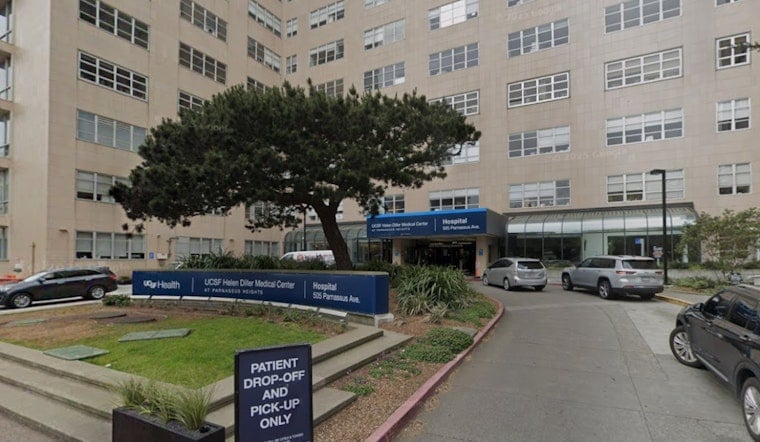
Thousands of people are walking out of UCSF Medical Center’s Parnassus emergency department before a doctor ever sees them, and frontline staff say the reasons are no mystery: long waits, thin staffing and a system that feels maxed out. Clinicians describe hours-long delays for basic medications, patients treated in curtained-off hallways and waiting rooms so packed that some people decide to leave against medical advice. The gap between what workers call an unsafe day-to-day reality and the health system’s ambitious expansion plans has turned up the heat on hospital leadership.
Numbers show the scale of the problem
State records show the Parnassus ER posted the highest left without being seen rate in San Francisco in 2025 at 5.6%, with about 2,243 patients leaving before they were evaluated by a licensed physician. That is up from 1,872 such walkouts in 2024, even though the department handles roughly 40,000 visits a year. Federal data tell a similar story on delays: The Centers for Medicare & Medicaid Services lists the median time from arrival to departure at Parnassus at about 4 hours and 18 minutes, well above the national median. Reporting also notes that UCSF Health’s finances have swung into a sizable surplus even as staffing and boarding problems in the ER persist, according to The San Francisco Standard.
Patients and clinicians say care is failing
Some patients say the waits feel risky enough that staying put does not seem like the safer option. One liver transplant patient told reporters she “was too scared to stay” after spending hours in the waiting room and only came back later when her condition deteriorated. Residents and nurses describe medication delays stretching many hours and deeply sensitive end-of-life conversations playing out in public hallways. One trainee called the situation “morally distressing.” Those firsthand accounts emerged in staff interviews detailed by The San Francisco Standard.
Staffing model and union complaints
Workers point to a demand staffing model, which pegs nurse staffing levels to historical patient averages instead of the real-time crush of people in waiting rooms and hallways. Staff and union documents reviewed by local reporters show that as many as 14 emergency department beds that were once staffed around the clock were at times left without nurses. Union organizers also cite roughly 200 unfilled nursing positions across the system. UCSF told reporters the Parnassus emergency department is “appropriately staffed” and said a plan to align staffing with patient demand would be put in place, as reported by Mission Local.
Expansion won't fix today's shortages
At the same time, UCSF is pouring money into a new Helen Diller Hospital on the Parnassus campus, part of a $4.3 billion expansion that officials say will boost emergency capacity by more than 70%. That relief, however, is years away. Clinicians and unions argue that long-range construction plans do not address the immediate reality of boarded patients occupying ER beds and the long waits that follow for everyone else. The new hospital and UCSF’s recent system acquisitions have sharpened the debate over whether big expansion plans should be paired with faster fixes to daily operations, according to the San Francisco Chronicle.
What regulators require
California regulations establish minimum licensed nurse-to-patient ratios for hospital units. In emergency departments, the rule is one licensed nurse for no more than four patients, and it also requires that at least two licensed nurses be physically present any time a patient is in the ER. Those standards mean staffing gaps are not just a safety concern but can also raise regulatory questions, according to the California Code of Regulations (Title 22, §70217).
What UCSF says and what's next
UCSF Health says it reviews all patient safety concerns and is rolling out steps to free up beds and better match staffing to demand. Clinicians and union leaders counter that they have yet to see meaningful change in daily conditions and plan to keep pushing for faster hiring and the ability to call in extra staff when the ER is overwhelmed. Residents have held rallies and circulated petitions demanding more nurses and stronger escalation protocols. Community advocates, meanwhile, argue that city and state regulators should keep a close eye on the department until wait times and walkout rates come down, as reported by Mission Local.




