

























































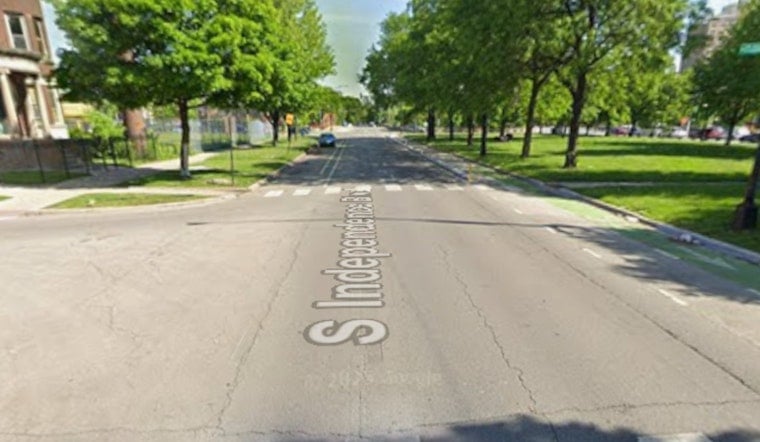
A 20-year-old man was found early Saturday in West Garfield Park with a gunshot wound to the head, critically injured on the 700 block of South Independence Boulevard.
Police said the man was discovered near a gray 2023 Acura that appeared to have slammed into a tree. The car had bullet damage and no license plates. Officers recovered shell casings at Lexington and Independence, and paramedics rushed the victim to Mount Sinai Hospital in critical condition.
According to CWB Chicago, there were no 911 calls about shots fired before the man was found. The outlet notes this case fits into a pattern it has been tracking in its "Brandon’s Bodies" series, which documents shooting victims discovered on blocks that previously had gunshot-detection sensors. That framing has pushed the case into the middle of a larger fight over whether the city’s choice to pull the technology has changed how quickly help arrives.
ShotSpotter Decommissioned In 2024
Mayor Brandon Johnson announced that Chicago would not renew its contract with ShotSpotter’s parent company, SoundThinking, and the city decommissioned the system in September 2024, according to the AP. Johnson’s administration said it would issue a request for information and follow a measured procurement process to identify alternative technologies instead of simply turning the old network back on.
Delays And Deadly Math
CWB Chicago has tallied roughly 85 shootings in areas that used to be covered by the sensors where victims appear to have waited a long time for emergency responders. It reports that about 58% of those delayed-response cases have been fatal.
In contrast, data compiled by HeyJackass and cited in CWB Chicago’s reporting show that about 21% of people shot citywide have died so far this year. The gap between those numbers is one reason the policy debate around gunshot detection has turned into a running fight over life-and-death odds.
Where The City Stands On Replacements
The city opened an RFI process to search for new “first responder” tools to flag shootings and other emergencies. SoundThinking, the company behind ShotSpotter, was among the firms that answered, according to local coverage.
Block Club Chicago reported that the administration set accuracy benchmarks and invited companies to compete for the work. As of the latest reporting, that competition had not yet produced a winning vendor.
Officials And The Council Remain Split
City leaders have stayed firmly divided over the decision. Many aldermen, violence-prevention advocates and some police officials pushed to keep gunshot detection in place, arguing it can help find victims who cannot call for help themselves. The mayor and other critics point to academic and watchdog research that questions how accurate the system really is and raises concerns about civil liberties for residents in heavily monitored neighborhoods.
GovTech has documented the public hearings, City Council debates and ongoing back-and-forth that followed the decommissioning.
What The Research Shows
Academic and watchdog reviews gave Johnson political cover to walk away from the contract. A Northwestern University MacArthur Justice Center analysis and a separate investigation by the city’s inspector general found large numbers of “dead-end” deployments where alerts did not turn up evidence of a gun-related crime.
The MacArthur Justice Center has argued that those deployments, which numbered in the tens of thousands during its study period, fueled worries about false alerts and concentrated police activity in neighborhoods sitting under the sensor grid.
What To Watch Next
The West Garfield Park shooting has now been folded into that larger argument over what comes after ShotSpotter. Residents and advocates say it highlights the human stakes when gunfire goes undetected until someone stumbles on a body, while the mayor’s office insists that any replacement must clear strict performance and civil-rights standards.
For now, the RFI remains the main path for choosing new technology, and neighborhoods like West Garfield Park are watching the clock as officials weigh accuracy, cost and equity concerns. Coverage of the RFI and vendor pitches has been closely tracked by local outlets including Block Club Chicago.





