

























































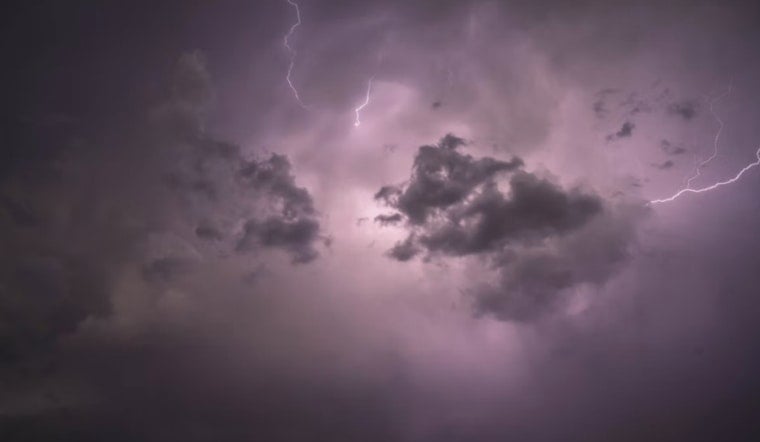
A quick-hitting severe thunderstorm warning had parts of Johnston and Wake counties on edge Saturday evening as forecasters flagged a line of storms capable of packing 60 mph wind gusts. The National Weather Service in Raleigh urged residents in Clayton, Smithfield and surrounding communities to hunker down indoors and stay off the roads while the rough weather pushed across the Triangle.
Storm Details From the NWS
At 5:53 p.m. EDT, the National Weather Service in Raleigh issued a warning in effect until 6:30 p.m. EDT, noting that a storm near Clayton, about 13 miles northwest of Smithfield, was tracking east at roughly 25 mph. Radar indicated wind gusts up to 60 mph. The alert called out Smithfield, Clayton, Wendell, Kenly, Emit, Coats Crossroads and Flowers, and highlighted Interstate 95 near mile marker 107, I‑40 between mile markers 308 and 318, and NC‑264 near mile marker 21, according to the National Weather Service in Raleigh.
Officials Urged Sheltering as Winds Threatened
“Seek shelter in a sturdy structure until the storm has passed,” forecasters warned, stressing that straight-line winds can topple trees and power lines just as surely as a weaker tornado. An updated account of the evening’s warnings said the severe portion of the storm later weakened and the formal warning was allowed to expire, though gusty winds and lightning still posed hazards, per the Charlotte Observer.
Why Lightning Matters
Lightning remains a major threat with summer storms. The National Weather Service estimates about 25 million cloud-to-ground strikes hit the U.S. each year, with roughly 20 lightning-related deaths annually. That is why forecasters push the old rule of thumb: once you hear thunder, head inside and wait at least 30 minutes after the last rumble before going back outdoors. For more safety guidance and educational resources, see the National Weather Service.
Stay Informed
During active weather, officials recommend keeping an eye on local alerts, NOAA Weather Radio or the NWS Raleigh feed, and avoiding driving through heavy rain or areas with downed trees. If you come across downed power lines or storm damage, call local emergency services so trained crews can handle it safely.





