

























































An Arizona State University parking attendant is taking Starship Technologies to court after a food-delivery robot allegedly knocked her down and hit her multiple times inside a Tempe parking garage in September 2023. The lawsuit, filed in Maricopa County Superior Court, seeks damages for medical bills, lost wages, and pain and suffering, and is currently set for a jury trial in February.
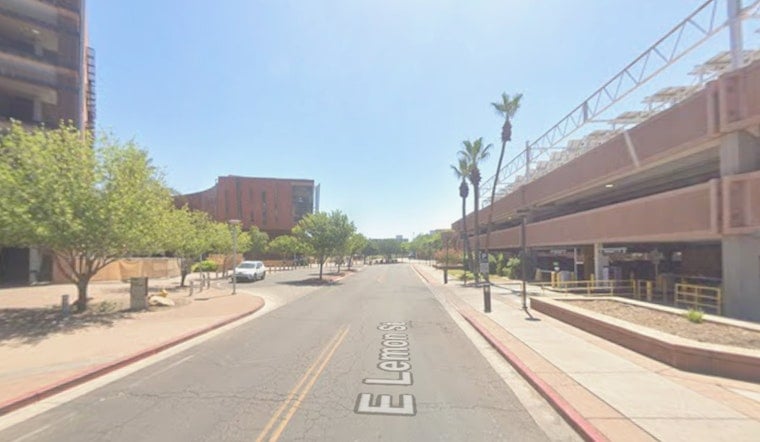
According to the ASU police report, the run-in happened on Sept. 22, 2023, at Parking Structure 1 on Lemon Street. Investigators identified the victim as 73-year-old parking and transit field service specialist Trudy Perez and described a white Starship food-delivery robot reversing into her and knocking her to the ground. First responders noted an approximately 4-inch laceration near her left elbow, complaints of back pain, and difficulty walking, and they documented that CCTV footage had been preserved on evidence.com.
The lawsuit accuses Starship Technologies of negligence and product liability, alleging the robot was still in testing, defective, and under the watch of a Starship employee who failed to properly control it, according to KJZZ. The complaint seeks medical expenses, pain and suffering, and lost wages. In court filings reviewed by KJZZ, Starship argues that Perez’s injuries stemmed from her own negligence, preexisting conditions, and a third party. The company has declined to comment on the ongoing litigation, and attorneys for the plaintiff did not respond to interview requests.
Public records show Starship provided police with video from the robot and, according to those records, requested Perez’s contact information to share insurance details and offer "promo codes," a detail first spotlighted by 404 Media. The description of the preserved footage says the robot stopped, then reversed and struck Perez, and later reversed again toward her while she was still on the pavement.
Arizona law and insurance
Under Arizona law, so-called personal delivery devices operate with the rights and duties of pedestrians, and operators must carry at least $100,000 in general liability insurance. Lawmakers wrote those rules into the transportation code to specifically cover sidewalk robots. As outlined in statute, operation is governed under the personal delivery device chapter instead of the standard rules for motor vehicles on roadways, a framework that helps define both how liability is handled and how violations are enforced. (A.R.S. § 28-913.)
Robots on campus and safety questions
Starship’s small white robots have been rolling around ASU’s Tempe campus since a 2020 pilot with Aramark that introduced a fleet of sidewalk delivery units for on-campus food orders, according to ASU News. Similar incidents involving delivery robots have turned up in public records and media reports from other campuses and cities, fueling questions about how well remote monitoring works, how reliable the sensors really are, and how companies document and respond when collisions occur.
The CCTV summary in the ASU police report states that the robot "went into reverse and ran into her, knocking her on the ground" and that it then reversed toward her again before moving away. Investigators noted that multiple camera angles captured the robot’s stops, starts, and direction changes, and that the footage was preserved as evidence.
What the lawsuit will test
The case sets up a real-world stress test for how the law treats companies that deploy fleets of semi-autonomous delivery devices. The central question is whether Starship met a reasonable standard of care in designing, monitoring, and operating the robot that struck Perez. As reported by KJZZ, Starship’s filings underscore that the plaintiff must prove the company breached its duty and argue that other factors may have caused her injuries.
How a jury divides responsibility among a human monitor, the robot’s software, and the company operating the fleet could influence how universities and cities write contracts and rules for delivery bots in the future. Court calendars currently show the case headed toward a February jury trial, where that preserved video and the police report are expected to be key evidence.





