

























































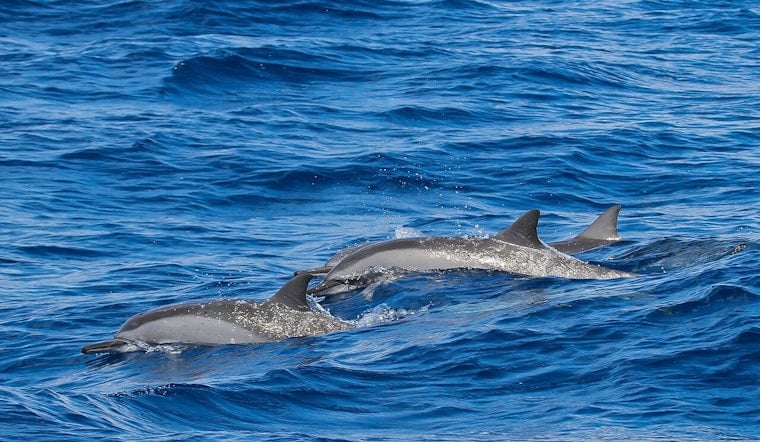
Spinner dolphins off Hawaiʻi Island are not having nearly as many calves as expected, and local researchers say the drop could spell trouble for the population. A University of Hawaiʻi–led drone study found that young dolphins make up only about 9% of the animals surveyed, raising concerns that the population may not be replacing itself without stronger protections.
How researchers measured the population
To get those numbers, scientists used drone photogrammetry during surveys in 2021 and 2022, measuring the body length of free‑swimming spinner dolphins and building the first age‑length growth curve for this Hawaiʻi Island group. They paired those aerial measurements with age‑length data from stranded dolphins, then sorted animals into calves (under 2 years old), juveniles (2 to 9 years) and adults (9 and older). The full methods and results are laid out in a paper in Endangered Species Research.
Low calf share raises alarm
The analysis showed calves made up roughly 9% of the Hawaiian Island stock, compared with about 17% in a healthy, stable spinner dolphin population. That shortfall, and the study’s warning that the population may not be replacing itself, are highlighted in a news release from University of Hawaiʻi at Mānoa.
Human disturbance is a likely factor
The authors point to chronic daytime disturbance as a likely culprit behind lower reproductive success and calf survival. Repeated boat approaches, swimmers and commercial dolphin‑swim tours regularly enter the dolphins’ preferred resting bays. Prior field work on the Kona coast found spinner dolphins are exposed to human activity during more than 80% of daylight hours, with only about 10 minutes between disturbance events, according to Royal Society Open Science. An economic analysis estimated that dolphin‑focused tourism brought in roughly $102 million in 2013, as reported in Frontiers in Marine Science.
Policy and protections on the table
In 2021, NOAA finalized a rule that prohibits swimming with Hawaiian spinner dolphins or approaching them within 50 yards. The regulation, however, does not on its own require daytime closures of key resting bays. The new paper, along with recent scientific advisory reviews, notes that advisory groups have questioned whether a 50‑yard buffer is adequate and have argued for mandatory time‑area closures at critical bays to cut down on chronic disturbance. Those management concerns are detailed by NOAA Fisheries and in the PSRG response, and the study itself formally recommends time‑area closures in Endangered Species Research.
What comes next for monitoring
The authors say long‑term monitoring and stable funding will be critical to keep track of age structure, reproductive trends and whether any new protections actually reduce disturbance. The Marine Mammal Research Program at the Hawaiʻi Institute of Marine Biology has shared the publication and outlined plans to refine drone techniques and continue tracking the population, according to the Marine Mammal Research Program.
Balancing tourism, culture and conservation
Researchers stress that any new rules have to walk a tightrope between a lucrative tourism industry, cultural stewardship of marine life and the long‑term health of the dolphins and the services they provide to the ecosystem. “We hope this work provides the science‑based evidence needed to develop effective protections,” Randall Wells said in the news release from University of Hawaiʻi at Mānoa.





