

























































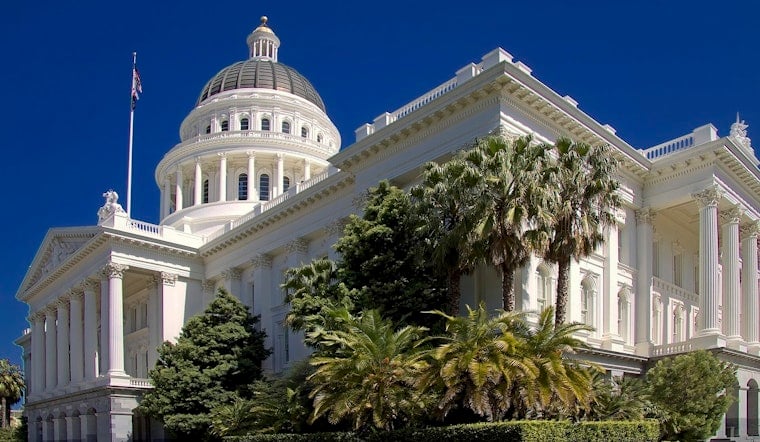
Sacramento lawmakers are working to lock California’s abortion and gender-affirming care shield laws into place so they do not depend on the politics of whoever happens to be governor. AB 2164 would narrow when the governor can honor out-of-state extradition requests tied to care that is legal in California, and it would expand protections for people who help patients travel for that treatment. Supporters say the bill responds to recent high-profile extradition fights and a wave of new criminal laws in other states that target medication abortion.
Assembly Bill 2164, authored by Assemblymember Rebecca Bauer-Kahan, would rewrite the state’s extradition rules and block recognition of most out-of-state demands tied to “legally protected health care activity” unless the requesting state can allege the accused was physically present during the alleged offense, according to Legislative Information. The measure also clarifies protections for anyone who assists a person in traveling to obtain lawful care. Backers argue that putting those provisions into statute makes them harder to undo than relying on executive orders alone.
What AB 2164 would change
Beyond extradition rules, the bill would extend statutory safeguards for clinicians, volunteers and others who help patients travel to receive legal reproductive or gender-affirming services and would limit state cooperation with out-of-state investigations tied to such care, the attorney general’s office says in a press release. Sponsorship from Attorney General Rob Bonta signals the department’s interest in codifying protections that now exist in part through executive action. Supporters say the goal is to take a single person’s discretion out of crucial decisions about whether California will cooperate with more restrictive states.
Supporters: insurance against political swings
Health-care providers and advocates told lawmakers in committee hearings that leaning on an executive order or one governor’s judgment leaves them exposed if state politics swing in a different direction. "Protecting providers from prosecution should not rely on shifting political winds or a single person’s decision," said Alyssa Sherer of telehealth provider Hey Jane, and emergency physician Kamara Graham warned that fear of criminal exposure is pushing clinicians away from practice, as reported by Times of San Diego.
High-stakes tests are already underway
The stakes are not theoretical. When Louisiana sought to extradite a Bay Area physician accused of mailing abortion pills, Gov. Gavin Newsom refused the request and cited California protections, a move widely reported by the press. That case and others have put governors’ choices at the center of the fight. Republican gubernatorial candidate Steve Hilton has said he would honor such extradition requests if elected, per KQED.
Shield laws have held up in court, so far
States that adopted shield protections have already run into legal clashes over how far their protections go. Texas obtained a default judgment against a New York doctor in early 2025, but a New York court later refused to domesticate that judgment, finding that the care at issue fell within the state’s shield law, an outcome reported by the Associated Press. Those rulings are now part of a growing patchwork that will shape how far states can reach across their borders to enforce abortion bans.
Federal review and a telehealth fallback
The state-level fight is playing out alongside federal scrutiny. Health and Human Services Secretary Robert F. Kennedy Jr. directed a safety review of mifepristone at the FDA, a process that could alter access nationwide if it results in new restrictions, according to reporting by The Washington Post. Observers note that if mifepristone access is curtailed, many telehealth providers say they would pivot to misoprostol-only regimens, and data show that telehealth provision to patients in states with total bans has grown, findings documented by the Guttmacher Institute and summarized in press coverage.
New criminal laws in red states raise the stakes
At the same time, several conservative-led states have tightened criminal penalties for distributing abortion medication. Mississippi’s recent law adds misoprostol and related drugs to a criminal category, raising questions about routine medical uses of those medications, reporting shows. Oklahoma and South Dakota also passed measures this year that criminalize distribution or advertising of abortion pills, with advocates warning the statutes could chill legitimate medical care and outreach, according to coverage from Mississippi Today, KUAF and the South Dakota Searchlight.
Legal note
AB 2164 attempts to thread a narrow legal needle. It restricts recognition of extradition warrants tied to activity that is legal in California while preserving exceptions "as required by federal law," language drawn from the bill text. How those statutory changes will interact with interstate extradition practice and federal authority is likely to be tested in hearings and, eventually, in courts, a complexity underscored by legal guides on shield statutes and state practice at UCLA Law.
What’s next
AB 2164 has advanced through committee hearings and remains under active consideration as lawmakers debate amendments and timing. The legislation has been discussed at recent Sacramento hearings, including committee events this spring. Lawmakers say they want a permanent statute in place ahead of the November election season so protections do not hinge on any single executive decision, and the bill’s progress is being closely watched by providers and clinics across the state. The legislative hearing record provides more detail from the California Legislature.





