

























































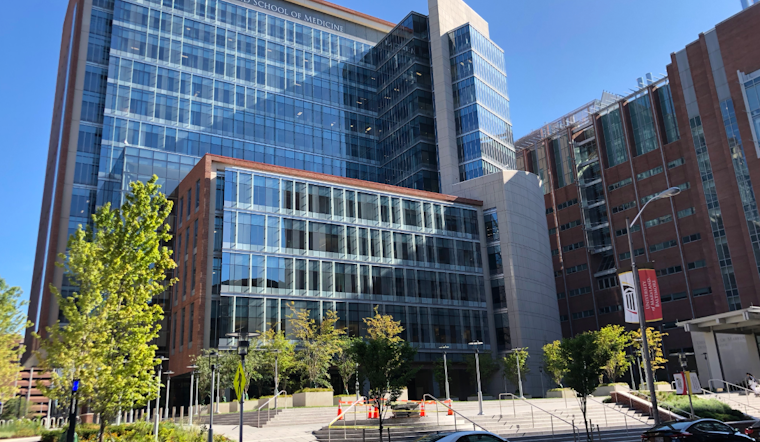
Baltimore’s top trauma experts are gearing up to build a new battlefield medicine hub tailored to the age of small, cheap drones. The roughly 5,000-square-foot facility will pack in secure research and training space, and project leaders say the initial build-out should wrap within two years. State support and university backing are expected to carry the first phase.
In June, the University of Maryland School of Medicine announced it had secured a $1 million Build Our Future grant from the Maryland Department of Commerce to launch a Center for Combat Casualty Care and construct a Sensitive Compartmented Information Facility (SCIF) for rapid prototyping and clinician training, according to the University of Maryland School of Medicine.
The center will sit inside an existing university building in Baltimore City, although officials are still hammering out the final site, project development lead Elizabeth Powell told local reporters, according to local coverage. Keeping the project in the city is meant to keep researchers close to Shock Trauma’s heavy clinical caseload and to the university’s military-civilian training partnerships.
Why Drone Warfare Matters
Low-cost unmanned aerial systems have reordered the battlefield in recent conflicts, making evacuations tougher and rotorcraft more vulnerable, which in turn nudges medics toward longer on-site stabilization and new field treatments. Analysts and combat-medicine commentators say those dynamics, visible in Ukraine and in strikes tied to Iran, are driving demand for rapid prototyping of protective gear, portable treatment tools and longer-duration field care. As explained by Breaking Defense, drone-driven casualty patterns have pushed medics to plan for hours-or-days timelines instead of quick helicopter evacuations.
What The Center Will Do
Project leaders say the Center for Combat Casualty Care is designed to modernize battlefield trauma care from the point of injury through early surgical and critical care, speed up the development and fielding of new medical tools, and return effective technologies to civilian hospitals, according to local reporting. Early phases are expected to feature rapid-prototyping labs, secure development space and training for military clinicians, Baltimore Business Journal reports.
Timeline And Local Context
The Maryland grant program states that the award will support the center’s initial phase for two years and help pay for construction of the SCIF and related work, anchoring the project in Baltimore’s clinical ecosystem, per the Office of Governor Wes Moore. The R Adams Cowley Shock Trauma Center already serves as the state’s primary trauma resource and a long-standing military training partner, and federal reviews document those military-civilian readiness collaborations (Government Accountability Office). Project leaders say they will publicly announce the chosen building and construction schedule once the site selection process is complete.
For now, military medical planners and med-tech developers are watching Baltimore closely to see how fast this new center can push battlefield-ready innovations into civilian hospitals and medevac workflows.




