

























































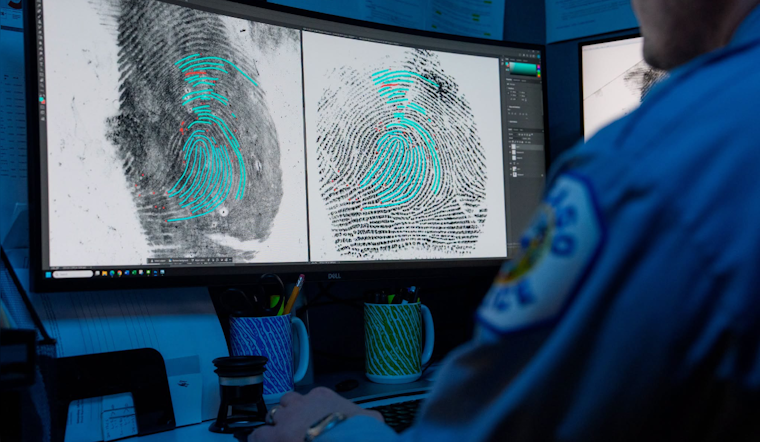
After years of scrutiny over how it handles fingerprints and other evidence, the Chicago Police Department’s Forensic Services Division has finally cleared a major national hurdle. The department announced Thursday that the crime lab has earned accreditation from the American National Standards Institute’s National Accreditation Board, a certification that caps a multi-year overhaul of lab procedures, staffing and documentation.
Department officials say the revamped lab passed its first assessment on the first try, a result they described as rare for an operation of this size, and one they hope will give its work more weight in both investigations and prosecutions.
According to WTTW News, First Deputy Superintendent Antoinette Ursitti called the recognition “the culmination of years of hard work” to standardize how the lab operates. Chief of Detectives Kevin Bruno told the outlet that accreditation “has helped us expand and further legitimize our forensic capabilities.”
The department told WTTW the Forensic Services Division had to meet more than 400 separate requirements tied to testing processes, staffing levels, training, documentation and accountability. CPD said the accreditation will aid both investigations and prosecutions, according to the outlet.
What the accreditation requires
The ANSI National Accreditation Board accredits forensic laboratories to international standards that focus on technical competence, routine quality checks and a clean, well-documented chain of custody. The ANAB website notes that labs typically must meet ISO/IEC 17025 and related forensic requirements to qualify, benchmarks that courts and prosecutors use to judge whether a lab’s work can be trusted.
For CPD, hitting that mark meant formalizing standard operating procedures, tightening up documentation and providing regular training for staff across the lab’s forensic workflows. In theory, that should make it easier to show a judge exactly who touched which piece of evidence, when and how.
A long-running departmental push
This was not an overnight fix. The Chicago Police Department had flagged forensic accreditation as a priority in its 2026 goals and said it submitted an application as part of a broader push to beef up both digital and physical forensics. As outlined in the Chicago Police Department goals document, that effort included hiring criminalists, upgrading lab space and driving down processing times.
The push also follows long-standing criticism of how Chicago police have handled fingerprints and other evidence. A 2019 investigation by The Chicago Reporter flagged serious problems in the department’s latent-print unit and noted that the lab previously operated without outside accreditation.
What this could change in court
Department leaders say the new status should make it harder to knock out forensic evidence in court and help prosecutors build stronger, more resilient cases. “Though we have achieved our goal of accreditation, we know there is more work to be done on behalf of every Chicagoan affected by crime,” Chief of Detectives Kevin Bruno said, according to WTTW News.
Defense attorneys and judges, however, will still probe the lab’s procedures through cross-examination and contested hearings. Accreditation sets a floor for quality, not a ceiling, and any misstep in how evidence is handled can still become a flashpoint in court.
CPD officials say the lab will face ongoing review to keep its accreditation and hope to add more accredited forensic disciplines over time. For Chicago residents, the department is pitching the certification as a concrete step toward modernizing investigations and closing the procedural gaps that have, at times, weakened evidence once it lands before a judge or jury.





