

























































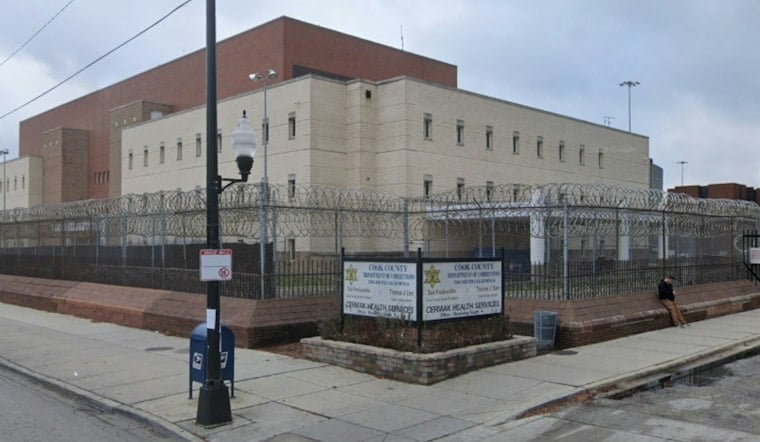
Mold, standing water, graffiti and loose tiles have shown up again and again in inspections of Cook County Jail dating back to 2022, and a new review from the county's independent watchdog says staffing gaps and suspected narcotics are still cycling through the facility even as officials make repairs. The Cook County Office of the Independent Inspector General laid out the findings in a letter to Sheriff Tom Dart dated October 16, 2026, and released the review to the public on Friday, October 30, 2026.
According to CBS News Chicago, the inspector general's office launched its review in response to complaints from people in custody and their family members about living conditions, staffing shortages and medical care. Investigators pored over Illinois Department of Corrections inspection reports, the sheriff's office's own staffing data and other documentation, ultimately identifying persistent jail problems touching supervision, maintenance, sanitation and housing conditions.
A Pattern That Spans Three Inspections
The physical complaints have shifted in character but not disappeared. The 2022 jail inspection found standing water, mold, rust, ventilation and temperature complaints, and water damage, per the same CBS Chicago report. By 2023, inspectors were instead citing trash, debris, graffiti, loose tiles and mildewy showers, and the 2024 inspection turned up bedding left on floors, more graffiti, soot and restroom doors that weren't properly secured.
The watchdog's review wasn't entirely bleak. It documented improvements to roofing, flooring, ADA accessibility, cameras, communications, kitchen equipment and body-scanning technology, the station's report notes, and found that administration, training, food and library services were either compliant or not formally flagged as deficient. Separately, Illinois Department of Corrections reports covering 2022 through 2024 documented a worsening trend in detainee-supervision requirements, including failures by jail staff to complete supervisory checks, alongside sanitation and maintenance problems.
Staffing Gaps And A Lingering Drug Problem
An April 2026 staffing report cited in the review found that deputy staffing at the Cook County Department of Corrections was uneven across different days of the week and shifts. Reports reviewed by the inspector general's office also documented a persistent pattern of suspected inmate intoxication and narcotics activity inside the jail, with 560 people in custody involved in suspected intoxication incidents as of September 28, 2026, according to the same account. Synthetic marijuana products were the most frequently seen controlled substances, and the inspector general's office said inmate-caused property damage was responsible for much of the jail's physical deterioration.
Smuggled drugs have been a documented problem at the jail for some time. The Cook County Sheriff's Office has said jails have been fighting a drug-soaked paper epidemic for three years, and in one case the office said suspected drug-soaked paper sent to the Illinois State Police lab tested positive for a synthetic cannabinoid. In responding to the inspector general's inquiry, the sheriff's office said it provided articles about drug-soaked paper along with disciplinary reports on property damage, and maintained that it cooperated fully with every request from investigators.
Emergency Response Times Swing Year To Year
The review also tracked how quickly medical emergencies were handled inside the jail, finding that average response times moved from 70.2 minutes in 2023 down to 45.2 minutes in 2024, then back up to 57.5 minutes in 2025. The inspector general's office cautioned that those averages do not necessarily indicate delays in medical treatment, suggesting one possible explanation is that people in custody may receive care from Cermak Health Services inside the jail before a 911 call is ever made.
Based on its findings, the inspector general's office recommended actions touching security checks, facilities maintenance, property-damage reporting and medical emergencies. Corrections officials met with investigators and discussed the recommendations verbally, and the sheriff's office also issued a formal written response to the review.
How Cook County Compares Statewide
Cook County's troubles aren't happening in isolation. A statewide review found that in 2025, inspectors documented violations at 52 Illinois jails, and 45 of those facilities had the same category of violations as the year before, according to IPM Newsroom. That same reporting found Cook County Jail, the state's largest, had violated standards covering supervision, security, admissions procedures, reporting, sanitation and more.
A separate analysis from Corrections1 found that more than 40 Illinois jails missed mandatory 30-minute observation checks during a 2024 inspection period, though Cook County Jail itself was compliant with that requirement 82.4% of the time. The outlet also reported that the Cook County Department of Corrections employed 2,091 correctional officers in fiscal 2025, filling 93% of budgeted positions, while an average of 237 officers took an unscheduled absence or leave in any given 24-hour period.
Oversight gaps have surfaced elsewhere in the state's jail system too. Hoodline previously reported on compliance monitoring gaps, noting a 2025 IDOC report found required 15-minute visual checks of juveniles at Kankakee County Jail were not always conducted on schedule, and that IDOC had referred Edgar County Jail to the Illinois Attorney General's Office after repeated inspections dating back to 2011 documented continuing violations. The Illinois Department of Corrections conducts annual inspections of county jails.





