

























































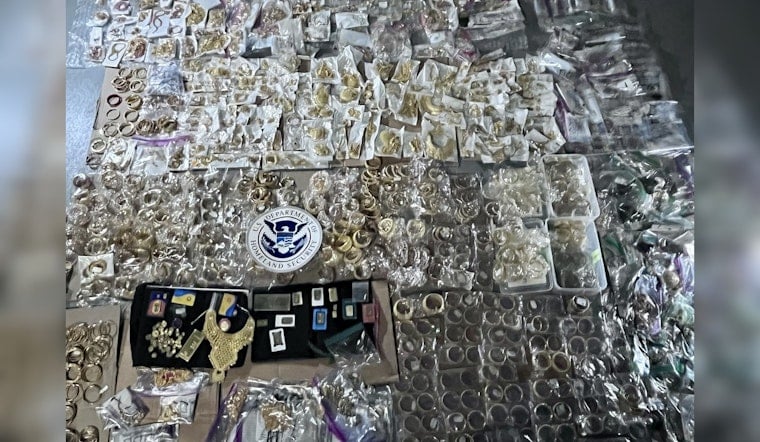
Chicago just became the city that tipped a major federal trade crackdown into ten-figure territory. Federal prosecutors said Tuesday that charges filed here helped push the Justice Department’s new Trade Fraud Task Force past $1 billion in recoveries, penalties and publicly charged losses. At the center of the milestone are two jewelry import cases that prosecutors say relied on bogus country-of-origin labels to duck customs duties.
What The DOJ Just Touted
According to the Department of Justice, the interagency Trade Fraud Task Force, launched in August 2025, has piled up more than $1 billion in civil and criminal recoveries, penalties, forfeitures and publicly charged losses in under a year. Assistant Attorney General Colin McDonald said the benchmark reflects a deliberate move away from handling trade cheats with mostly administrative fines and toward tougher criminal and civil enforcement that can hit much harder.
Chicago’s Starring Role In The Announcement
U.S. Attorney Andrew Boutros joined Justice officials at an event near Chicago’s O’Hare hub to roll out the billion-dollar figure, Reuters reported. Local prosecutors said the two matters filed out of Chicago were the tipping point that nudged the task force over that $1 billion mark.
The Jewelry Import Cases At The Center
According to WTTW, prosecutors allege that Raj and Veena Kohli, who operate Surya International in South San Francisco, brought in roughly 563 separate entries of gold jewelry between August 2020 and May 2024 that were falsely declared as made in Singapore. The shipments had an estimated total value of about $693 million and are accused of dodging more than $38 million in U.S. customs duties.
WTTW reports the other case focuses on Naperville wholesaler Narain Gulabani of Barkha Wholesale. He is accused of importing about 242 entries between 2016 and 2021 that were falsely declared as made in Oman or Singapore, with an estimated value of roughly $240 million and about $13.6 million in unpaid duties.
Why Prosecutors Are Turning Up The Heat
Officials say the task force is zeroing in on transshipment, mislabeling and fake origin schemes that drain U.S. revenue and undercut companies that play by the rules. They are particularly targeting evasion of Section 301 tariffs, antidumping rules and forced-labor risks, Reuters reported. Prosecutors say this marks a shift from treating customs issues mainly as administrative headaches toward civil and criminal actions meant to deliver larger, more public recoveries.
Legal Stakes And Playbook
The Justice Department also rolled out a Resource Guide and announced a new Global Trade & Commerce Enforcement Section to back the effort, spelling out how civil recoveries, forfeitures and criminal prosecutions can move forward under laws that include the Tariff Act and the False Claims Act, according to the Department of Justice. Prosecutors stressed that the filings are still just allegations and that defendants are presumed innocent. Judges, juries and any eventual settlements will determine whether money is actually recovered and how much.
What Happens Next
In the two Chicago cases, court filings, discovery and any plea negotiations will set the pace and the ultimate recovery figures, and prosecutors urged potential tipsters to step forward through the Department’s corporate whistleblower program, WTTW reported. Officials also noted that Customs and Border Protection has already assessed more than $2.1 billion in commercial trade penalties this fiscal year and has debarred dozens of parties from doing business with the federal government, numbers that framed Tuesday’s announcement as part of a much broader crackdown.





