

























































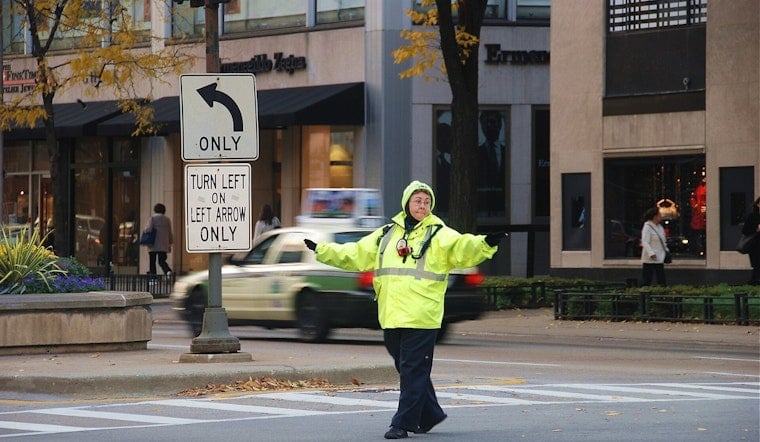
Chicago traffic aides are supposed to keep cars and pedestrians from colliding during the city's biggest events. Instead, two aides were hospitalized after drivers struck them in May, while others say motorists have cursed at them, flipped them off and treated basic traffic directions like a personal attack. Now the workers are heading into another packed summer weekend with Lollapalooza about to begin.
The timing is especially stark because Lollapalooza starts Thursday in Grant Park, bringing four days of concerts and massive crowds to the Loop. The festival will feature more than 170 acts across eight stages, according to Choose Chicago.
Two May crashes put the danger in stark terms
On May 18, a supervising traffic aide was struck near Soldier Field. Another aide was hit May 25 near Rate Field on 35th Street, according to Block Club Chicago.
Both aides were hospitalized. The driver in the first incident fled, while the driver in the second incident stopped only after bystanders physically got in front of the car. The supervising aide was released but is undergoing physical therapy six days a week, while the other aide recovered and returned to work.
Traffic aides can work 10- or 11-hour shifts around events, and supervisors try to rotate workers so they can sit down, drink water and grab snacks. Michelle DiCola, Chicago's director of traffic management, emphasized that the workers are “real people with families,” while aide Kayla Corbett described the job's mental calculus more bluntly: “I can't feel nervous,” as reported by Block Club Chicago.
A city hiring push is underway
The city is currently seeking 200 hourly traffic control aides at $25.54 an hour, with applications open through Friday, according to a City of Chicago job posting. The position requires workers to be available anywhere in the city and whenever events are scheduled.
The listing also makes clear that this is part-time work with no benefits, no guaranteed hours and a yearly cap of 1,300 hours. That means a workforce responsible for managing major crowd surges is largely built around hourly employees whose schedules rise and fall with the event calendar.
The staffing problem is older than this summer
A city town hall document from 2011 described a reduction in full-time traffic aides in the Loop and at the airports as part of a budget-saving effort. The plan kept part-time aides available for special events, emergencies and construction while shifting toward coverage of traffic hot spots, according to the City of Chicago archive.
More than a decade later, the city's traffic-aide payroll has been cut roughly in half from its 2011 level, even as Chicago continues to stack concerts, games and festivals into the same downtown corridors. The city says the Office of Emergency Management and Communications oversees about 200 aides, a thin human buffer between impatient drivers and thousands of people trying to cross the street.
Lollapalooza will be the next stress test
For the aides, the assignment is not to win arguments or make every driver happy. It is to keep moving vehicles, pedestrians and eventgoers from occupying the same piece of pavement at the same time.
For drivers, the instruction is simpler: slow down, follow the person in the reflective vest and remember that the traffic jam is temporary. The worker standing in it still has to go home afterward.





