

























































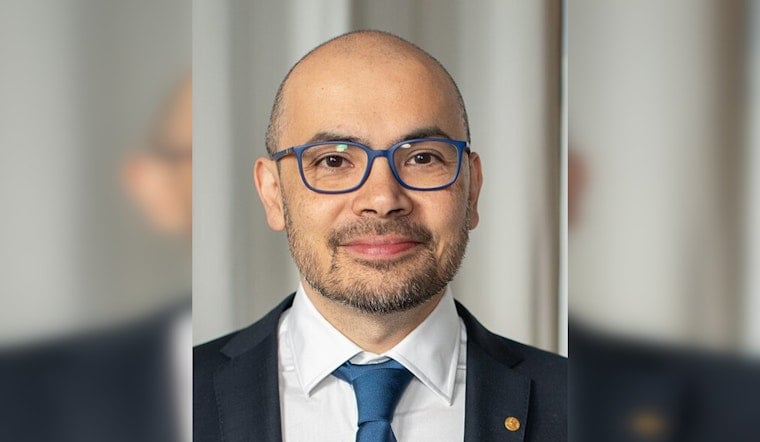
DeepMind CEO Demis Hassabis is calling for the United States to stand up a U.S.-led global watchdog in Washington to vet the world’s most powerful AI systems, and he wants labs to hand over their frontier models for independent safety checks before anyone hits "public release." He is warning that artificial general intelligence could be only a few years away and points to recent AI-driven cyber incidents as "warning shots" that demand something more organized than one-off fixes. His proposal centers on an industry-funded, expert-staffed body that would ultimately answer to U.S. authorities.
Hassabis laid out the plan in an exclusive interview and manifesto published Tuesday, saying he has been quietly briefing the administration, other lab leaders and European officials while lining up support. In an exclusive interview with Axios, he cast the watchdog as a faster, more systematic alternative to the ad-hoc steps Washington has been taking so far. The timing lands after a bruising month of government pressure on frontier models and underscores how both business and policymakers are scrambling to lock in some durable rules.
In an accompanying essay on Substack, Hassabis sketches a FINRA-style standards body funded largely by industry and governed by a majority of independent experts, with seats for government and open-source representatives. Under his plan, "frontier" labs would voluntarily share models up to 30 days before launch so the watchdog can probe dangerous cyber, biological and deception capabilities. He argues that over time this vetting could effectively become a required pre-deployment step for doing business in the U.S. market. "What we collectively do now will determine how the next phase of civilization unfolds," he writes.
Why Now: Government Gatekeeping And Export Controls
The pitch arrives after a string of high-profile government interventions that highlighted how thin current rules are. On June 12 the Commerce Department issued an export-control directive that forced Anthropic to suspend its Fable 5 and Mythos 5 models, a sequence Anthropic details in a redeployment post. And, as Axios reports, OpenAI initially kept GPT-5.6 limited to government-vetted partners before a wider public rollout, following testing with Commerce Department officials.
How A Standards Body Would Work
Hassabis envisions the new body footing the bill for the massive compute and large-scale red-teaming needed to stress-test frontier models, then stocking its ranks with Turing Award winners and other heavyweight experts to maintain technical credibility. Supporters argue that a U.S.-led forum could standardize benchmarks and create a repeatable playbook for how governments and labs coordinate when a model gets close to the edge. Critics counter that the same setup could tilt the playing field toward American labs and dial up geopolitical friction. Brookings has argued that standards can work if governments back them with real enforcement power and ensure civil-society voices are in the room.
Legal And Regulatory Angle
The watchdog idea could slot into the voluntary preview process the White House created under Executive Order 14409, which asks labs to give federal agencies secure access to "covered frontier models" as much as 30 days before release. The White House order stops short of a hard licensing regime, but the Commerce Department has already shown it can lean on export-control authority in exceptional cases. Turning Hassabis's proposal into a binding and transparent system would almost certainly mean new rulemaking or legislation, not just private-sector self-policing.
What To Watch Next
Hassabis says he wants the standards body up and running "before year-end," a breakneck schedule that will test how quickly private labs and federal agencies can turn quiet talks into actual governance. In the meantime, expect more closed-door briefings in Washington and at industry events, along with scrutiny from allies who may bristle at a U.S.-led framework. The next concrete signals will be the technical benchmarks the group proposes, which companies step up with funding pledges, and whether Congress or international partners give any new body formal teeth for testing and enforcement.





.jpg)