

























































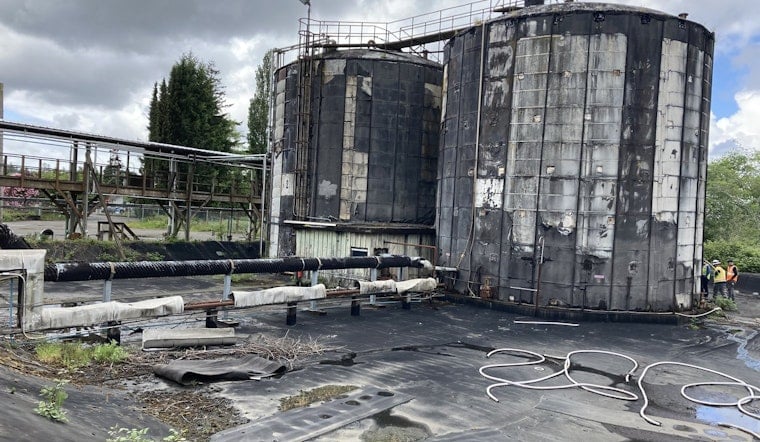
Federal regulators have told the owner of the long-dormant Cosmo Specialty Fibers pulp mill in Cosmopolis that time is up on leaving corrosive acids and other hazardous liquids sitting in decaying equipment. The U.S. Environmental Protection Agency has ordered the materials removed to head off what officials describe as a potential environmental emergency near the Chehalis River.
The 180-acre site has been idle since 2022 while storage tanks, piping and treatment ponds have continued to deteriorate and spill. That slow-motion breakdown has set off alarms among state and federal agencies and nearby residents, and now comes with a clear ultimatum: secure and remove the chemicals on a tight timeline or watch the EPA step in and do it, with the bill likely arriving later.
EPA Issues Time-Critical Removal Order
The EPA has issued a time-critical Unilateral Administrative Order under CERCLA that compels the mill's owner to stabilize, secure and begin removing hazardous liquids from the facility, according to EPA. The order lays out specific deadlines for naming contractors and project coordinators, requires weekly progress reports and mandates insurance coverage, all aimed at protecting nearby homes and waterways.
Federal and state assessments detail just how much risky material is still sitting on site. Investigators identified roughly 727,000 gallons of known hazardous liquids and warned the total inventory could be as high as 1.7 million gallons, as reported by The Seattle Times. Inspectors documented corroded tanks, unsecured drums and at least eight active leaks, including one tank reportedly losing about 45 gallons a day.
Site Hazards Include Corroded Tanks And A Wooden Conveyance
EPA's site evaluation describes roughly 1.6 million gallons of liquids in tanks, containers and piping, many of them corrosive, and notes severe rust, failing secondary containment and unsecured containers, according to the agency's order. It is not the kind of aging infrastructure anyone wants overlooking a river system.
The paperwork also flags a wood-stave pipe and a chain of stormwater ponds that discharge toward Grays Harbor. Regulators say those features could help move contamination into the Chehalis River and coastal waters if the situation is not addressed.
Owner Pushes Back
Owner Richard Bassett has resisted moving the materials and told regulators he intends to keep the chemical inventory on site. In correspondence cited in the reporting, he wrote, "I did not buy Cosmopolis to sell bits and pieces." Records show Bassett has disputed some of the regulators' descriptions of the hazards and has, at times, declined EPA requests for access to the property.
State Fines And Cleanup Orders
The Washington Department of Ecology fined Cosmo $2.3 million in 2025 for water, waste and air quality violations and issued cleanup orders under the state's Model Toxics Control Act, according to the Department of Ecology. Ecology said the penalties reflected deteriorating tanks and treatment systems that increase the chance of a significant spill in neighborhoods near the mill.
What The Law Allows
Federal Superfund law gives regulators wide latitude in situations like this. Under 42 U.S.C. § 9607, the government can compel cleanup and then recover removal costs from owners or other potentially responsible parties, potentially saddling a site owner with large bills and liens.
For Cosmo Specialty Fibers, that mix of state fines, state enforcement orders and the prospect of federal cost recovery creates a dense thicket of legal and financial problems. Any attempt to restart operations at the mill will now have to push through that, with millions of gallons of hazardous liquids at the center of the fight.





