

























































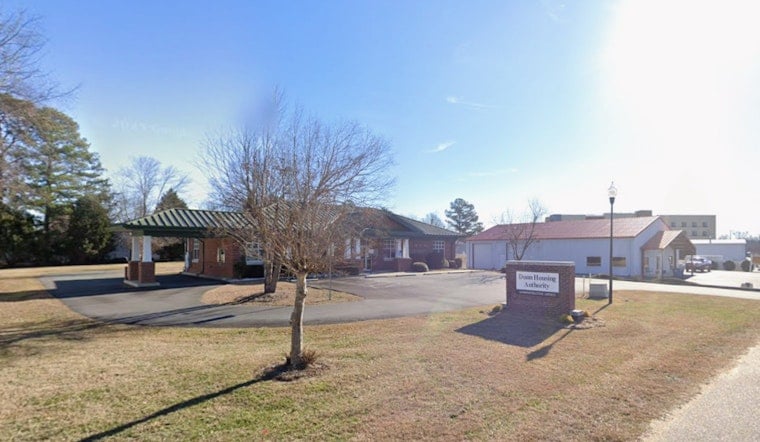
The former leader of Dunn’s public housing agency is headed to federal prison after prosecutors said money meant for low-income tenants instead helped bankroll personal spending and padded a family business.
A federal judge sentenced Debbie Woodell, 64, the former executive director of the Dunn Housing Authority, to two years in federal prison and ordered her to repay $232,488 to the U.S. Department of Housing and Urban Development. Her husband, Kevin Lee Tyson, previously pleaded guilty and was ordered to pay $207,233 in restitution and placed on three years of supervised release. The case centers on allegations that credit cards and agency funds intended for tenants were diverted for personal purchases and for work contractors never completed.
According to The News & Observer, Woodell pleaded guilty to conspiring to commit federal program theft after an indictment in May 2025 described purchases of ATV gear, diverted kitchen appliances and payments of more than $200,000 to Tyson’s maintenance company for jobs prosecutors say were never finished. The paper reports Woodell rose through the agency after starting as a clerical aide in 1989 and became executive director in 2014.
Per the Dunn Housing Authority’s own website, the agency manages 143 public-housing units out of an administrative office in the center of town, underscoring how a small local program can be hit hard when leadership is accused of abuse. Dunn Housing Authority lists its office on Stewart Street and handles maintenance and tenant services for the community it serves.
What prosecutors say
In a news release that local reporters cited, U.S. Attorney Ellis Boyle said the defendants stole money from taxpayers and tenants and vowed the office would hold people who exploit public programs accountable. The News & Observer notes Woodell’s plea agreement is not publicly available on PACER, while court records show Tyson’s February plea led to his supervised-release sentence and restitution order.
How tenants and a small authority feel the damage
Federal housing dollars pay for maintenance, appliances and basic services tenants rely on; prosecutors say some of those resources wound up at Woodell’s house and in ATV gear instead. Small housing authorities that operate a single portfolio of units, like Dunn’s 143 apartments, have less redundancy and can see program services strained quickly when funds are diverted, according to the agency’s public materials and federal program guidelines.
The problem is not unique to North Carolina: the Department of Justice has prosecuted similar schemes in which housing officials embezzled HUD funds, resulting in prison time and restitution orders elsewhere, showing how oversight and audits factor into accountability. For one example, see a previous DOJ prosecution of a public-housing director in Ohio that led to a multiyear prison sentence and restitution to HUD. U.S. Department of Justice
Restitution, reporting and next steps
Woodell must repay $232,488 to HUD and will report to federal prison in the coming months, while Tyson’s restitution and supervised-release terms are already part of the court record, as reported by local coverage. The Dunn Housing Authority board and HUD did not immediately publish statements tied to the sentencing; the authority’s public site lists contact information for tenant services and the administrative office.
Local residents and tenant advocates say the case highlights the need for clear checks on purchasing and vendor oversight at small agencies that depend heavily on federal dollars. Officials in Dunn and federal housing overseers now face the task of restoring trust and ensuring money earmarked for residents is spent where it belongs.



