

























































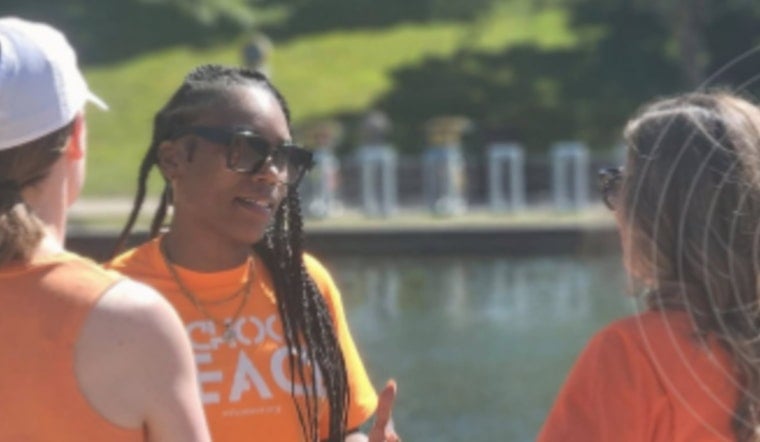
Photos shared yesterday by the City of Indianapolis Office of Public Health & Safety put the Indy Peace Fellowship’s peacemakers right where they work most: on neighborhood blocks and in hospital rooms, talking one-on-one with people caught up in gun violence.
In the images, life coaches, outreach workers and violence interrupters are seen meeting residents, passing out resource information and checking in on people affected by recent shootings. City leaders say the point is to head off retaliation and connect those at highest risk with help, not arrests, positioning the Fellowship as a community-first partner rather than a law enforcement unit.
In its Facebook post, the Office of Public Health & Safety walks through what the Fellowship actually offers, from resume building and housing support to food resources and cognitive behavioral therapy. Fellows receive ongoing life coaching and stipends when they hit agreed-on goals, part of an intensive program that can last up to 18 months and is designed to strip away practical barriers while building trust, according to the Indianapolis Office of Public Health & Safety.
How Peacemakers Operate In The Field
The peacemaker model splits the work into distinct roles. Violence interrupters rush to shooting scenes and hospital bedsides to calm tensions and mediate conflicts before they spiral. Outreach workers focus on building relationships with people at very high risk of being shot or shooting someone. Life coaches stay in the picture for the long haul, offering personalized support that can stretch across housing, jobs and behavioral health.
Program materials and local reporting describe peacemakers working both in public spaces and alongside clinicians to prevent retaliation and steer people toward services. It is a community-centered, data-driven approach that national advisers say helps focus resources on the small number of individuals most likely to be pulled into cycles of violence, according to WRTV.
What Fellows Actually Receive
Indy Peace materials say fellows can work with a life coach for up to 18 months. During that time, they can get help with employment, housing, food and behavioral-health services, while outreach workers and interrupters provide crisis response and stay in regular contact.
The idea is to combine immediate intervention with steady support so participants can stabilize and move toward job or education opportunities. Stipends and milestone incentives are built in as part of the Fellowship’s strategy to keep people engaged over the long run, per Indy Peace.
Where It Fits In The City’s Strategy
The Indy Peace Fellowship operates inside Mayor Joe Hogsett’s broader Gun Violence Reduction Strategy, which pairs focused enforcement with community interventions and behavioral-health investments.
Independent partners and city briefings point to notable drops in criminal homicides and nonfatal shootings since the strategy launched in 2022, with early analyses putting the decreases roughly in the high-20s to low-30s percentage range. Those trends and the program’s role in the city’s overall framework are outlined by the National Institute for Criminal Justice Reform.
Hospital Partnerships And Funding
The Fellowship also runs a hospital-linked violence intervention effort that places life coaches inside IU Health Methodist Hospital, where they help coordinate care and support for shooting victims as they recover. That hospital connection has attracted grant funding and institutional partners that are helping expand outreach and stabilization work into surrounding neighborhoods.
IU Health has highlighted those hospital linkages and recent grant awards that back the program’s growth, according to IU Health.
City officials say Indy Peace will continue ramping up outreach through the summer and are encouraging residents to connect with peacemakers or explore ways to volunteer. For contact details and program updates, visit the Indy Peace page from the Indy Public Safety Foundation.





