

























































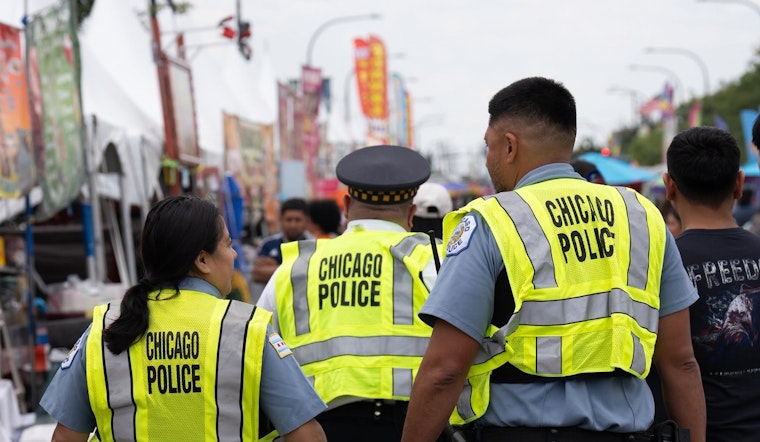
Latino officers are on pace to become the largest racial group in the Chicago Police Department by the end of 2026, a milestone that would mark a quiet but dramatic reshaping of who wears the badge in the city. The shift is being driven by a wave of retirements and a recruiting push that has changed the look of academy classes and, increasingly, neighborhood patrols.
City watchdogs have been watching the trend in real time. Staffing data published by the Office of Inspector General show Latino representation climbing steadily in recent years, as others decline. The OIG has expanded its public dashboards to track staffing, hiring, separations and discipline, and laid out how those tools are used by researchers and city officials in its Public Safety reporting, according to the Office of Inspector General.
What the numbers show
A data analysis of CPD and oversight records found that, as of June, about 4,158 officers identified as Latino, roughly 4,403 identified as white and about 2,300 identified as Black. Latino representation has been rising quickly, helped along by recent academy classes. The same coverage reported that more than half of the roughly 328 recruits in the current class identify as Latino, a group that also includes 49 recruits identifying as white and about 80 identifying as Black. That mix is helping push the department toward a Latino plurality, according to the Chicago Tribune.
Oversight data add a more complicated layer. Records from the Civilian Office of Police Accountability show that, since 2023, Latino officers have most often been named in misconduct complaints. COPA publishes complaint-per-member tables and district breakdowns in its quarterly reports, tables the agency says help it spot patterns in behavior across the department. Those charts appear in its second-quarter 2026 report, according to the Civilian Office of Police Accountability.
What changed
Police leaders and City Hall officials point to targeted recruiting and explicit policy commitments as the main drivers of the demographic shift. In 2023, CPD rolled out a three-year Racial Equity Action Plan, or REAP, that set hiring, retention and training goals and emphasized bilingual outreach and community pipelines into the force. The draft plan lays out specific steps and timelines intended to diversify the ranks and improve how officers connect with the neighborhoods they serve, according to the Chicago Police Department.
Local elected officials have not been shy about weighing in. Ald. Peter Chico told reporters that more Spanish-speaking officers could help build trust in heavily Latino neighborhoods. Ald. Silvana Tabares noted that many Latino families still see policing as a stable, honorable job that comes with a paycheck and a pension. At the same time, scholars and reform advocates caution that simply changing who is in uniform will not, by itself, fix long-running concerns about training, supervision and discipline. Those reactions were detailed in coverage by the Chicago Tribune.
Consent decree and oversight
This demographic turn is unfolding while CPD is still under a court-ordered consent decree that grew out of the 2014 killing of Laquan McDonald. The monitoring team has repeatedly stressed that policy and training requirements need to keep pace with any staffing changes, no matter who fills the ranks. By the end of 2025, monitors found the department was in full compliance with roughly 25% of the decree's requirements, a reminder that reform obligations will run alongside any demographic milestones. The monitors' findings were reported by WTTW.
Legal and accountability takeaways
Who wears the uniform may be changing, but the legal rules around that uniform are not. Misconduct complaints involving any officer are still investigated by COPA, the Bureau of Internal Affairs and the OIG, regardless of an officer's race or ethnicity. OIG reviews have already flagged problems with how CPD records discipline and follows through on it, and COPA's quarterly releases will continue to chart complaint patterns as new recruits come on the job. The underlying analysis appears in the OIG's Public Safety reporting and in COPA's quarterly publications, as detailed by the Office of Inspector General and the Civilian Office of Police Accountability.
On paper, at least, Chicago is headed toward a police force that looks more like the population it serves. Oversight officials and community leaders say the real test will be whether training, supervision and discipline keep up with that change. For reform advocates, neighborhood residents and rank-and-file officers alike, greater representation is an important milestone, not the finish line.





