

























































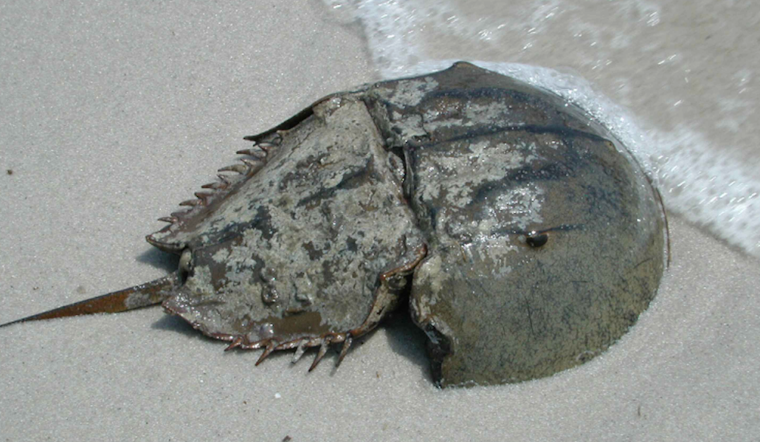
Families booking a bayside getaway in Ocean City were probably expecting sunsets and steamed crabs, not a canal that smells like something crawled in and never left. Yet along a dead-end canal off 94th Street, hundreds, and by some accounts thousands, of dead horseshoe crabs have piled up, fouling the air and forcing the town into a cycle of repeated cleanups.
As reported by WTOP, Town Manager Terry McGean put it bluntly: “Why they’re dying in these numbers this year, we don’t know.” The town has already hired a contractor who has cleaned the canal three times and is now weighing whether to bring in a larger contractor from Baltimore to keep up with the waves of carcasses.
State biologists point to low-oxygen conditions
The Maryland Department of Natural Resources suspects the problem starts underwater, not on the surface. The agency told local reporters that low dissolved oxygen in the dead-end canal is the likely culprit. Spawning horseshoe crabs can get trapped in these confined waterways. When hot summer temperatures and bacterial activity deplete the water of oxygen, mass die-offs can follow, according to WMDT reporting.
Researchers: spawning behavior and canal design
University of Maryland Eastern Shore researchers who monitor the 94th Street canals say the animals may be getting lured into a built environment that does them no favors. Crabs seeking sandy spawning spots inside man-made canals may repeatedly try to climb hard vertical walls, only to fall back and exhaust themselves, a pattern the monitoring project has documented in past seasons. The Maryland Coastal Bays Program has tracked similar bursts of mortality in prior years, notably in 2016 and 2021, and notes that dead-end canal geometry tends to trap carcasses and intensify both public-health concerns and the basic nuisance factor.
Who’s responsible, and what the town wants
Sorting out who should fix the mess has turned into its own headache. Town officials say jurisdictional lines are tying their hands, since the canal is treated as waters of the state. Ocean City has formally asked Maryland for help, but so far the state has declined to step in directly, a point highlighted in video coverage by CBS News Baltimore. In the meantime, Public Works crews and private contractors keep hauling away the dead crabs, while residents worry that the stench and grisly visuals could scare off renters and visitors right in the heart of peak season.
Why this matters beyond the smell
The stakes run deeper than a ruined vacation. Horseshoe crabs play an outsized role in coastal ecosystems and the economy. Their eggs are a critical food source for migratory shorebirds, and their blood is used by the biomedical industry to test medical products, which is why the Atlantic States Marine Fisheries Commission and Maryland DNR closely track populations and set management rules. Managers warn that concentrated die-offs in shallow, poorly flushed canals can have local ecological impacts and complicate broader decisions about conservation and harvest.
For now, town crews are continuing to pull carcasses from the canal and are asking residents and visitors to keep their distance. Public Works has been helping with disposal efforts, according to WMDT. Anyone who spots significant die-offs is urged to report them to the University of Maryland Eastern Shore monitoring project, which collects field observations and posts updates on its site.





