

























































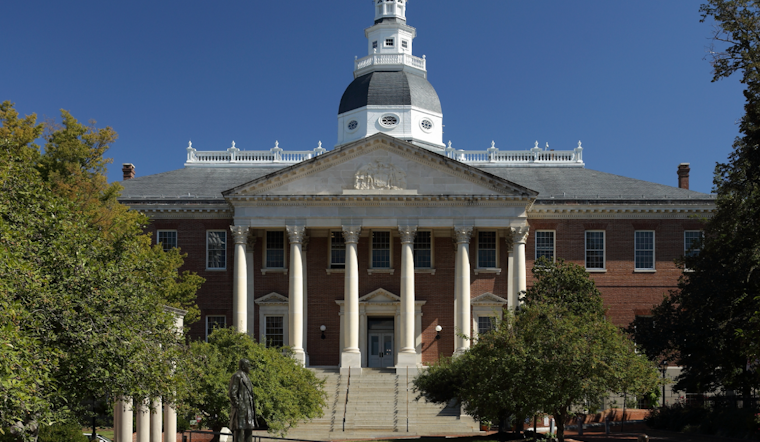
Maryland likes to bill itself as a land of opportunity, but a sweeping new analysis of public schools suggests that opportunity is not being shared equally. The report finds that Maryland’s public schools rank among the country’s most racially segregated, with Black, Hispanic and white students often funneled into very different campuses across counties and cities. Researchers say the divide tracks housing patterns and school district borders, concentrating poverty and privilege in different places. Educators and advocates warn that the split is dragging down academic results and narrowing life chances for students in high-poverty or racially isolated schools.
State ranking and what the numbers say
A report released this summer places Maryland 10th worst in the nation for racial segregation and 23rd for economic segregation. Brown's Promise, which published the "States of Segregation" rankings, used school-level data from the 2023-24 school year to build indexes that measure how separated students are by race and by poverty. The ranking puts Maryland ahead of states such as Connecticut and Massachusetts and behind states like New York, which the report lists as the most racially segregated.
How researchers measured segregation
The analysis relies on the Segregation Tracking Project, a Stanford and UCLA collaboration that applies a normalized exposure index to every U.S. school to estimate how likely students of different backgrounds are to attend the same schools. The Segregation Tracking Project pulled enrollment figures from the U.S. Department of Education for 2023-24 and breaks segregation into between-district and within-district components so policymakers can see where change is possible. That breakdown helps explain why some states look segregated primarily because entire districts differ sharply from their neighbors.
Neighborhood lines and district divisions
The Baltimore region is a clear example: many city schools enroll high concentrations of Black and Latino students while nearby suburban and rural schools are disproportionately white. As reported by The Baltimore Banner, much of Maryland’s racial segregation shows up between districts rather than inside them. That pattern suggests that state-level policy, not just local boundary changes, may be needed to make a real dent.
"Parents are more willing to have their child in a school with low-income children than have racial integration in their school," Ann Owens, a lead researcher with the Segregation Tracking Project, told The Baltimore Banner. Decades of social-science research, including work collected by The Century Foundation, find that racially and economically integrated schools tend to improve academic outcomes and college attainment for students across demographic groups.
Legal limits complicate fixes
Efforts to use race directly in student-assignment plans ran into a major roadblock in 2007, when the U.S. Supreme Court limited districts’ ability to rely on a student’s race when assigning schools. The decision in Parents Involved v. Seattle, detailed by Oyez, narrowed the tools districts can use to pursue racial balancing and prompted many policymakers to focus instead on economic factors and voluntary programs. That legal framework restricts what local school leaders can do on their own and often shifts responsibility for large-scale solutions to state policymakers.
Policy options and the politics ahead
Brown’s Promise lays out a state-level agenda, ranging from interdistrict transfer programs to countywide assignment models, magnet school expansions and resource-sharing agreements, all aimed at breaking up what advocates call "poverty packing." The group’s States of Segregation release pairs those policy ideas with mapping data to show where they might matter most. Actually putting those ideas into practice is likely to be politically fraught in many Maryland communities, but advocates argue that the evidence makes clear why action is necessary for students’ futures.
Expect the findings to surface at school board meetings and in Annapolis this fall as parents, educators, and lawmakers debate whether to lean on state authority or stick with local reforms to promote more diverse schools. For national context, see Hoodline’s Tar Heel Class Divide piece on how the same report affected North Carolina’s rankings. Whatever path Maryland takes, the new data leave little doubt that segregation remains a structural challenge for the state’s public schools.



