

























































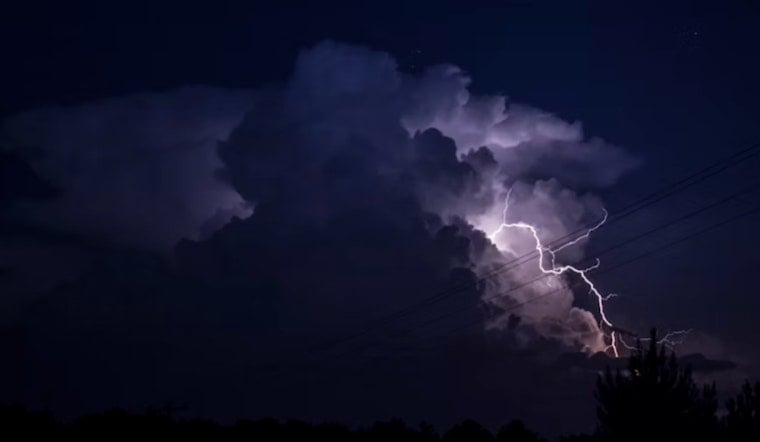
Evening thunderstorms rolled across the Houston metro Monday, lighting up radar and tossing frequent lightning over many neighborhoods just as commuters were heading home. The broken line of storms produced pockets of heavy rain and gusty wind that briefly tangled traffic and put outdoor events on pause, while local weather teams warned conditions could change quickly through the evening.
KHOU 6:30 p.m. Live Update
KHOU meteorologist David Paul tracked the cells in a 6:30 p.m. live weather impact update and warned viewers about frequent lightning and locally heavy downpours, according to KHOU. The station urged drivers to avoid flooded streets and to give storms some extra space on the roads while conditions stayed volatile.
Radar and Official Readings
The National Weather Service's Houston/Galveston office showed lightning at multiple observation sites and posted a map update just after 6:30 p.m., with surface temperatures across the metro in the upper 80s to low 90s, according to NWS Houston/Galveston. Forecasters said a few storms were capable of producing strong gusts and brief localized flooding where the heaviest downpours set up.
Where Storms Hit Hardest
KPRC's Click2Houston tracked cells firing up from the Heights north through Aldine and noted that most showers should weaken after sunset, leaving a warm, muggy night for much of Southeast Texas, per Click2Houston. The outlet's live radar showed the most intense lightning in scattered pockets instead of one solid line.
Tonight's Outlook and the Week Ahead
Forecast models show hit-and-miss storms continuing through Tuesday before a midweek drier stretch as Saharan dust returns, a pattern that could lower rain chances but push temperatures higher later in the week, per ABC13. Meteorologists cautioned that even isolated storms can produce intense rainfall and frequent lightning, so localized flash flooding remains on the table.
How to Stay Safe
If you encounter a storm tonight, head indoors at the first clap of thunder, avoid driving through standing water, and steer clear of downed power lines and fallen trees. For official guidance and real-time warnings, see resources from the National Weather Service and local broadcasters.





