

























































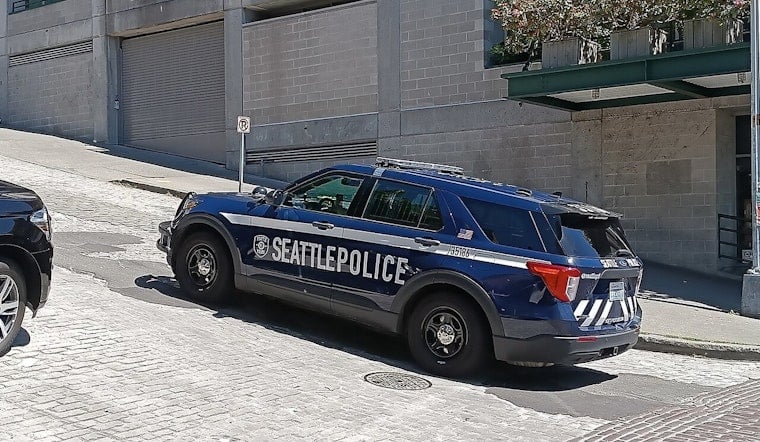
A King County inquest jury has concluded that Seattle police officers were justified in using deadly force when they shot and killed 31-year-old Ryan Smith during a May 8, 2019 911 response, ruling that the officers’ actions were necessary under the circumstances.
The inquest, which began July 13, wrapped up unusually fast. Jurors reviewed body-worn camera footage and heard from officers and witnesses in a hearing that put a years-long controversy under a tight courtroom microscope. Smith’s family, who describe him as struggling with substance use and depression, have consistently argued for non-police crisis responses in cases like his.
What jurors saw
Jurors watched video of officers kicking in an apartment door after a woman called 911 and reported that her boyfriend had threatened to kill her. The footage shows Smith holding a knife and taking a step forward just before two officers fired several shots. Jurors later told the court they believed the officers’ use of deadly force was necessary in that moment, according to KIRO 7.
The incident has been winding through civil courts for nearly seven years. In March 2025, the Ninth Circuit Court of Appeals affirmed that factual disputes about whether Smith posed an immediate threat and whether less-lethal options were feasible meant the officers could not win qualified immunity at summary judgment. Court records name Officers Christopher Myers and Ryan Beecroft and note that roughly 5.87 seconds passed between the door being kicked open and the first shots, according to Justia.
King County’s inquest program is a public fact-finding process separate from criminal prosecution. It is designed to produce written jury answers that are archived so anyone can later see how a panel analyzed a deadly encounter with law enforcement. The King County Prosecuting Attorney’s Office had already reviewed the shooting and, on May 2, 2024, issued a redacted “decline” memorandum stating prosecutors would not file criminal charges at that time. The inquest materials and declination memo are posted by the county through the King County Inquest Program and the King County Prosecuting Attorney’s Office.
During the inquest, Smith’s mother, Rose Johnson, testified that her son’s struggles with addiction and depression called for dialogue and crisis intervention instead of gunfire. Her stance has echoed through local advocacy circles and City Hall, where calls have grown louder for expanded civilian crisis responders and non-police emergency teams. The Seattle City Council took up those ideas this month as part of a broader public-safety package, according to council records published by OpenPublica and reporting from local outlet KIRO 7.
Legal implications
An inquest finding that a killing was justified does not decide criminal liability. Prosecutors can consider the jury’s written answers as one piece of a larger review but are not bound by the panel’s conclusions. On a separate track, Smith’s family is still pursuing Fourth Amendment claims in federal court. The Ninth Circuit’s 2025 ruling that key facts remain in dispute means that civil litigation can move forward even after the inquest has closed the book on its portion of the case.
The jury’s written answers in Smith’s case will be added to the county’s inquest archive for public review. For those looking to dig into the legal backstory, the appellate analysis is detailed in the Ninth Circuit materials hosted by Justia, alongside the county’s inquest and prosecutorial records.





.jpg)