

























































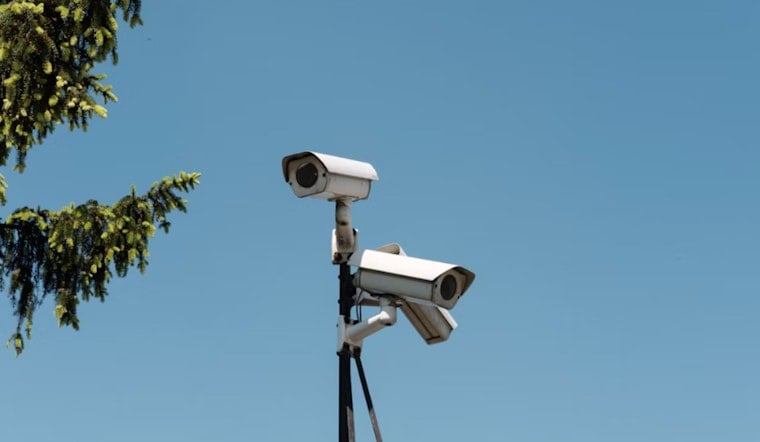
Raleigh Police Department has 416 active users with access to its network of Flock Safety license plate reader cameras, but an internal audit found that only about half of those accounts actually logged into the system during the review period. The department has more than 700 sworn officers, meaning more than half its force is listed as having active Flock access, even though usage tells a very different story.
The figures come from an audit reported by WRAL, which found that 239 active users did not log in during the evaluation period covered by an April 2026 department audit, and 148 users had not logged into Flock at all in 2026. WRAL enterprise reporter Destinee Patterson, who authored the investigation, noted the department has not provided responses to the outlet's questions about Flock account access and usage.
Raleigh's policy requires employees outside the Raleigh Intelligence Center to obtain advance supervisor approval for automated license plate reader access, according to the same WRAL report. Department spokesperson David Davis said law enforcement uses Flock technology solely for legitimate criminal investigations and public safety efforts, and that officers do not use the technology for random surveillance or to monitor people engaged in lawful activities. Davis also said Police Chief Rico Boyce would not be available for an interview the week the story published.
How Raleigh Compares to Other Triangle Departments
The scale of Raleigh's user base stands out against neighboring departments. Durham Police has 252 active Flock accounts among 427 sworn officers, or about 59% of its force, while Fayetteville Police reports 61 Flock users among 393 sworn officers, roughly 15% of its personnel. Asheville Police, which reports about 170 sworn officers, has just 12 active Flock users — including four professional staff — amounting to about 7% of its force, though Asheville lost its Flock camera access after the city terminated its contract with the vendor.
Flock requires users to be in approved roles to gain access, per the company's own website. Chris Barnes said Flock access should be limited to officers with clearance, a sentiment echoed by residents who have raised concerns about the breadth of Raleigh's user list. Clara Matthews said the situation made her suspicious and that it came down to transparency.
State Law Sets a Floor, Not a Ceiling, on Oversight
North Carolina law already requires agencies running automated license plate readers to maintain written access policies, supervisory oversight, and mandatory auditing, while capping standard non-investigative data retention at 90 days, under state statutes that made misuse of license plate reader data a Class 1 misdemeanor starting in 2023. But enforcement of those audit requirements is largely left to internal agency self-review, a structural gap that has surfaced repeatedly across the Triangle region this year.
Raleigh currently operates between 26 and 32 fixed Flock cameras citywide and enforces an internal default data retention period of 30 days, according to the Atlas of Surveillance, with data held longer only under an active criminal investigation or formal legal hold. During an August public forum, Chief Boyce defended the department's camera system and its monthly internal audits, even as community members and civil liberties advocates pushed for stricter access limits and independent oversight, according to a report cited by the News & Observer.
Regional Precedents Fuel the Push for Outside Review
The concerns raised at that forum echo problems documented elsewhere in Wake County. An August municipal audit in neighboring Apex revealed local Flock data was mistakenly shared with federal agencies, resulting in three nationwide federal searches that pulled in local driver records before Apex police severed those federal data-sharing connections. In Greensboro, public records showed that despite the city's Flock contract ending in May 2026, police personnel conducted 3,866 searches across 204 active user accounts over a single 30-day period, according to DeFlock America, prompting officials there to confirm the remaining hardware was being decommissioned.
Beyond North Carolina, Georgia oversight investigations identified at least 19 cases over a single year in which officers were accused of using Flock camera networks for unauthorized personal searches or stalking, per Atlanta News First, a pattern that pushed vendor Flock Safety to roll out AI-assisted audit tools meant to flag anomalous officer queries.
A Statewide Expansion With a Thin Hit Rate
The Raleigh findings arrive as the state doubles down on plate-reader surveillance. The North Carolina General Assembly's July budget permanently authorized the State Bureau of Investigation to place automated license plate readers along Department of Transportation rights-of-way statewide following an 18-month pilot, a shift Hoodline detailed in its report on the budget's roadside camera expansion, with those state highway rights-of-way covering roughly 80% of all public road miles in North Carolina.
Yet the yield from that expansion has been modest by comparison. An April 2026 State Bureau of Investigation report found 17 participating agencies logged over 152 million license plate scans across 140 highway locations statewide, with Raleigh's three right-of-way cameras alone scanning nearly 14.8 million plates and generating 956 NCIC alerts, according to Carscoops. Only 227 of those Raleigh alerts involved stolen vehicle hits, roughly one such alert for every 65,324 plate scans. Civil liberties organizations including the ACLU have reported that nationwide ALPR databases now cover more than 120,000 Flock cameras, while fewer than 1% of total plate scans match active criminal warrants or stolen vehicle records, a gap that INDY Week says privacy analysts point to when arguing that broad user access without individualized suspicion effectively turns the cameras into warrantless movement-tracking tools.
Other Triangle-area governments have already begun responding to that tension. In April, Chatham County commissioners opened formal work sessions to evaluate restrictions on local Flock data, including proposed bans on using plate records for federal immigration or out-of-state healthcare investigations, and paused contract renewals pending a deeper review of vendor agreement terms, as Hoodline reported in its coverage of the county's Flock camera review. Whether Raleigh follows with similar restrictions, or simply tightens its own account list, remains an open question the department has yet to answer publicly.





