

























































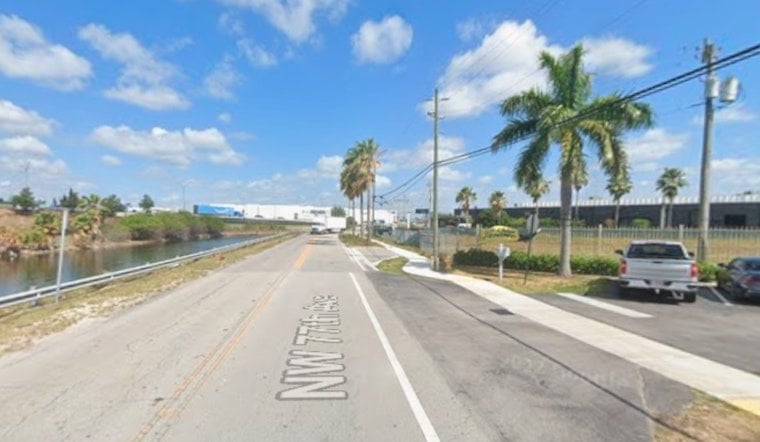
An ammonia leak sent Miami-Dade Fire Rescue crews racing to Northwest 77th Avenue and 31st Street Saturday morning, prompting evacuations in the heavily industrial corridor without a single reported injury. The cause of the leak remains unknown, and it is unclear which facility was the source.
Miami-Dade Fire Rescue confirmed that evacuations were ordered after the leak was detected, according to WSVN. Rescue crews responded to the scene after the leak triggered the evacuation order, and fire officials said the cause of the leak was not immediately known.
The station reported no injuries stemming from the incident, a relatively fortunate outcome given how quickly ammonia exposure can turn dangerous. Anhydrous ammonia is highly corrosive and hygroscopic, meaning it rapidly absorbs moisture from the body and can cause severe chemical burns to the eyes, skin, and upper respiratory tract, according to the Agency for Toxic Substances and Disease Registry. Inhaling the gas can also cause acute airway constriction and delayed pulmonary edema, per the same agency.
Why the Industrial Corridor Is an Ammonia Hotspot
The intersection sits within Northwest Miami-Dade's dense industrial and logistics corridor, an area known for commercial cold-storage and food distribution warehouses. Anhydrous ammonia, also known as R-717, is the standard refrigerant used in those facilities because of its thermodynamic efficiency and zero global-warming potential, though pressurized piping and relief valves can pose leak risks if damaged, according to Stellar. That concentration of ammonia-reliant refrigeration systems helps explain why gas leaks tend to cluster around this stretch of the county.
Once released, ammonia vapor is lighter than air, with a vapor density of roughly 0.597 relative to air, according to Blackline Safety. That property helps outdoor leaks disperse faster than ground-hugging gases, though vapors can still accumulate in enclosed upper areas such as warehouse roof spaces before they clear.
Federal and State Rules Govern Ammonia Storage
Facilities storing 10,000 pounds or more of anhydrous ammonia are required under the Clean Air Act's 40 CFR Part 68 to maintain an accidental release prevention program and file a Risk Management Program plan with the U.S. Environmental Protection Agency. Smaller operations remain subject to the law's General Duty Clause for preventing accidental releases. Separately, the Emergency Planning and Community Right-to-Know Act classifies ammonia as an Extremely Hazardous Substance with a Tier II reporting threshold of just 500 pounds, a rule meant to ensure local emergency planners and fire departments know a facility's chemical inventory before responders arrive on scene.
Florida law also requires facility operators to report accidental releases of extremely hazardous substances at or above reportable quantities to the state's Warning Point within 15 minutes, with civil penalties for failing to do so. It remains an open question whether the facility involved in Saturday's leak met the reporting thresholds that would trigger those disclosure requirements, and the exact volume of ammonia released has not been made public.
Miami-Dade's HazMat Response Capability
Miami-Dade Fire Rescue maintains specialized Hazardous Materials units, including Unit 28 based at Station 28 in Doral, which provide dedicated response capability for chemical spills and gas leaks across Northwest Miami-Dade. Those crews are trained to isolate hazardous chemical spills and manage evacuations, the kind of response deployed Saturday. Under OSHA rules, workplace ammonia exposure is capped at a Permissible Exposure Limit of 50 parts per million over an eight-hour shift, while NIOSH considers 300 ppm Immediately Dangerous to Life or Health, a threshold that would require responders to don full Level A protective gear.
Saturday's leak is not the only recent ammonia scare in South Florida. In April, a transmission pipe failure at a Port Everglades cold-storage facility in Broward County released anhydrous ammonia, sending one person to the hospital and closing nearby roads, though it did not require building evacuations, as Hoodline previously reported. Miami-Dade Fire Rescue has also handled other recent gas emergencies, including a July bus crash in North Beach that damaged gas lines and forced evacuations, sending two people to the hospital for respiratory issues.
No cause has been determined for Saturday's leak, and Miami-Dade Fire Rescue has not identified the specific facility involved. WSVN's Jayme Berezdivin reported the incident Sunday, noting that officials had not released further details on the source of the leak or how long the evacuation order remained in effect.




