

























































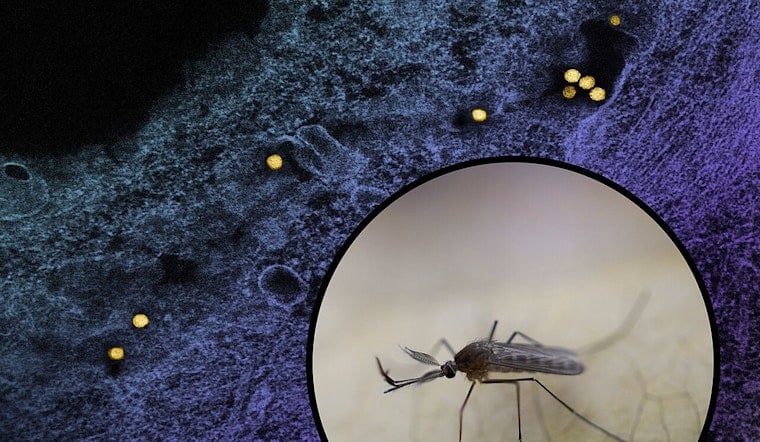
Arcadia has recorded its first West Nile virus case of the year after a mosquito sample collected near Baldwin Stocker Park tested positive on August 18, health officials confirmed. The detection lands the city squarely inside a broader wave of viral activity that has been building across California and the San Gabriel Valley for weeks.
The positive sample was pulled from a trap site near the park, according to the San Gabriel Valley Mosquito and Vector Control District, which oversees surveillance traps across dozens of eastern Los Angeles County cities. As reported by MyNewsLA.com, Arcadia's case marks the city's first confirmed detection of 2026, arriving amid what officials describe as elevated West Nile virus activity statewide.
Arcadia is not the first San Gabriel Valley community to see the virus turn up in its traps this summer. The vector control district's first West Nile-positive mosquito sample of the year emerged in Alhambra on June 29, with another positive detection following in San Gabriel near Smith Park on July 21. Pasadena confirmed its own first mosquito trap detection of 2026 on August 13, per the Pasadena Public Health Department, prompting health warnings across the west San Gabriel Valley just days before Arcadia's own positive sample appeared.
A Death in the San Fernando Valley and a Countywide Surge
The Arcadia finding comes weeks after Los Angeles County recorded its first West Nile virus death of 2026, involving a San Fernando Valley resident who had been hospitalized with neurological illness caused by a severe case of the virus. The Los Angeles County Department of Public Health confirmed that fatality earlier in August, a case Hoodline covered in its report on the San Fernando Valley resident's death. County health officials had documented 15 West Nile virus cases through mid-August, exceeding the five-year average for that point in the season, with half of those infections concentrated in the San Fernando Valley.
Los Angeles County's first human case of the year had actually surfaced far earlier, in late June, in a Long Beach resident who recovered at home after developing symptoms, according to the Los Angeles Times. That early case, along with a July hospitalization of an Antelope Valley resident reported previously by Hoodline, signaled that human infections were beginning well ahead of the county's typical seasonal pattern.
Why This Summer's Mosquito Season Arrived Early
California's record-warm winter allowed West Nile virus amplification and detection in Los Angeles County to begin nearly two months earlier than usual this year, according to vector control officials cited by CBS News. Mild winter temperatures let a higher share of adult female mosquitoes survive into spring and accelerated how quickly the virus replicated inside those insects once temperatures climbed.
The result has been a statewide surge unlike anything seen in years. The California Department of Public Health reported 30 human cases across 13 counties as of mid-August, including three fatalities, a pace marking a five-year high in viral activity. Statewide surveillance data compiled by Our Weekly showed more than 24 percent of dead birds testing positive for West Nile virus through mid-August, compared with a five-year average of 13 percent, while positive mosquito pools reached 8 per 1,000 tested against a baseline of 5 per 1,000. Dead bird testing is considered an early warning indicator because birds serve as the primary reservoir that amplifies the virus before it spreads to mosquitoes and, eventually, people.
Similar surges have been logged elsewhere in the state this month, including in Sutter County and Stanislaus County, where Hoodline reported that mosquito pool positivity rates had climbed to five-year highs statewide.
What Health Officials Say About Risk and Symptoms
Health officials said most people who become infected with West Nile virus have no symptoms at all. About one in five infected people develop a fever along with other symptoms, while roughly one in 150 go on to develop severe illness, which can include high fever, stiff neck, and muscle weakness. Officials said severe cases can escalate into meningitis, encephalitis, and paralysis.
People older than 50 and those with certain underlying health conditions face a greater risk of serious illness from the virus, officials noted. There is no vaccine for West Nile virus and no specific treatment once someone is infected, which is why prevention efforts focus almost entirely on avoiding mosquito bites in the first place.
The virus is transmitted through the bite of an infected mosquito and affects both people and animals, though the Centers for Disease Control and Prevention notes that humans and horses are considered “dead-end hosts” — meaning infected people do not carry high enough virus levels in their bloodstream to pass it on to biting mosquitoes. West Nile virus is instead maintained in nature through an ongoing cycle between Culex mosquitoes and birds.
Prevention Steps and Vector Control Response
Residents are urged to remove standing water around their properties, except in pools that are properly chemically treated, since standing water is where mosquitoes breed. Officials also recommend ensuring door and window screens fit properly, minimizing outdoor time at dawn and dusk when Culex mosquitoes are most active, wearing long pants and long-sleeved shirts outdoors in mosquito-prone areas, and using insect repellent.
The CDC recommends repellents containing DEET, Picaridin, IR3535, 2-undecanone, or Oil of Lemon Eucalyptus as the most effective and longest-lasting protection against Culex bites, according to guidance published by the Sutter Yuba Mosquito & Vector Control District. When local viral detections surge in residential neighborhoods, the San Gabriel Valley Mosquito and Vector Control District deploys truck-mounted ultra-low volume adulticide and larvicide applications overnight to knock down adult mosquito populations before they can spread the virus further.





