

























































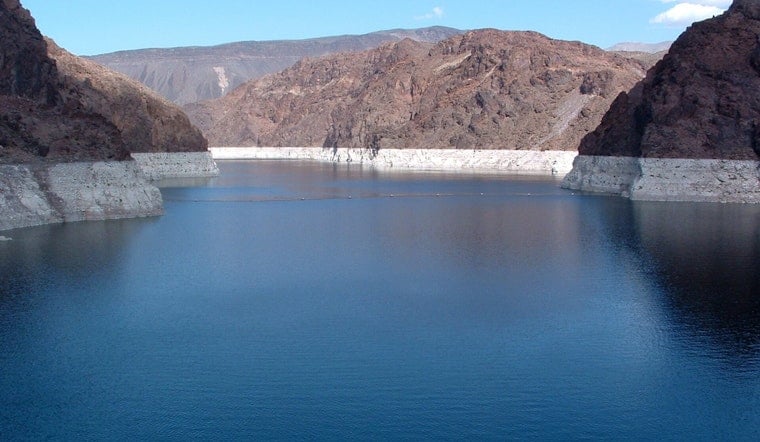
The federal government has finalized a sweeping new set of rules for the Colorado River that will slash water deliveries to Arizona, California and Nevada starting in 2027, with Arizona absorbing by far the largest share of the cuts. The Record of Decision and 2027–2028 Operating Guidelines lock in a 10-year framework for managing the river through 2036, arriving as combined storage in Lake Mead and Lake Powell has dropped to its lowest point since Lake Powell first began filling behind Glen Canyon Dam in 1963.
Arizona Bears the Brunt of Mandatory Cuts
Under the finalized guidelines, Lower Basin states must reduce annual deliveries by a combined 1.25 million acre-feet, with Arizona shouldering 760,000 acre-feet of that total, California cutting 440,000 acre-feet and Nevada reducing deliveries by 50,000 acre-feet, according to the U.S. Department of the Interior. The announcement was shared by the City of Phoenix, AZ, which described itself as the official page for the fifth-largest city in the United States. Beyond those mandatory reductions, Lower Basin states must also voluntarily conserve and store at least 700,000 acre-feet of additional water in system reservoirs through 2028, a step outlined by Courthouse News Service as an effort to stabilize declining elevations at Lake Mead and Lake Powell.
The lopsided distribution traces back to a 1968 legal bargain. Under the Colorado River Basin Project Act, Arizona agreed that California's full 4.4 million acre-foot annual allocation would carry senior priority over Central Arizona Project diversions whenever shortages hit, as explained by PBS NewsHour. Arizona accepted those junior water rights decades ago in exchange for congressional authorization to build the Central Arizona Project, the canal system that delivers river water to central Arizona's cities and farms.
Phoenix Mayor Says Plan Falls Short of Basin-Wide Fairness
Phoenix Mayor Kate Gallego criticized the federal decision, saying it fails to deliver fair, basin-wide leadership across all seven Colorado River states, according to a statement from the City of Phoenix government. Gallego also called for federal funding to help cushion rising municipal water costs for Phoenix rate payers. Her criticism reflects a broader Arizona grievance that Upper Basin states — Colorado, New Mexico, Utah and Wyoming — face no comparable mandatory conservation targets under the new rules.
Arizona Governor Katie Hobbs framed the outcome in starker terms. Without the Lower Basin consensus agreement that Arizona, California and Nevada struck earlier this year and that federal officials ultimately adopted, Hobbs said federal managers could have imposed cuts of up to 77% on Arizona's Central Arizona Project supply in 2027 and 2028, according to the Office of the Arizona Governor. Hoodline previously reported on that tri-state agreement when Arizona, California and Nevada backed the short-term plan in May.
A Decade-Long Framework With Steep Drought Sideboards
The newly finalized guidelines replace the 2007 Colorado River Interim Guidelines and the 2019 Drought Contingency Plans, both of which were set to expire at the end of the 2026 operating year, per the Water Resources Research Center. Those expiring rules had proven insufficient to halt the river's multi-decade storage decline, setting up the urgent deadline that pushed federal officials toward the new framework.
Looking further out, the 10-year decision framework establishes sideboards allowing federal officials to enforce Lower Basin shortages of up to 3 million acre-feet annually — roughly 40% of the states' combined allocations — if extreme drought persists through 2036, according to the Los Angeles Times. The framework relies on biennial reviews to adjust operational rules as hydrology conditions change. It also requires maintaining Lake Powell at or above a minimum elevation of 3,510 feet to preserve hydroelectric power generation and operational reliability at Glen Canyon Dam, the same detail reported by Courthouse News Service.
Extensive Public Input Preceded the Final Rules
The rulemaking process drew heavy public engagement before officials settled on the final guidelines. Public participation during the Post-2026 Environmental Impact Statement process generated 18,127 comment submissions ahead of the March 2 deadline, including 785 unique substantive submissions from tribal governments, states and water agencies, according to the Bureau of Reclamation. That volume of input underscores how contentious the underlying tradeoffs remain among the seven basin states.
The record-low reservoir levels driving this round of cuts follow a pattern Hoodline has tracked closely across the basin. Just three days before the federal decision, Hoodline reported that Apache Junction bets $60M on new water plant to prepare for ongoing Colorado River cutbacks, while a separate Hoodline report detailed how Lake Mead hit a record low the same week. Together, those stories illustrate the on-the-ground stakes behind Wednesday's federal announcement, as Arizona cities weigh infrastructure investments against a decade of tighter water supplies still to come.





