

























































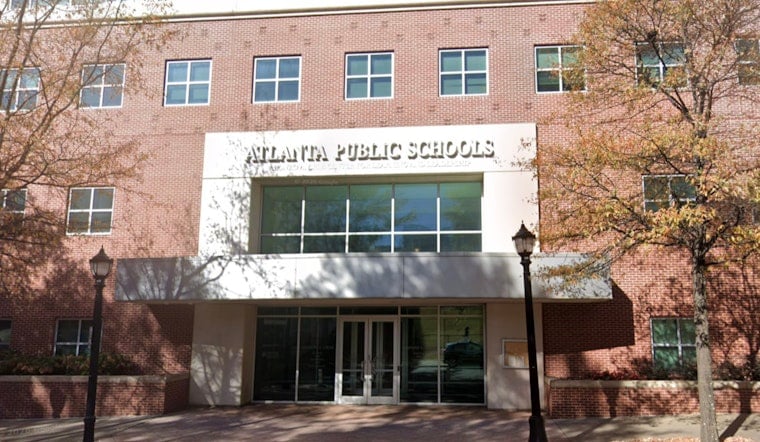
Atlanta Public Schools is weighing a new policy that would force federal immigration agents to produce a judicial warrant or court order before questioning a student or removing them from campus. The proposal, discussed at a board meeting on August 10, would also require updated visitor warrants or subpoenas before agents could access private areas of a school, and it comes as parents and advocates warn that informal guidance from the district simply isn't enough to protect kids.
Jessica Stern, an immigration attorney, parent, and policy lead for the Safe Space to Learn Coalition, told the board that informal instructions and emails are insufficient without a formal district policy in place. As reported by AJC.com, Stern has been pushing school policies that would require a judicial warrant or court order before ICE agents can enter private school areas, arguing that without written rules, campus responses to federal agents are left to chance.
The coalition includes seven core member organizations, among them the Association of Raza Educators and We Are CASA, plus 16 supporting groups including the ACLU of Georgia and the Southern Center for Human Rights, according to the same report. It has pushed for similar policy passage not just in Atlanta but in DeKalb County, Marietta City Schools, and other metro Atlanta districts, framing its proposals around Fourth Amendment protections against unreasonable searches and seizures.
Parents Describe Fear Rippling Through Classrooms
Yolanda Lopes, a mother of two children in DeKalb County schools, said her kids have been affected by the fear surrounding ICE enforcement. Tammy Brazzelle, a parent and fellow Safe Space to Learn Coalition member, echoed that concern, saying the fear of ICE affects students and families well beyond any single encounter with an agent.
Those worries have already reached DeKalb County's own school board, which heard testimony about the effects of ICE enforcement on students and families as it took up its own draft rule. DeKalb's proposal, designated Policy LDAJ (Law Enforcement), had a first reading in August after being postponed from an earlier date in July, with a formal board vote scheduled for September. The draft would require judicial warrants and district legal review before ICE agents could enter non-public school areas, the district notes.
Student Records and a Constitutional Backstop
The proposed Atlanta policy also reaffirms protection of student records under the Family Educational Rights and Privacy Act, which bars public schools from releasing personally identifiable student records to federal law enforcement without parental consent, a valid court order, or a judicial subpoena. Under the 1982 Supreme Court ruling in Plyler v. Doe, public K-12 districts are constitutionally barred from denying enrollment or equal educational access to children because of their immigration status, a baseline advocates say underpins the entire push.
The urgency behind these local policy fights traces back to a federal shift. On January 20, 2025, the same day Donald Trump was inaugurated as the 47th president, the Department of Homeland Security issued a directive rescinding the previous “protected areas” guidelines that had discouraged ICE and CBP civil enforcement actions at sensitive locations including K-12 schools, hospitals, and places of worship, according to the National Immigration Law Center. That change removed a longstanding administrative barrier that once discouraged agents from approaching schools at all.
Georgia's Anti-Sanctuary Law Complicates the Picture
Any policy Atlanta or DeKalb adopts has to be threaded carefully. Georgia Governor Brian Kemp signed House Bill 1105, the Georgia Criminal Alien Track and Report Act, in May 2024, banning local sanctuary policies across government entities — including school districts under O.C.G.A. § 36-80-23 — and mandating that local law enforcement cooperate with federal immigration detainers. Districts that run afoul of the state's anti-sanctuary provisions risk losing state funding, meaning school board attorneys must draft these access rules to demand warrants without appearing to obstruct federal enforcement outright.
That tension has already surfaced in metro Atlanta's traffic stops, which fueled a surge in ICE detainers and transfers to the remote Stewart Detention Center in Lumpkin, a pattern Hoodline reported has heightened fear among school families across the region. Earlier this year, high school students across metro Atlanta organized anti-ICE walkouts and demonstrations, according to The Southerner, illustrating how student-led activism has helped push the issue onto school board agendas.
Part of a Wider National Pattern
Metro Atlanta's proposed rules are not happening in isolation. School boards in Portland and the Los Angeles Unified School District have already updated local protocols this year to require judicial warrants and restrict federal immigration enforcement in non-public campus areas, moves Hoodline has covered as part of a broader trend of districts trying to insulate campuses through property-access standards. Community groups are advocating for similar rules in several metro Atlanta school districts that would make it harder for federal agents to remove students from public schools.
Atlanta Public Schools had originally scheduled a policy passage meeting for August before postponing it to September, according to AJC.com's reporting. Parents and school administrators remain concerned about student safety in the meantime, even as the board works to finalize language that satisfies both advocates' demands and the state's legal constraints.





