

























































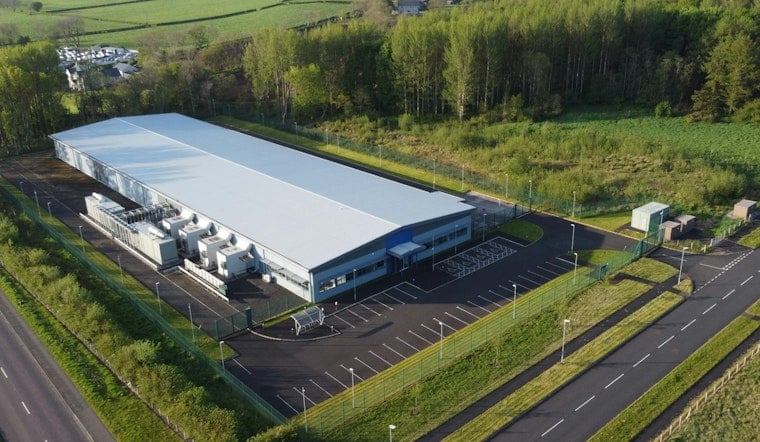
Bartholomew County commissioners say they want a clearer, fact-based path toward regulating data centers before the industry's hyper-scale ambitions collide with the county's farmland and power grid. During a meeting at the Bartholomew County Governmental Office Building in Columbus, commissioners directed the county attorney and the City-County Planning Department to study policy options and report back, while stopping short of endorsing either a total ban or unchecked growth.
Commissioner Larry Kleinhenz, who asked for the review, read the commissioners' prepared statement and said data centers have become a major concern for the public, according to The Republic News. Kleinhenz said misinformation and miscommunication about data centers have circulated across the country, and the commissioners agreed that the best path forward requires accurate information rather than reactive policy.
Fellow commissioner Tony London put it bluntly: Bartholomew County is not well set up for hyper-scale data centers as things currently stand. He noted that other Indiana counties have already banned data centers outright or imposed temporary moratoriums while they figure out how to respond, but London said a full ban would not serve Bartholomew County either.
Not All Data Centers Are Created Equal
Commissioners were careful to distinguish between the massive, AI-driven computing campuses drawing national attention and the smaller facilities already operating locally. Bartholomew County has some smaller, non-AI-driven data centers that resemble storage facilities more than industrial power users, and officials described them as good neighbors and community partners rather than sources of concern.
The real worry centers on hyper-scale operations, which require enormous amounts of land, strong connections to energy grids, and reliable water access. Commissioners noted that data centers have no one-size-fits-all impact — some have driven up electric bills in the communities that host them, while others have actually lowered energy costs, and water use varies dramatically, with some facilities consuming enormous volumes and others using none at all.
Columbus Already Moved on Zoning
Commissioners pointed to the city of Columbus as a model worth following. In July, the Columbus City Council changed its zoning ordinances to reclassify data centers as a conditional use rather than a permitted one, meaning new projects now require case-by-case approval from the city's Board of Zoning Appeals along with public hearings. Hoodline previously reported that the shift updated a zoning definition dating back to a 2008 code overhaul that never anticipated today's generative AI computing demands.
The Bartholomew County Plan Commission plans to discuss a similar change to county zoning ordinances, with the topic on the agenda for a September meeting, per Kleinhenz. County planners have already indicated they intend to revise the rules governing data centers, and commissioners say they support the potential zoning change as a first step toward broader oversight.
Farmland Fears Echo Past Fights
Commissioner Carl Lienhoop, who is also a farmer, said he is concerned about the potential loss of agricultural land to industrial-scale development. That concern isn't new to the county: in July 2024, the Bartholomew County Board of Zoning Appeals voted 3-1 to reject the 1,192-acre Swallowtail Solar project after residents argued the 200-megawatt proposal violated the county comprehensive plan's goal of preserving productive farmland.
That precedent looms over the current data center debate, since hyper-scale campuses can require similarly large land footprints. Bartholomew County's caution mirrors a broader trend playing out statewide — data tracked by Indiana University's Environmental Resilience Institute found that nearly a third of Indiana's 92 counties have enacted some form of data center restriction, including 11 with permanent ordinances, at least 17 with temporary moratoriums, and two, Marshall and Cass counties, with outright bans, according to WFYI.
Regional Pressure Builds
Neighboring jurisdictions have already taken action. Boone County commissioners unanimously approved a one-year moratorium through June 2027 on new data center applications in unincorporated areas, giving planners time to update zoning rules that date to 1998, as reported by WTHR. Just north of Bartholomew County, Shelbyville officials have advanced a 576-acre annexation and zoning review for a proposed Prologis data center known as Project Ruby, a plan that has sparked resident opposition over groundwater protection and utility infrastructure.
Hoodline has also tracked a Jeffersonville freeze on new data center development, where the city council voted 8-0 for a 12-month moratorium to draft a permanent overlay district with residential buffers, while carving out an exception for Meta's $800 million campus already under construction at the River Ridge Commerce Center. The pattern reflects a statewide push-pull: Indiana Code 6-2.5-5-19.5, enacted in 2019, offers qualified data center operators sales and use tax exemptions on equipment, software, and electricity for up to 50 years, a financial incentive that has helped attract tens of billions of dollars in investment, including Amazon Web Services' $15 billion commitment to add 2.4 gigawatts of capacity in northern Indiana on top of its original $11 billion campus near South Bend.
Statehouse Debate Over Grid Costs
Those incentives have collided with growing concern over who pays for the electrical infrastructure hyper-scale facilities demand. Indiana Senate Bill 257, introduced in January, would bar the Indiana Utility Regulatory Commission from approving rate increases on retail customers if those costs stem solely from serving data centers or facilities with fewer than 50 full-time employees. A companion measure, House Bill 1245, would direct the commission to formally study how data center power demands affect generation costs and retail rates, with findings due in its 2026 annual report.
For now, Bartholomew County commissioners appear focused on gathering that kind of information locally before committing to a specific regulatory path. With the county attorney and planning department set to report back and the Plan Commission's September discussion on the horizon, the county's approach — like Columbus's before it — hinges on deciding case by case rather than closing the door entirely.





