

























































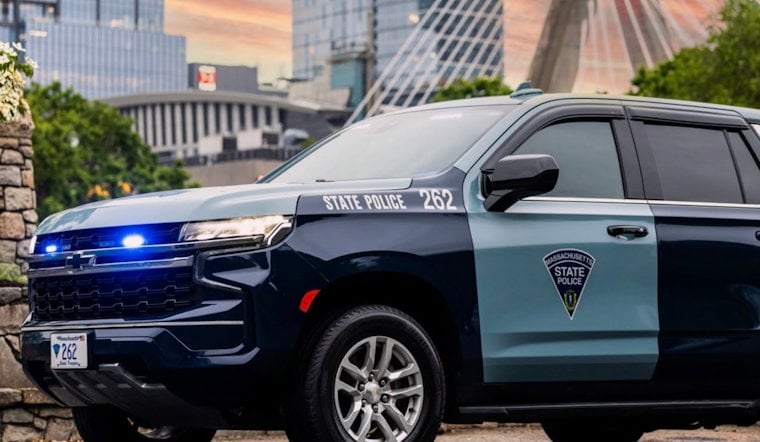
A box truck struck the Fenway overpass sign on Storrow Drive early Tuesday morning and rolled onto its side, briefly trapping the driver inside before crews freed them and rushed them to the hospital. Massachusetts State Police responded to reports of the crash, and the extent of the driver's injuries had not been shared as of Tuesday morning.
According to NBC Boston, the driver was briefly trapped inside the box truck before being removed and transported to the hospital, per state police. Boston Fire and EMS also responded to the rollover. NBC10 Boston reported it had reached out to the Massachusetts Department of Transportation for more information, and the article did not establish whether the overpass sign itself was damaged in the collision.
A Familiar Hazard Along the Charles River Parkway
The crash is only the latest example of what locals call “Storrowing,” a phenomenon in which tall box trucks and rental vehicles collide with the low overpasses lining Storrow Drive. The parkway features vertical clearances as low as 9 to 10 feet in several spots, well below the standard federal roadway clearance of 13 feet 6 inches, according to Mass.gov. The term spikes in frequency during late August and early September, precisely the window this crash falls into.
That timing is no coincidence. Greater Boston is home to roughly 160,000 college students spread across 64 higher education institutions, and about 70% of residential leases in the region start on September 1, according to Mass.gov's reporting on the seasonal trend. That annual deadline sends a wave of out-of-town drivers into the city behind the wheel of rented box trucks, many unfamiliar with the parkway's restrictions.
Why GPS and Warning Signs Haven't Solved the Problem
State agencies have long directed commercial vehicles and box trucks away from Storrow Drive, Memorial Drive, and Soldiers Field Road, steering them instead toward routes like Commonwealth Avenue, Beacon Street, or the Massachusetts Turnpike, per Mass.gov. Massachusetts State Police and MassDOT have also repeatedly warned that standard consumer GPS apps such as Google Maps do not filter routes by vehicle height, a gap that often sends unsuspecting rental truck drivers straight onto the restricted parkway.
In response, the Massachusetts Department of Conservation and Recreation introduced a pilot program in August 2023 installing high-visibility “CARS ONLY” signs that hang at bridge clearance height, designed to physically strike tall vehicles as a soft first-contact warning before they reach the actual overpasses. The program has since expanded, but Tuesday's crash shows the risk persists even with those measures in place.
Bowker Overpass Has a History of Bridge Strikes
Tuesday's rollover happened near the Fenway overpass, an area with a documented history of serious collisions. In May 2024, a tractor-trailer struck the nearby Bowker Overpass on Storrow Drive westbound, forcing authorities to shut down westbound lanes during peak morning rush hour. A bus also struck a low-clearance bridge on Storrow Drive in April 2024, adding to the parkway's long list of vehicle-versus-overpass incidents.
Drivers who strike the low bridges face steep consequences beyond the crash itself. Vehicle roof repair bills can average up to $10,000, on top of towing charges, state traffic citations, and potential civil liability that MassDOT can assess for structural bridge damage, according to Lifetime Moving Co. The parkway sits within a broader regional network that includes roughly 2,866 bridges in the Boston Metropolitan Planning Organization region, with about 154 requiring specialized vertical clearance or structural monitoring.
Storrow Drive opened in 1951, named for investment banker James Jackson Storrow, who championed the Charles River Basin. Notably, Storrow himself never advocated for building a highway along the river, and his widow, Helen Osborne Storrow, publicly opposed its construction before her death in 1944, according to Buildings of New England. As of Tuesday morning, it remained unclear whether the driver involved in this latest crash was using standard consumer GPS navigation, and Massachusetts State Police had not indicated whether citations would be issued or whether MassDOT would assess damage to the overpass structure.



