

























































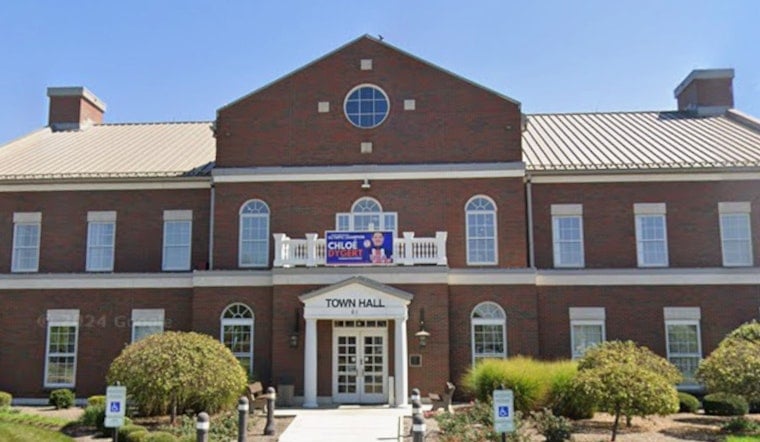
Brownsburg drivers could soon see a new charge on their vehicle registrations after the Town Council takes up a proposed wheel tax and vehicle excise surtax this Thursday at 7 p.m. at Brownsburg Town Hall. The proposal would set a $25 municipal vehicle excise surtax on passenger cars, motorcycles, electric bikes, collector vehicles, trucks, trailers, mini trucks and military vehicles, alongside a matching fee on heavier vehicles like semis, buses and recreational vehicles, with the new rates set to take effect January 1 if adopted.
The push isn't unique to Brownsburg. As WISH-TV reports, the town published a meeting agenda outlining the proposed ordinance on its website, framing the vote as a way to preserve access to state infrastructure dollars, including the Community Crossings Matching Grant, which the Indiana Department of Transportation provides for road repairs, bridge preservation and other infrastructure projects. If adopted, the proposed rates would qualify Brownsburg for that matching grant program going forward.
A State Mandate Forcing the Town's Hand
Brownsburg's timing isn't a coincidence. In May 2025, the Indiana General Assembly passed House Enrolled Act 1461, an overhaul of state transportation funding that requires municipalities to adopt a local wheel tax and vehicle excise surtax to keep full eligibility for INDOT's Community Crossings Matching Grant program and the newer Lane Mile Direct Distribution program, according to Indiana Legislative Insight. Before that law, 56 of Indiana's 92 counties and 15 municipalities had already adopted local wheel taxes voluntarily, but the 2025 mandate turned the decision into what the outlet describes as a financial ultimatum for the holdouts.
Local governments now face a hard deadline. Under Indiana Department of Transportation administrative rules, municipal wheel tax and excise surtax ordinances must be filed with both the Indiana Bureau of Motor Vehicles and the Indiana Department of Revenue by September 1, 2026, for the fees to take effect on January 1, 2027 — meaning towns that miss the window risk losing a full year of eligibility for state road grants. State law also sets the ceiling on what towns can charge: Indiana Code § 6-3.5-10 and § 6-3.5-11 cap municipal excise surtaxes on passenger vehicles at $25 and wheel taxes on heavy commercial vehicles and trailers at $40, and require the two fees to be adopted together.
Why Brownsburg Says It Won't Double-Tax Residents
Town staff have tried to get ahead of a common resident worry — that this amounts to paying twice for the same registration. According to town briefings reported by Citizen Portal, adopting the municipal vehicle tax simply redirects vehicle registration fees the BMV already collects, shifting them from Hendricks County to Brownsburg rather than layering a new charge on top of what residents already pay. Under the town's proposed ordinance, all revenue collected would go into dedicated town funds restricted solely to local street construction, reconstruction and repair, with no ability to divert the money to general operations.
The stakes for Brownsburg's road budget are already visible. At its July 9 meeting, the Town Council announced it had been awarded $839,798.13 in INDOT Community Crossings matching grant funds for local street resurfacing, a separate Citizen Portal report notes — money that depends on the town staying in compliance with state grant rules going forward.
Neighboring Towns Have Already Moved
Brownsburg isn't deciding in a vacuum. On August 10, the Indianapolis City-County Council voted 17-7 to override Mayor Joe Hogsett's veto of Proposal 192, enacting a citywide vehicle tax hike with a $100 passenger car surtax and a $240 heavy vehicle wheel tax, unlocking an estimated $50 million in annual state matching funds, according to the Indianapolis Business Journal. That rate sits far above the statutory cap that applies to smaller municipalities like Brownsburg.
Beech Grove took a different path. On August 3, the Beech Grove Common Council approved a standalone municipal wheel tax setting $25 for passenger vehicles and $40 for commercial vehicles starting in 2027, a move WTHR reports is expected to generate roughly $500,000 annually rather than folding into Indianapolis' higher rate structure. Greenwood has also advanced its own local option wheel tax and excise surtax proposal to comply with the updated state requirements, per a report from 95.3 MNC.
Brownsburg's proposal, as currently drafted, would track closer to Beech Grove's minimum-tier approach than Indianapolis' steep increase, sticking to the $25 surtax and matching wheel tax rather than pushing toward any higher figure. Whether the council adopts those rates as written, adjusts them, or delays action entirely will become clear when it meets Thursday evening at Town Hall — with the September 1 state filing deadline leaving little room for a second attempt before 2027.





