

























































On Chicago’s South Side, a tennis facility is doubling as a small clean-energy test bed: solar-powered tables now charge phones and laptops, while a public curbside EV charger is aimed at drivers who cannot plug in at home. The rollout puts practical infrastructure in neighborhoods where climate risks and the cost of going electric have not been evenly shared.
At XS Tennis Village in Washington Park, the workstations sit near outdoor courts, giving parents and visitors a place to charge devices while they watch matches or work. CBS Chicago reports that ComEd has installed seven solar charging sites across the South Side as part of a broader push to make clean-energy tools more visible and usable.
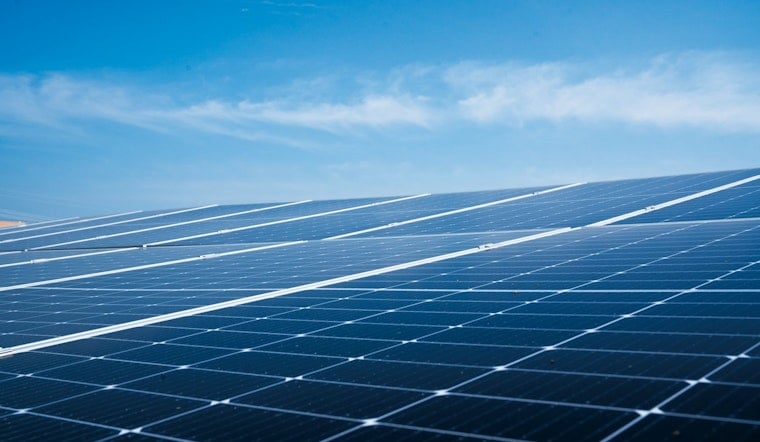
The stations are not just conventional tables with a panel bolted on top. According to ComEd’s community update, the units were installed with Sunbolt, operate independently of the electric grid, and can generate enough power to charge dozens of devices each day; some also offer Wi-Fi.
From Phone Charging To Neighborhood Resilience
That neighborhood-scale approach fits a larger regional shift. The Chicago Metropolitan Agency for Planning says transportation accounts for 26% of Greater Chicago’s greenhouse gas emissions. It identifies vehicle electrification, charging access, and grid investments as central to the region’s climate strategy.
The South Side project also sits inside a longer-running Bronzeville experiment. The utility’s public-charging initiative is aimed at residents in rental housing and others without a private garage, while Cristina Botero of ComEd told CBS Chicago that the company is prioritizing areas with too little public charging and communities that have historically borne heavier climate impacts.
Bronzeville’s community microgrid supplies a resilience layer beyond the new workstations. In a 2021 overview, ComEd said the microgrid’s footprint includes more than 1,000 residences, businesses and public institutions, including police and fire facilities, and can disconnect from the main grid during an emergency.
None of this makes the South Side’s charging gap disappear overnight, and the new station is not a substitute for reliable home or neighborhood-scale access. But it does make the clean-energy transition tangible: a phone gets a charge, an EV gets a place to plug in, and a community already testing the future gets another piece of infrastructure to work with.





